Michael Gwarisa
Zimbabwean health authorities say they are monitoring three healthcare workers who arrived in the country on Monday after being identified as contacts of a confirmed hantavirus case on Ascension Island, amid growing international attention over an outbreak linked to a cruise ship travelling from South America.
The Ministry of Health and Child Care said the three Zimbabwean nationals, who were repatriated aboard a private charter flight, had tested negative for hantavirus before departure and were not showing any symptoms.
In a statement, the ministry said the evacuation was arranged because Ascension Island has limited isolation and treatment facilities.
The three travellers arrived through Robert Gabriel Mugabe International Airport in Harare, where they were screened by Port Health officials before being transferred for monitoring.
Authorities said the group would remain under active observation during the recommended incubation period and would stay together at a designated private isolation facility as a precautionary measure.
The ministry added that infection prevention and control protocols had been activated throughout the transfer and quarantine process.
Officials also sought to reassure the public, saying there was currently no indication that the travellers posed a public health threat.
“Hantavirus is not transmitted through casual person-to-person contact in most cases, and all precautionary measures are being implemented in line with international public health protocols,” the ministry said.
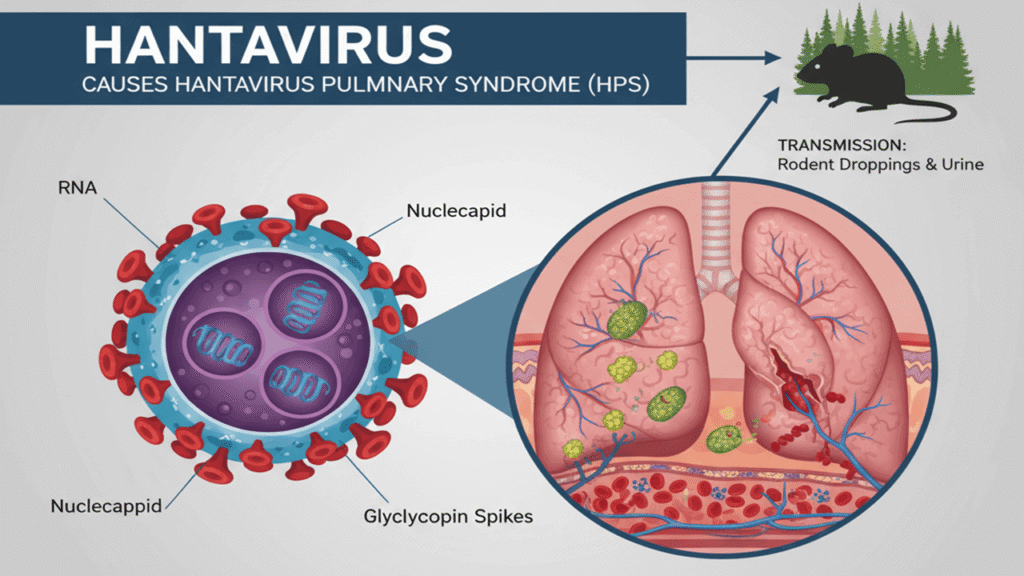
Hantavirus is a rodent-borne disease spread mainly through contact with infected rodent urine, saliva, or droppings. Infection often occurs when contaminated dust particles are inhaled while cleaning enclosed spaces or areas with heavy rodent activity.
The World Health Organisation (WHO) says some strains of hantavirus can cause severe respiratory disease, including hantavirus cardiopulmonary syndrome (HCPS), which can be fatal.
The current outbreak has been linked to passengers aboard the Dutch-flagged cruise ship MV Hondius, which travelled from Argentina to Cape Verde. Some infected passengers later travelled through South Africa, prompting regional health surveillance and contact tracing efforts.
WHO says the virus involved is the Andes strain of hantavirus, found mainly in Latin America and capable of limited human-to-human transmission through prolonged close contact.
Investigations suggest exposure may have occurred during visits to rodent-inhabited areas in Argentina, Chile, and Uruguay before passengers boarded the vessel.
While the outbreak remains largely confined to passengers connected to the cruise ship, public health specialists say the incident highlights broader concerns about Africa’s preparedness for emerging zoonotic diseases.
Experts say many African countries continue to face challenges in disease surveillance, laboratory testing, genomic sequencing, and cross-border outbreak coordination.
Briefing journalists recently, WHO Director-General Tedros Adhanom Ghebreyesus said the organisation was closely monitoring the situation and supporting affected countries.
“WHO is aware of reports of other people with symptoms who may have had contact with one of the passengers. In each case, we are in close contact with the relevant authorities,” he said.
Tedros said although additional cases could emerge because of the virus’s incubation period, the outbreak was very different from COVID-19.
“This is not COVID, this is not influenza. It spreads very differently,” he said.
WHO infectious disease epidemiologist Maria Van Kerkhove also dismissed fears of a global pandemic, saying hantavirus outbreaks have occurred before and remain relatively rare.
“This is not SARS-CoV-2. This is not the start of a COVID pandemic,” she said.
Researchers say rising risks from zoonotic diseases are being driven by environmental and demographic pressures, including rapid urbanisation, climate change, and expanding human settlement into wildlife habitats.
Rodent-borne diseases remain particularly difficult to monitor because rodents are widespread and often live close to human populations.
Zimbabwean health authorities stressed that hantavirus does not spread through ordinary daily interactions.
The ministry said people could not contract the disease through talking to, touching, or caring for infected individuals in routine settings, and that it is not spread through mosquitoes, flies, food, water, schools, markets, offices, or public transport.
Officials advised members of the public to reduce rodent exposure by sealing holes in homes and grain storage facilities, storing food securely, and using protective equipment when cleaning contaminated areas.
The ministry said it was continuing to work closely with airport authorities, Port Health Services, and international partners to monitor the situation.
No confirmed hantavirus cases have so far been recorded in Zimbabwe.