By Kuda Pembere in Marondera
Zimbabwe is aiming to establish a recyclable dairy packaging processing plant, a goal that will only be achievable if the country manages to collect 1,000 tons of dairy packaging waste each month.
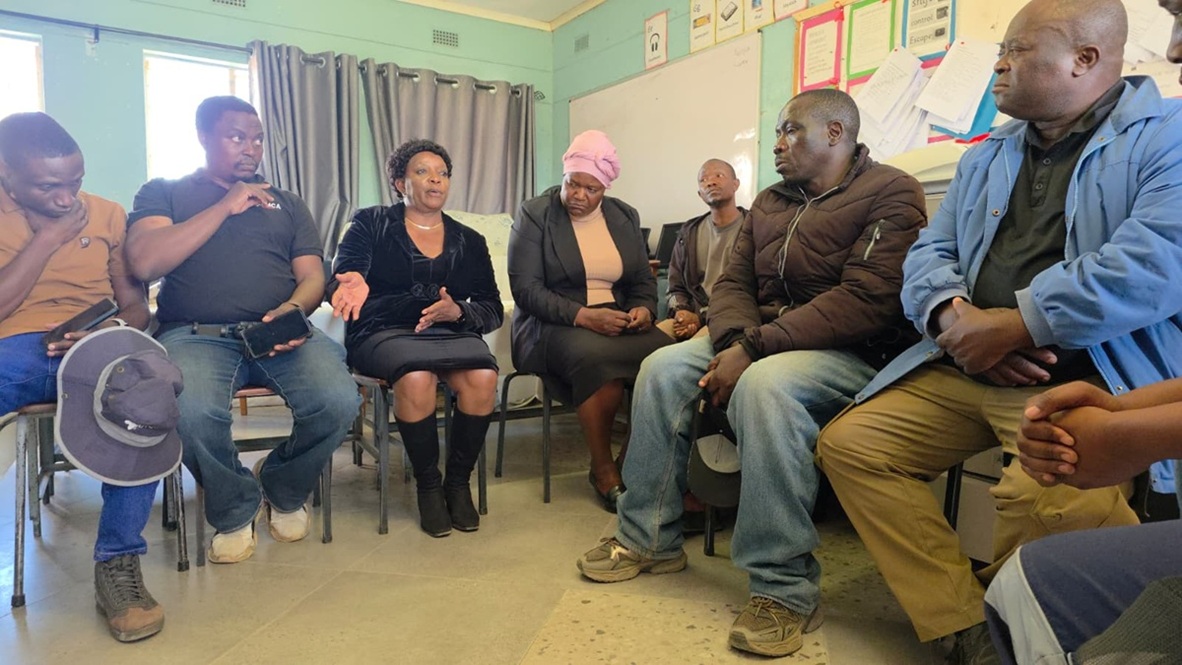
This was revealed by Dairy Processors Association of Zimbabwe (DPAZ) Secretary-General Tendai Marecha on Tuesday in Marondera, where the association launched an awareness campaign to highlight the importance of recycling dairy packaging. The campaign which began in Marondera aims to boost the collection volume and help meet the ambitious target. It will continue till Friday in Mabvuku, Epworth, Chitungwiza and Highfield.
DPAZ is a nine-member organization made up of processors involved in the value addition of milk and milk products. As these processors currently import most of their packaging from Tetra Pak South Africa, the association has entered into an agreement to improve the collection and recycling of this packaging waste.
“We are a nine-member organization of processors who are into value addition of milk and milk products,” said Marecha.
“As an association, we buy most of our packaging from Tetra Pak, which is a South African-based organization. We call that liquid-board packaging, LBP, and it is now commonly referred to as ‘carton’ packaging. You’ll find it used in UHT milks like Chimombe, Life, Maheu, Citro, and Revive.
“All those boxes, even the Kefalos snacks, Cortina snack drinks, and yogurts, which come in small boxes, are imported from South Africa. So, the objective of us, as the Dairy Processors Association, entering into a pact with Tetra Pak South Africa, was to support their global target of producing about 20 percent of their packaging from recycled materials,” she said.

Currently, Zimbabwe sends its dairy packaging waste to South Africa for processing.
“The LBP or cartons currently being picked through three buyback centres — EnviroWaste, Sunshine Group, and Rutanhi — are being baled for processing in South Africa. They are transported by Tetra Pak-designated trucks to South Africa, where the waste is purchased and processed by companies there.
“If we want the recycled material, we have to buy it from them and import it back to Zimbabwe,” she explained.
She added that DPAZ signed the agreement with Tetra Pak in March 2024.
“As dairy processors using this packaging from South Africa, we signed the pact in March this year,” she said.
One of the key clauses in the agreement is for Zimbabwe to collect 1,000 tons of dairy packaging waste per month. Marecha said this is an achievable goal, although progress has been slow, prompting the need for intensified awareness campaigns.
“We have been picking cartons since then. I think the highest amount we collected in a single month was about 130 tons of these carton boxes.
“Yet, under our agreement with Tetra Pak, once we reach the 1,000-ton mark per month, we will qualify to have a local factory set up to process the waste into various usable products.”
She highlighted some of the materials that can be recovered through recycling.
“What excited me most were the aluminum sheets, which can be made from the thin layer of aluminum inside the seven-layer carton box. There’s also the plastic and the cardboard.
“So, our aim now, as we hold these activations, is to increase the volume of our collections to at least 1,000 tons per month by the end of next year, so that we can have our own factory established locally,” Marecha said.
Marecha encouraged consumers to sort carton box waste to support pickers. She also noted that collecting dairy packaging waste is a viable business opportunity that provides employment while helping protect the environment.
“As a sector, we have a responsibility to remove waste from the end-user. Most of the packaging should be picked up from consumers.
“We are encouraging pickers from various locations, and there are buyback centres across the country where people can redeem their packaging waste at about 8 cents per kilogram,” she said.
Elvis Bika, the Group Projects Manager at Rutanhi Beverages, also emphasized the economic and environmental value of recycling.
“It’s quite key for us. First of all, those customers or consumers are of value to us because we are already providing them with our products.
“They benefit in two ways. One, there’s already a system in place that pays people for collecting this waste. It has become an industry on its own.
“If you collect PET, cardboard, or other materials and bring them to our company, we will pay you. So at the end of the day, you benefit directly.”
Bika also connected the recycling initiative to national clean-up efforts and environmental protection.
“As a country, this initiative adds value. The President has been promoting the first-day-of-the-month clean-up campaigns. This aligns with that vision.
“You know PET can remain in the ground for up to 15 years. If we don’t act now, it will have long-term effects on our environment.
“So, it’s a two-way process. That’s why we are raising awareness and telling people to make sure these materials are collected and properly recycled,” he said.