

Kuda Pembere
A nationwide hospital quality improvement programme, Kaizen, has concluded after four years, with the Health and Child Care Ministry reporting improvements in hospital organisation, service delivery and patient satisfaction.
The 5S-Kaizen Total Quality Management (TQM) initiative, which ran from 2022 to 2025, was supported by the Japan International Cooperation Agency (JICA) in partnership with the Ministry of Health and Child Care.
The 5S-Kaizen-TQM approach is a Japanese management philosophy adapted for hospitals to improve quality, efficiency and safety through a staged process. It begins with 5S for workplace organisation, namely sort, set, shine, standardise and sustain. This progresses to Kaizen, which focuses on continuous and participatory problem-solving, before integrating into Total Quality Management.
The approach is designed to reduce waste, streamline workflow and improve patient satisfaction while relying largely on existing resources.
The programme, titled ‘Project for Quality Improvement of Health Service through 5S-Kaizen-TQM Approach (ZIM-QIPS)’, targeted six central hospitals and eight provincial hospitals. It also sought to strengthen the capacity of the Quality Assurance and Patient Safety Directorate and provincial health executives so the participating hospitals could continuously implement the system.
In addition, the initiative introduced the concept to participating institutions and established internal monitoring and supervision systems to ensure sustained implementation.
Speaking to journalists on the sidelines of the closeout ceremony, Harare Provincial Medical Director Dr Innocent Hove said the programme focused on improving quality across the health system.
“Yes, this project started in 2022 and it’s a project that has been supported by the Japanese International Cooperation Agency, JICA. We were supporting the provincial hospitals, all the provincial hospitals, our central hospitals, all of them, as well as the provincial health executives. So it’s a quality improvement programme,” he said.
Dr Hove said the approach helps create a more organised working environment, which ultimately improves patient care.
“As you are aware, our hospitals, they need to be better organised so that they help or it helps with improving patient outcomes, the way we manage our patients, the environment in which we work as healthcare workers.
“It is of utmost importance that we work in a clean environment and also it facilitates the way we do our work in the sense that everything gets organised properly so that you are able to run up and down within your institution knowing where to get what. So this is basically the essence of this programme,” he said.
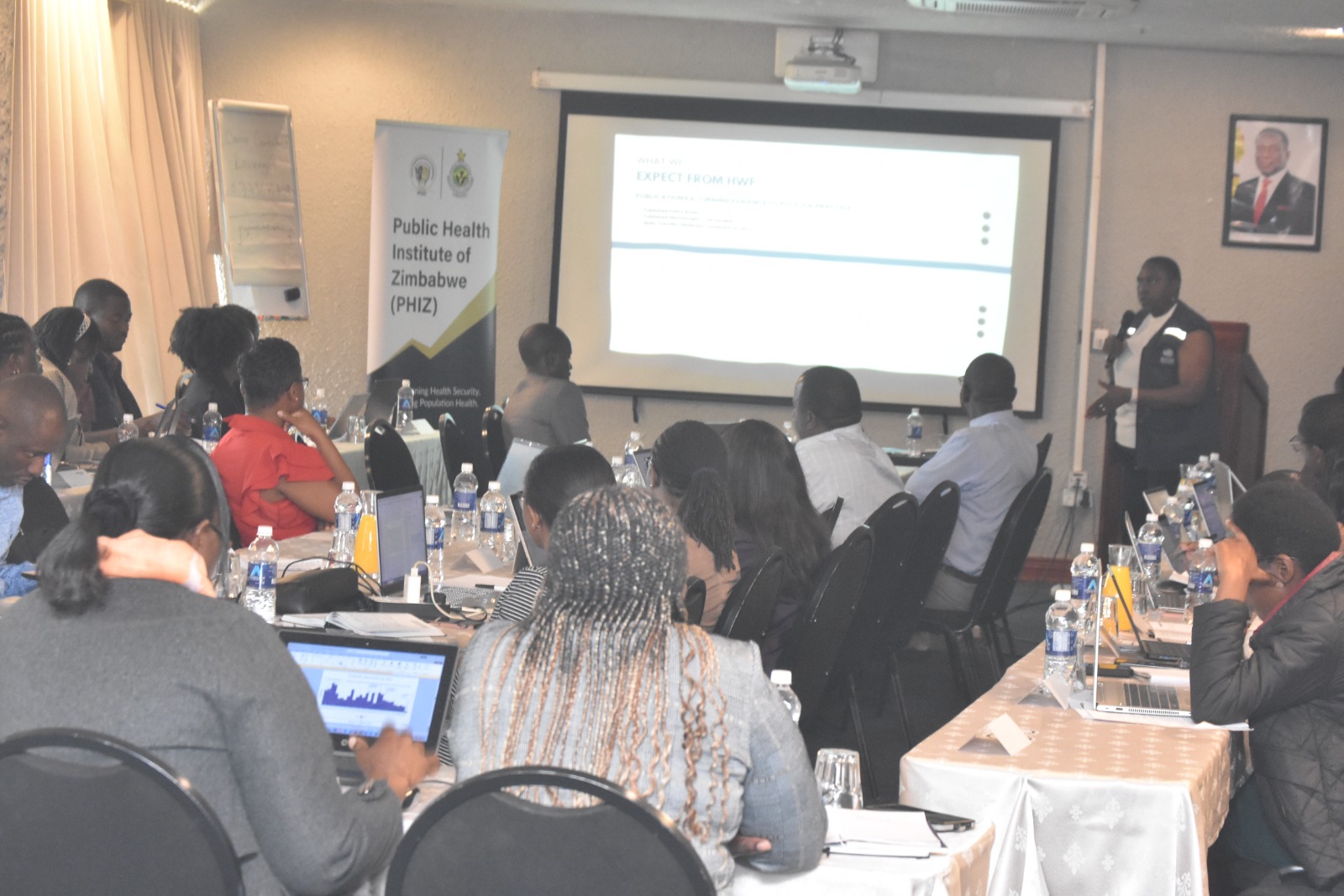
Over the four-year implementation period, several key milestones were achieved. These included the development of a second edition of the national operational guidelines for the 5S-Kaizen-TQM approach and the rollout of the system across all central and provincial hospitals.
More than 3 200 hospital staff were trained under the programme, while 522 quality improvement activities were recorded across participating institutions.
Dr Hove said the initiative helped create a safer and more organised working environment while improving service delivery.
“Okay, what happened was we had a baseline benchmark which we assessed to see what the level of quality now within our institutions was. But everybody or every institution was not implementing quality the way it is supposed to have been.
“People were doing it differently across the various provincial institutions, across the central hospitals. So now we have standardised everything so that there is uniformity in the way that we serve our patients. So it has helped us a lot.
“We have seen that our patients, they are quite satisfied now with the type of service that we are giving to them. The cleanliness now within the environment, within our hospitals, everything has improved because of this project,” he said.
Japan’s Ambassador to Zimbabwe, Maekewa Nobutaka, described the results of the programme as impressive.
“This is my first time to attend this meeting and it’s very, very impressive. And first, what all the Zimbabwean stakeholders and the ministries also achieved and also we are very much delighted and also express our gratitude that Zimbabwean side also, expressed a strong intention to continue what they experienced and studied through this project furthermore in the future.
“And so, to continue this improvement process and cycle is the most important thing for us, all of us, and that’s also our final goal of this project,” he said.
Chitungwiza Central Hospital emerged as the best performing institution in implementing the quality management approach.
Chief Medical Officer Dr Raphael Makota said the hospital initially recorded low ratings during baseline assessments but improved significantly through staff engagement and management support.
“So, I think the most important thing is that we made an effort that our staff members appreciated the 5S in the total quality management system. And that is actually something that they could implement and it would improve their workflows and also make them more efficient.
“Because when you are introducing a new concept, people are often likely to think of it as more work. So we had to make an effort to show people that actually implementing this quality management system is going to actually improve our workflows and improve our efficiency.
“And so once people actually accepted it and then it needed them to, they were now self-driven.
“And I think that really was a game changer. And we also made sure we support the activities from the managerial level. We would sponsor our teams to go, you know, Gweru Hospital was one of the hospitals that we started doing this and they are quite good at it.
“So we actually sent our teams to Gweru Hospital, all the HODs, so that they could actually learn and realise, you know, this is doable because other guys were doing it. And I think that was a huge morale booster. And whenever we have these competitions, we also motivate and reward the ones that would have done well.
“And yeah, I think that did well. I also had the opportunity to go to Japan for a month to train on high-facility 5S-Kaizen and total quality management system. So I think that also could have helped,” he said.
Dr Makota added that the system helped improve patient flow and reduce waiting times at the hospital.
“Yes, I think it has helped so much. Because remember, most of our, of the complaints about, you know, being at the Gweru Central Hospital, most of the complaints are really about waiting time. So using this principle and just, you know, increase supervision and from the managerial staff to our junior guys, that has really helped us.
“And it’s, we are above, we are doing better than the Ministry’s target, but we intend to keep on improving. There are a few other areas that still need to be tweaked. So that’s ongoing work, but we’re happy with where we are currently,” he said.