By Kuda Pembere
The Health and Child Care Ministry is upbeat that Zimbabwe’s neonatal mortality rate will drop to 20 deaths per 1,000 live births within the next two years.
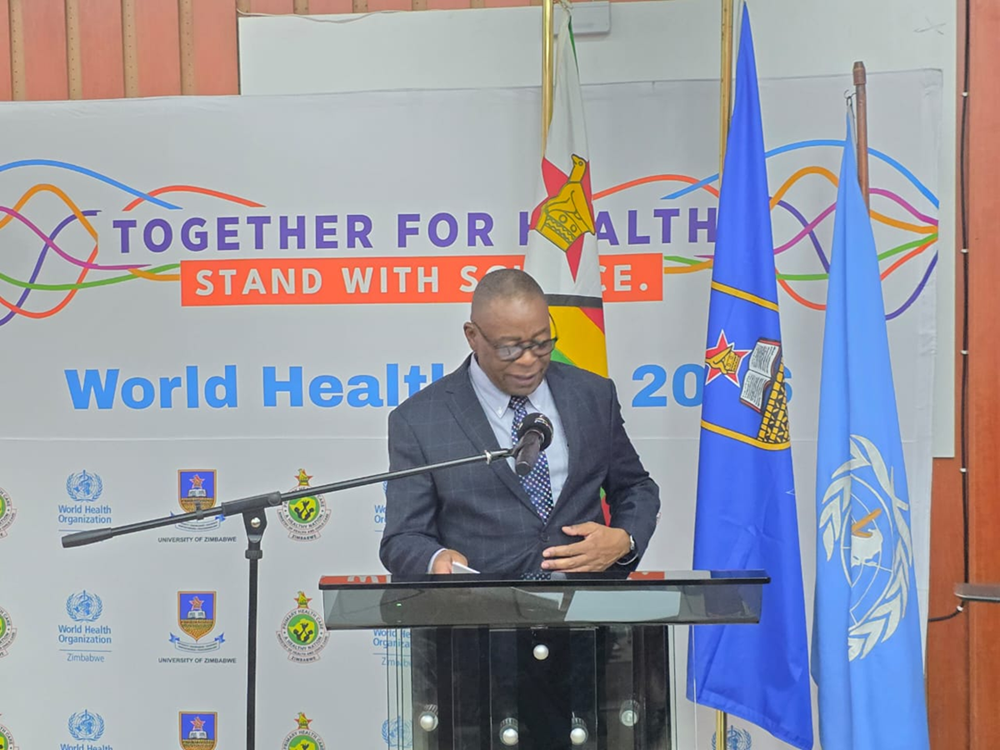
Currently at 37 deaths per 1,000 live births, the ministry’s Permanent Secretary, Dr Aspect Maunganidze, told HealthTimes on the sidelines of a Health Sector Working Group Meeting that strategies are already in place to achieve this target. Neo-natal mortality refers to the number of deaths during the first 28 completed days of life per 1000 live births.
He also noted that Zimbabwe has made progress in reducing maternal mortality, which according to the 2024 Zimbabwe Demographic and Health Survey (ZDHS) stands at 363 deaths per 100,000 live births.
“So you note that there are various highlights that we have achieved, and fortunately there are also a few areas that still have challenges. One of the highlights is that we have done very well in reducing maternal mortality. However, with that we expect that we also do well in neonatal or perinatal mortality,” Dr Maunganidze said. “These usually go hand in hand. We have noted an increase in perinatal mortality, and our Technical Working Group on Family Health has been grappling with all measures and factors that might have led to this, and we are glad to have that in place.”
He explained that the Technical Working Group on Family Health identified challenges contributing to the rise.
“We have looked at issues of equipment. We have looked at issues of human resources. We have looked at issues of the referral system. We have noted some gaps in those areas, and we are strengthening them to make sure that we reduce this perinatal mortality from 37, that it is, to at least 20 within the next two years,” he said.
Dr Maunganidze added that the ministry is prioritizing this goal.
“So this is a work in progress, but the highlights of achievements, I think when you look at the global picture, we seem to be doing quite well in the health sector, but we need to make sure that the gaps are taken care of. In particular, when we lose any child, any loss of a child is not desirable,” he said.
Najibullah Safi, coordinator of Strategic Health, Policy and Planning at the World Health Organization (WHO) Zimbabwe Country Office, commended the country’s progress but stressed the need to tackle neonatal mortality.
“Well, if you look at the result of the recent DHS demographic health survey, I think Zimbabwe is doing a great job in improving life expectancy and reducing the maternal mortality rate. But there are areas that were discussed previously by the Permanent Secretary as well, that neonatal mortality or perinatal mortality, and that needs additional work to reduce those mortalities across the country,” he said.
Mrs Vuyelwa Sidile-Chitimbire, Executive Director at the Zimbabwe Association of Church-Related Hospitals (ZACH), said mission hospitals are addressing the problem by setting up mothers’ waiting homes.
“So critical for Zimbabwe is to make sure that the mother and child’s life are well-protected and well-resourced so that we save lives. Currently, we have serious shortages of health workers, like midwives, who really should cater for the saving of lives. And also, we don’t have doctors in our rural areas who are specifically engaged to look at the health and gynecological issues which affect mothers and children.
“So, as the PS has alluded to, we find that most women, when they present, they present late. But because of the initiatives done by some of our hospitals, like Karanda, Nyadiri, and others in Chelanyemba and across the country, we find that we have what we call mothers’ waiting shelters, where we bring women in so that at least we can look at their own health before they actually deliver,” she said.
She added that these shelters also provide preventive care.
“So we make sure that there are nutrition elements which are addressed there. They also look at their own health as mothers in terms of their blood pressures and so forth, so that by the time they deliver babies, we know that the mother is also fit, and also that the child has had enough nutritional levels.