By Michael Gwarisa in Binga
For more than a decade, Mrs. Esteri Simwaka from Siansundu Village in Binga has been helping her 13-year-old daughter, Bwime, relieve herself in the backyard or nearby fields.
“It was easier when she was younger,” said a teary Mrs. Simwaka. “But now she’s grown and much heavier. I can’t lift her anymore. I place her in a bathing dish, drag her across uneven ground to the bush, lift her up so she can relieve herself, clean her, and then drag her back home. The sun burns, the ground is rough, and every day feels like a struggle.”

Bwime developed cerebral palsy as a baby, and her mother has cared for her ever since. For families like the Siamwakas, building a proper toilet is a luxury they simply cannot afford.
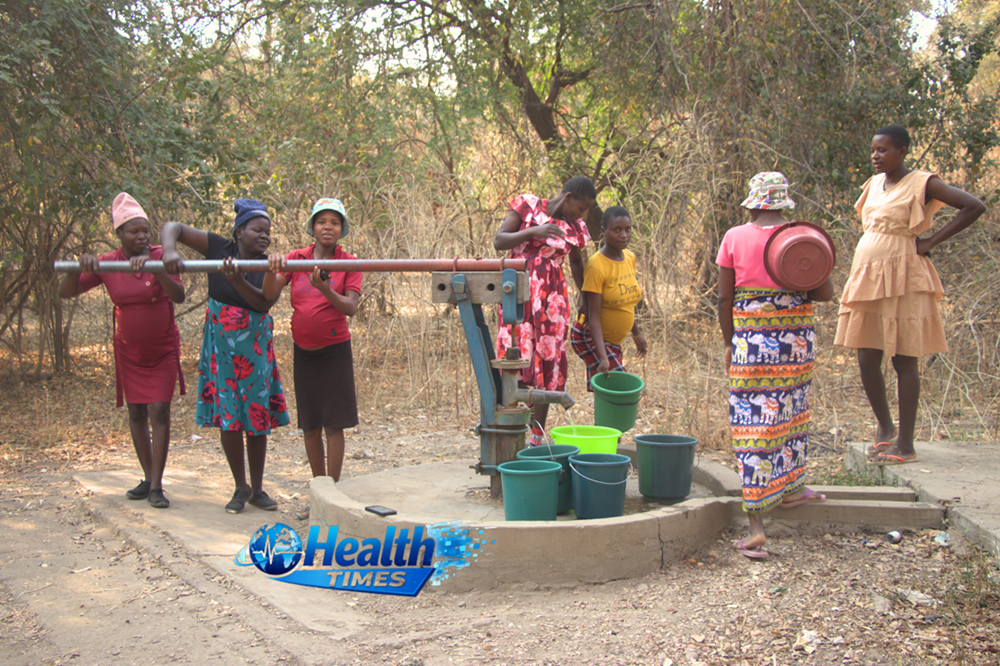
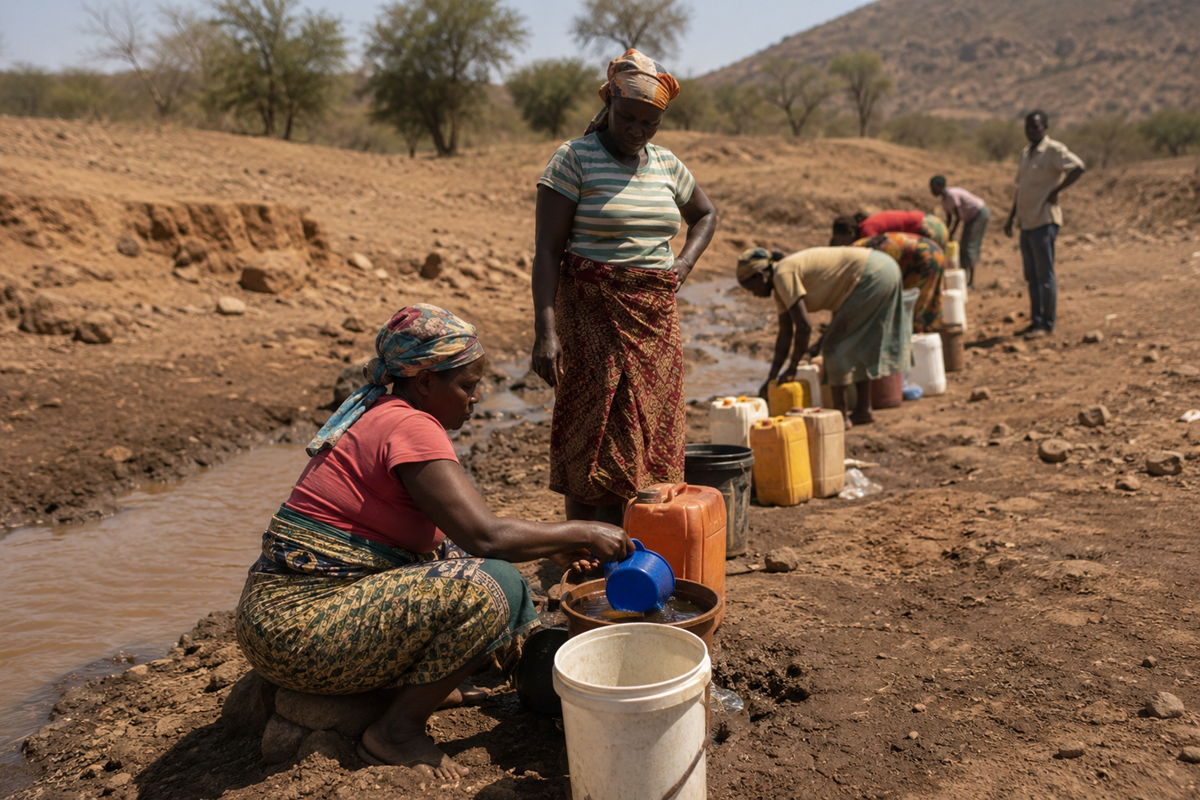
According to the 2025 Zimbabwe Livelihoods Assessment Committee (ZimLAC) Report, Binga records the highest proportion of households practicing open defecation in the country, at 80.1 percent, followed by Tsholotsho (56.5 percent), Kariba (50.8 percent), and Mwenezi (49.4 percent). The district also falls within a province that has one of the highest numbers of people living with disabilities. The report shows that Matabeleland North has 4.8 percent of households with at least one person living with a disability, second only to Masvingo at 7.2 percent.
In Matabeleland North, Binga to specific, some disabilities result from frequent human-wildlife conflicts.

One such case is that of 46-year-old Windaz Mleya, who lost both legs and his left arm following a crocodile attack three years ago.
I was fishing in the Mlibizi River when a herd of elephants charged toward me,” he recounted. “As I tried to swim away, crocodiles attacked me. That’s how I lost my limbs. The water was cold, the current strong, and I remember feeling completely helpless.”
Since then, Mleya has had to adjust to life as a person with a disability. He now moves around by dragging himself across the sandy ground, and his biggest challenge is accessing proper sanitation.
“We use the bush as a toilet,” he said. “But because of my condition, it’s very difficult. I can’t dig a hole or move far, so I just relieve myself behind my room. It’s dangerous, especially at night, and I often fear snakes or scorpions.”
Just a few kilometers away, 98-year-old Gogo Mwembe Nyoni from Saba Village faces a similar struggle. After a road accident that dislocated her hip six years ago, she became permanently disabled and now relies entirely on her daughter-in-law, Rute Mpande, for care.
“I’ve been taking care of her since her accident,” said Mpande. “She can’t walk to the bush anymore. It’s too far, and the terrain is uneven. She’s too weak. Sometimes she cries because she feels embarrassed, and I feel helpless.”
For these families, life has taken a positive turn thanks to the Zimbabwe Red Cross Society (ZRCS), working in partnership with the Finnish and Danish Red Cross under the Climate Smart Resilience (CSR) Project, implemented in Binga since 2022.
Through the Latrine Construction for People with Disabilities initiative, the Red Cross has built 50 improved, accessible toilets for people with disabilities, restoring dignity and improving hygiene for entire households.
Christopher Munsaka, a Zimbabwe Red Cross Society volunteer, said they worked closely with local leaders to identify households in greatest need.
“We focused on people with mobility challenges, whether due to old age or disability,” he explained. “Most people here use the bush as toilets, but for those who can’t walk or squat easily, it’s a daily struggle. These new toilets have ramps, sturdy rails, and enough space for wheelchairs. They are safe, hygienic, and easy to clean. Every day now is easier for the families.”
Beyond households, the project has extended to schools and health facilities, ensuring inclusivity at every level. Beneficiary institutions include Mankobole Primary School, Saba Secondary School, and Chalumba Primary School, among others.

Mr. Henry Sianchali, Deputy Head of Mankobole Primary School under Chief Saba, said the new facilities have transformed access for learners with disabilities.
“We’re grateful to the Red Cross for these inclusive toilets,” he said. “Before, it was almost impossible for a child with a disability to use our old toilets because the doors were narrow, there were no rails, and no ramps. Now, the new design has enough space inside, rails for support, and a ramp for wheelchair access. The children can use it safely without fear of falling or getting hurt.”
He added that the school had also struggled to attract children with disabilities.
“We hope this will change things,” he said. “These toilets show that every child is welcome here. It’s about dignity, safety, and equality.”
Before launching the project, the Red Cross conducted a comprehensive assessment to understand the scale of the problem. The findings showed that most schools, health institutions, and households lacked disability-friendly sanitation infrastructure.
Mrs. Sphiwe Sibanda, District Field Officer for the Climate Smart Resilience Project, said the assessment guided their intervention.
“We engaged people with disabilities to understand their daily challenges,” said Sibanda. “One of the main issues raised was poor sanitation. Many either have no toilets or the ones they have are inaccessible. When we assessed 12 schools and one health institution across our wards, only one school had a disability-friendly toilet, and the health facility serving four wards had none.”
In 2024, the project constructed two toilets at Siansundu Clinic and two more at nearby schools.
“This year, we’re expanding to five institutions, three primary schools and two secondary schools,” Sibanda added. “These schools previously lacked inclusive infrastructure even though they have learners with disabilities. Now, children and teachers can move safely, and the toilets are ventilated and easy to maintain, which is a huge relief.”
According to the Red Cross, the project has also indirectly benefited entire households, not just individuals with disabilities.
“Families with elderly or injured members also find the toilets useful,” Sibanda said. “They’re safer, more hygienic, and easier to use for everyone. It’s a small change, but it transforms daily life.”
An estimated 284 people are indirectly benefiting from the disability-friendly toilets built so far under the Climate Smart Resilience Project.
For people like Mrs. Simwaka, Mleya, and Gogo Nyoni, these new facilities represent far more than just improved sanitation; they symbolize dignity, inclusion, and hope.