By Kuda Pembere
Zimbabwe will next week undergo a critical World Health Organization (WHO) review of its medicines regulatory system, a process expected to determine its readiness for the highest global standard.
The assessment, running from April 27 to May 1, will evaluate how effectively the Medicines Control Authority of Zimbabwe (MCAZ) ensures that medicines and medical products on the market are safe, effective and of good quality.
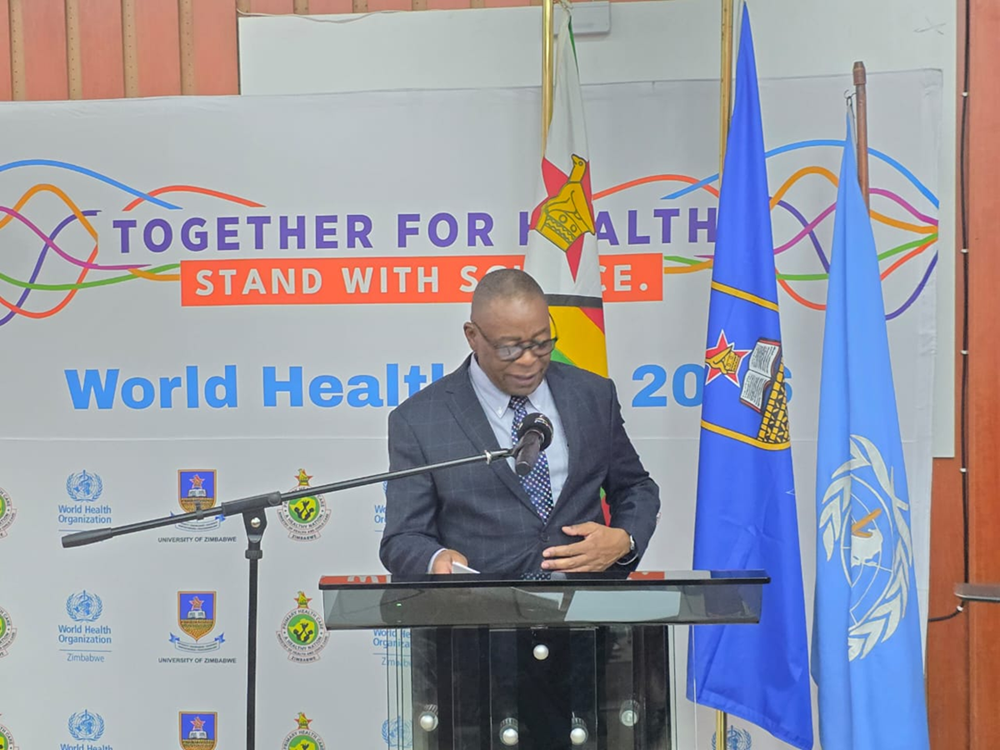
Addressing journalists on Friday, MCAZ Director-General Richard Rukwata said the mission marks a key step in Zimbabwe’s push to align with global standards.
“This is not merely an assessment exercise. It is a strategic partnership aimed at continuous improvement and ultimately better health outcomes for Zimbabweans,” he said.
Rukwata explained that the WHO Global Benchmarking Tool measures the performance of national medicines regulatory authorities across four maturity levels.
“The tool starts at Maturity Level 1, which focuses on the legal foundation. Level 2 looks at basic regulatory processes. Level 3 assesses more advanced systems, while Level 4 evaluates broader, outward-facing systems where transparency becomes critical.
“When a country meets all indicators and sub-indicators, it is classified as having reached Maturity Level 4,” he said.
He said the assessment comes at a time when regulators are grappling with serious challenges in the medicines market.
“We are dealing with a number of issues in our regulatory environment. There are individuals advertising medicines online and claiming to cure diseases such as cancer. Others are selling antibiotics and sexual performance enhancers on the streets.
“These practices are dangerous and harmful to public health. Addressing them requires a coordinated effort from all stakeholders. As a regulator, we are leading many of these interventions, but it is ultimately about strengthening the entire system, improving communication and adopting a whole-of-government approach,” he said.
Zimbabwe is seeking to move from Maturity Level 3, which it has already attained, to Level 4, the highest ranking under WHO standards. This level reflects a regulatory system that is stable, well-functioning and continuously improving.
Rukwata said Zimbabwe’s progression to Level 3 was a significant milestone, achieved without external funding.
“Zimbabwe was the sixth country in Africa to reach Maturity Level 3. However, if we focus specifically on medicines regulation, we were the fourth, after Tanzania in 2018, Ghana in 2020 and Nigeria in 2022. We achieved this milestone in 2024.
“What makes our case unique is that we did it without donor support. Our operations are largely funded through user fees, yet about 60 percent of regulatory activities are not directly funded.
“These include inspections, post-market surveillance and medicine safety monitoring. This means we have had to be highly efficient and prudent in how we use our resources,” he said.
He said the decision to pursue Level 4 reflects the authority’s commitment to continuous improvement.
“After reaching Maturity Level 3, we asked ourselves why we should stop there. We decided to continue strengthening our systems and push towards Level 4.
“Re-benchmarking is normally conducted every three years. We requested WHO to assess us for Level 4 in July 2025. Although there were initial concerns about resources, we agreed that both the Level 4 assessment and the re-benchmarking of our Level 3 status could be conducted this year.
“As far as our self-assessment is concerned, we are ready. The mission next week will therefore cover both processes,” he said.
If successful, Zimbabwe could become the first country in Africa to attain Maturity Level 4 status.
For citizens, the outcome goes beyond rankings. A stronger regulatory system translates into tighter control over medicine quality, faster access to essential treatments and greater confidence in the healthcare system.
Rukwata said the WHO review will assess the country’s regulatory framework, identify gaps and guide future reforms.
He linked the process to broader government priorities under the National Development Strategy 2 and Vision 2030, which emphasise stronger health systems and improved access to affordable medicines.
“A strong medicines regulator is at the heart of any effective health system. Without it, we cannot guarantee the safety and quality of healthcare products,” he said.
MCAZ, established under the Medicines and Allied Substances Control Act, is mandated to protect public health by ensuring that medicines and medical devices meet required standards before reaching patients.
Over the years, the authority has strengthened its systems, including pharmacovigilance and laboratory testing, while also participating in regional initiatives aimed at accelerating access to medicines across Southern Africa.
Rukwata called on stakeholders, including government agencies, healthcare workers and the media, to support the process.
“This mission represents a defining moment for Zimbabwe’s health regulatory system. It reflects how far we have come and provides an opportunity to achieve even more,” he said.