By Michael Gwarisa
Efforts to curb cholera outbreaks across Africa are facing severe challenges, with Sudan’s ongoing civil war exacerbating an already dire situation. According to the Africa Centres for Disease Control and Prevention (Africa CDC), the continent remains the epicenter of the global cholera burden, with Sudan standing out due to the devastating impact of conflict on public health infrastructure.
As of July 10, 2025, Africa has recorded 182,506 cholera cases and 3,697 deaths across 21 member states, according to official data released during Africa CDC’s weekly media briefing. These countries include Angola, Burundi, Comoros, DRC, Ethiopia, Ghana, Côte d’Ivoire, Kenya, Malawi, Mozambique, Namibia, Nigeria, Rwanda, Somalia, South Sudan, Sudan, Tanzania, Togo, Uganda, Zambia, and Zimbabwe. Africa accounts for 82% of global cholera cases and 93.5% of all deaths reported in 2025 so far.
Speaking during the media briefing, Professor Yap Boum II, Africa CDC Incident Manager, said that while there has been a general decline in cholera cases continent-wide, Sudan remains a critical hotspot due to the war.
In Sudan, we have seen a decline in reported cases, from 809 to 603 in the last week—a 25 percent reduction. But the outbreak remains highly volatile due to access issues, overcrowding in displaced persons camps, and the collapse of water infrastructure,” Prof Boum said.
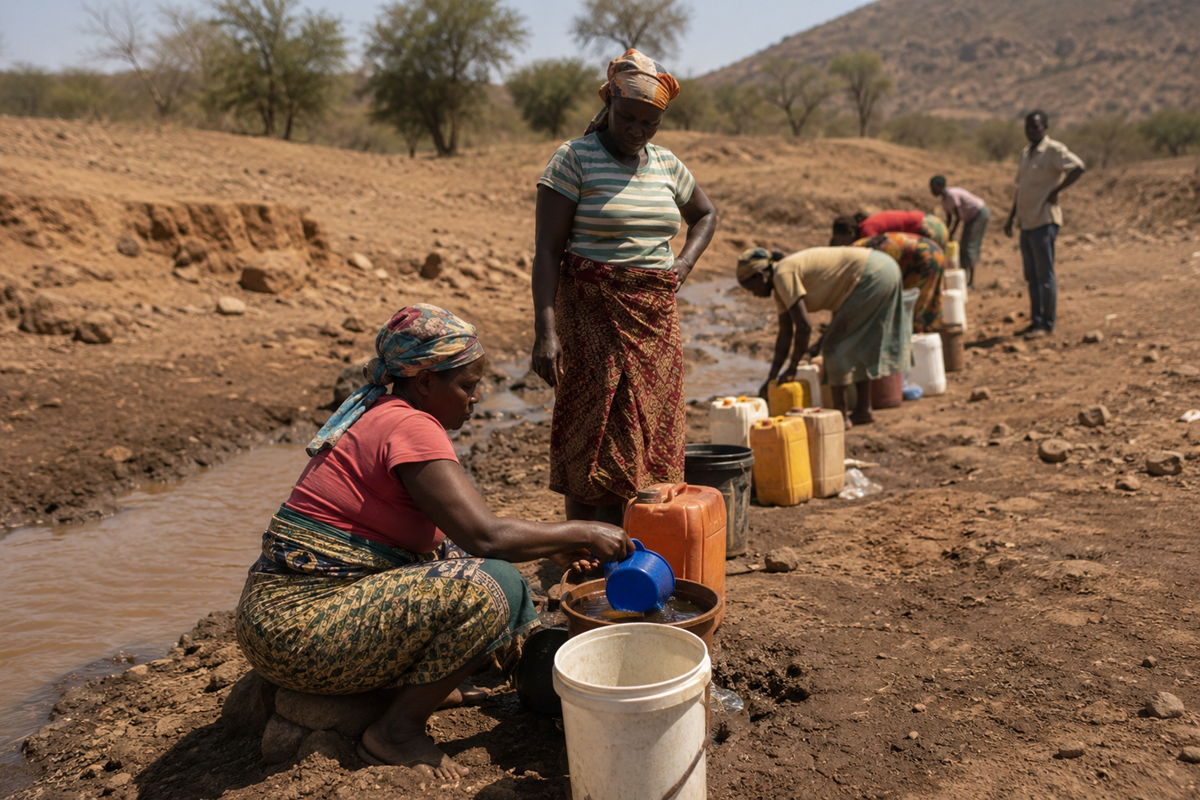
According to the Africa CDC, Sudan has recorded 33,373 cases and 744 deaths in 2025, with a case fatality rate (CFR) of 2.2%. Oral Cholera Vaccine (OCV) coverage remains extremely low at 6.7%, and the most affected areas are Khartoum and White Nile, where 90% of water plants are non-functional. In Darfur, overcrowded IDP camps, insufficient sanitation, and no funding for water chlorination have left thousands vulnerable to the disease. “Health needs peace to happen,” Prof Boum stressed, pointing to targeted attacks on water and power infrastructure that have crippled service delivery.
The situation in Sudan is further compounded by an overall lack of funding, which hampers effective response efforts.
The cholera crisis extends beyond Sudan. In the Democratic Republic of Congo (DRC), the burden continues to escalate, with 34,190 cases and 802 deaths reported so far in 2025, reflecting a CFR of 2.3%. The majority of these cases are concentrated in Tshopo, Sud-Kivu, Kinshasa, Maniema, and Tanganyika. Children account for 40% of all cases, and outbreaks have been fueled by flooding, cross-border transmission, collapsing urban water systems, and severely limited vaccine coverage.
“Integration of health interventions is key,” said Prof Boum. “In Kinshasa, we observed an integrated treatment center where cholera and Mpox are managed together. Community health workers in hard-hit zones like Kokolo are trained to simultaneously identify cholera, Mpox, and measles. This integrated approach helps in resource optimization and timely responses.”
Angola, while still affected, has shown signs of improvement. The country has reported 27,008 cases and 759 deaths (CFR 2.8%), with a 4-week decline in both cases and fatalities. The second phase of OCV administration reached 706,091 people, achieving 99.6% coverage, and the government has requested an additional two million vaccine doses from the International Coordinating Group (ICG). The highest burdens have been recorded in Benguela, Namibe, Luanda, and Cuanza, areas that continue to face challenges such as open defecation, contaminated drinking water sources, and overcrowding in urban areas.
Africa CDC has reiterated its concern that despite recent progress in countries like Angola and temporary declines in Sudan, other regions like the DRC are seeing dangerous upward trends. The agency is finalizing a continental cholera response plan that will enhance coordination, integrate interventions, and mobilize resources across member states.
Prof Boum concluded with a call to action. “Cholera is not just a health issue. It is a development issue. It is a governance issue. And it is a peace issue. Until we address the structural vulnerabilities, we will continue to fight this same battle every year.”