By Michael Gwarisa
Women in artisanal mining have called for their voices to be included in Zimbabwe’s new Mines and Minerals Act, currently at the bill stage, arguing that the legislation must reflect the lived realities of women miners who remain sidelined in the sector.
Speaking at the Women in Mining Conference in Harare, held under the theme “Empowering Women in Artisanal Mining: Advancing Gender Equity, Economic Justice, and Environmental Sustainability,” women miners said exclusion from decision-making structures has left them vulnerable to exploitation and inequality.
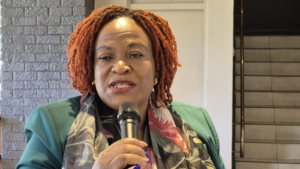
WCoZ National Coordinating Committee Chairperson Muchanyara Cynthia Mukamuri said the new law must deliberately address gender equity if Zimbabwe is to build an inclusive and sustainable mining industry.
Women artisanal miners work under very difficult conditions, without basic facilities, with middlemen exploiting them, and in spaces where they are mocked for doing what society still views as men’s work. Yet when decisions are made, our voices are ignored. The new Mines and Minerals Act must not repeat these injustices,” she said.
The conference brought together delegates from the Ministry of Mines, Mines and Minerals Development Portfolio Committee, women artisanal miners, civil society organisations, and women’s coalitions.
Mukamuri further stressed that women, who make up 53% of Zimbabwe’s population, should be adequately represented in mining governance, including leadership and policy spaces. She said women who own mining claims were breaking barriers in the male-dominated sector and must be supported and celebrated.
“What men can do, women can do even better. This bill is a chance to transform mining into a space of dignity, equity, and opportunity for all,” she said.
Organisers described the gathering as a call to action, urging lawmakers to ensure that gender justice is not an afterthought but a guiding principle in the pending legislation.
Sandra Mudzengere, Gender Mainstreaming, Inclusivity and Wellness Director in the Ministry of Mines and Mining Development , said, “Addressing gender inequality in the mining and minerals sector will serve as a guide in closing the extreme disparity gap in the mining sector.” She noted that only approximately 10% of workers in Zimbabwe’s mining sector are women.
Zimbabwe is a signatory to key international legal instruments emphasizing women’s inclusion and access to equal opportunities. These include the Convention on the Elimination of All Forms of Discrimination Against Women (1979), UN Security Council Resolution 25 on Women in Peace and Security, the Maputo Protocol, the Protocol on the African Charter of African Women and People’s Rights in Africa, and the SADC Protocol on Gender and Development.
Hazel Chimbiro, a legal officer with the Zimbabwe Environmental Law Organisation (ZELA), emphasised the importance of aligning mining laws with the Constitution during her presentation on the Impact Assessment of Zimbabwe’s Mining Laws and Policies on Gender and Human Empowerment.
“I think it’s very important to acknowledge women with power if this conversation is to be meaningful. The Constitution strongly promotes women’s empowerment, gender equality, and opportunities in all spheres, including mining,” she said.
She highlighted equality and non-discrimination as constitutional pillars but questioned women’s effective participation in key mining processes.
“To what extent are women participating in the Environmental Impact Assessment (EIA) processes? Are gender impact assessments integrated into mining laws and policies?” Chimbiro asked.
Margaret Chogugudza from the Rural Young Women Support Network said, “Women in artisanal mining face numerous challenges, many of which stem from cultural and societal beliefs that are harmful and counterproductive. For example, some male artisanal miners discourage women from working during their menstrual periods, claiming it brings bad luck or makes gold disappear.”
Beyond these stereotypes, she added that women also struggle with limited access to resources, exposure to health and safety risks, gender-based violence, cultural barriers, and the burden of traditional gender roles, all of which worsen their vulnerability to both environmental and health hazards.
Meanwhile, Parliament has urged women to actively participate in forthcoming Public Hearings regarding the Mines and Minerals Bill, expected soon.
Joseph Vhitande, Committee Clerk with the Parliamentary Portfolio Committee on Mines and Minerals Development, said, “Parliament aims to ensure the law guarantees equal terms for all per the Constitution. The new bill must address these issues so no one is left behind, reflecting our President’s mantra. Despite progress, challenges remain.”
During the Ministry of Mines and Mining Development’s 2024 fourth quarter submission, the Auditor General noted the Ministry lacks a gender policy, highlighting ongoing problems.