By Kudakwashe Pembere
Working in the diaspora is many a Zimbabwean’s dream, drawn by the promise of better salaries. When an opportunity for English teachers to work in the Orient arose, Rachael Musekiwa grabbed it and off she went. Months later, she returned home battling Stage Five kidney failure and facing a US $21 000 transplant bill.
While working in China, she was diagnosed with kidney failure in May 2024. Having worked for seven years, she was not yet on medical insurance and the costs were overwhelming.
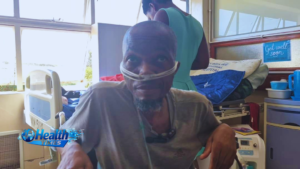
“I was not on medical insurance in China and the bills were high for me. I was paying over US $100 per session and this was too much for me,” she told HealthTimes after a Health Ministry organized press tour of the B6 Ward, which houses 22 new dialysis machines at Parirenyatwa Group of Hospitals.
The high medical fees abroad drained her mentally and financially, forcing her to return home.
In June 2024, she presented at Parirenyatwa when her health had already worsened. At the time, dialysis services were running from the cramped B10 ward under strained conditions.
“I started dialysis in June 2024, here at Parirenyatwa. Back then it was difficult for me because I had no idea what kidney failure was,” she said.
“I started learning about it, consulting doctors. Then I got seriously ill but the nurses here helped me a lot. Before B6, we were at B10 and the situation was undesirable and unbearable. The machines were at times dysfunctional. We would fight amongst ourselves as patients just to get a slot. The queues were very long.”
Her early weeks marked the harsh reality of Zimbabwe’s overstretched renal care, where demand far exceeded resources.
Understanding Kidney Failure
Now a Stage Five chronic kidney failure patient, Rachael urges others to prioritise regular checkups. She explained that doctors assess toxin levels in the body, which failing kidneys can no longer eliminate, before recommending dialysis.
“When you have kidney failure, you see your doctors for a diagnosis. After a diagnosis, they will see how much toxins you have in your system because the kidney won’t be able to flush that out,” she said.
“When you are in stage five, they recommend dialysis. This machine works like an artificial kidney.”
She stressed that early symptoms can be vague and misleading.
“There is no definitive symptom for kidney failure. You might go for years complaining about headaches or swelling or nausea. You may go to a pharmacy and get something over the counter not knowing you are worsening your situation. People should always go for checkups even if they don’t feel anything.”
On herbal remedies, she warned against their use.
“I didn’t use herbs and I wouldn’t encourage anyone to use them because when it comes to the kidney, it filters all the toxins and if you put something like that in your body, chances are it will injure the kidney. Rather stop using the herbs,” she said.
New Machines, Renewed Hope
Since October 2025, following the installation of new dialysis machines, conditions in the B6 ward have improved significantly.
“But now that we have the new machines, it has been really good for us. We no longer have those fights amongst ourselves and with the nurses,” she said.
Rachael said returning to Zimbabwe, despite concerns about the health system’s capacity, was necessary due to high costs abroad and the need for family support.
“I had to come back to Zimbabwe because of the high medical costs I would incur where I was in China. Secondly, there is this issue of proximity to family. It is bearable fighting this battle with family close by,” she said.
Unlike many in the diaspora focused on earning, she said having family near makes the struggle more manageable.
The Cost of a Kidney Transplant
Zimbabwe currently does not offer kidney transplant services, largely due to a lack of capacitated health workers and infrastructure. This means patients seeking transplants must travel abroad for the procedure.
“At the moment Zimbabwe is not doing kidney transplant but I hear there are plans to have them done in country. In India, the quotation I got was that it would fetch around US $21 000 for the procedure and accommodation. This does not include the airfare and one has to travel with a (kidney) donor and a caregiver,” she said.
Rachel has since set up a fundraising appeal and is appealing to well-wishers to support her through Ecocash (0783249796) and Go-Fund-Me.
Other Patients Welcome Free Dialysis Programme
Rachel is not the only one benefitting from the free dialysis programme. Tapiwa Bare, who began treatment in 2022, expressed gratitude for not having to queue early in the morning for life-saving care. He now does two sessions a week at convenient times.
Tazvibva Matope from Dzivarasekwa Extension commenced dialysis treatment in 2024 after seeing his body swell the previous year. He commended the Government for expanding the free dialysis programme.
“This initiative of free dialysis sessions is helping us in a big way. Going to a private hospital is expensive for us. They charge about US $120 for each session. All we need is transport fare,” he said.
While some patients struggle to afford transport to attend dialysis sessions, many also express the need for meals, as the five-hour dialysis treatment can be physically demanding. Unfortunately, some patients are forced to miss or discontinue their sessions due to lack of transport fare.
Expanding Capacity at Parirenyatwa
Emilda Machipisa, Matron for Critical Care Areas and Senior Nursing Officer at Parirenyatwa, said the hospital previously had only five working dialysis machines, which were insufficient to meet demand. Following the opening of the new, spacious renal unit, the hospital now has 18 working machines and two on standby.
“Then we also have a CRRT machine, that is the Continuous Renal Replacement Therapy, which we use for intensive care patients who require more dialysis,” she said.
Before the new machines were installed, the hospital admitted about 80 patients each week.
“But at times we have patients from the wards, those patients with acute kidney injury, so we also catered for them for the dialysis,” Machipisa said, adding that capacity has since increased.
“But as of now in total we have got 96 chronic kidney patients, and about 20 acute kidney injury patients, that is the patients who are admitted in the ward, and they will be coming in for slots for dialysis.”
Call to Resume Kidney Transplants
Director of Clinical Services at Parirenyatwa, Dr Tonderayi Magwiro, acknowledged that while chronic dialysis is expensive, it is time for the country to resume kidney transplantation.
“Running a dialysis unit is expensive, so there must be an outlet for those patients, which is renal transplantation. We are taking it seriously as a hospital. That’s one of the focuses that the Ministry of Health has now, to say for those patients who are on chronic dialysis, what is the outlet for them?” he said.
“An outlet for such patients is renal transplantation. So we are agitating for renal transplantation for patients. We have the experts, we need to be capacitated, and then we escalate renal care for our patients beyond dialysis.”
Machipisa explained why dialysis machines remain vital.
“So at least we need the machine to cater for that, so that at least the patient can continue with the activities of daily living,” she said.
She noted a rise in chronic kidney failure cases linked to diabetes, hypertension and increasing reliance on herbal medicines.
“The main cause of chronic kidney failure usually comes in as a complication of diseases like diabetes mellitus and hypertension, and these days we have got a higher incidence of the use of herbal medicines, which also can trigger that, and some infections can also trigger chronic kidney disease,” she said. “So we urge those patients with chronic diseases like hypertension to adhere to their medication so that they won’t be in the complication of chronic kidney disease.”
Rising Burden of Kidney Disease
According to the 2023 International Society of Nephrology (ISN) Global Kidney Health Atlas, Zimbabwe’s prevalence of chronic kidney disease is 4.9 percent, with an estimated annual cost of in-centre haemodialysis of about US $32 331.2 per patient. The ISN also confirms that kidney transplant services are not currently available in the country, placing additional strain on patients and the health system.
As Government expands free dialysis services at Parirenyatwa, health experts are calling for the resumption of kidney transplantation to reduce long-term costs and improve survival outcomes.
Speaking at a Rotary Club of Bulawayo webinar last year, specialist nephrologist and former Health and Child Care Minister Dr Obadiah Moyo said the number of chronic kidney disease cases is too high and continues to put significant pressure on the country’s limited dialysis centres.
He noted that several studies show haemodialysis is more expensive than peritoneal dialysis, with annual costs estimated at around US $37 000 for haemodialysis compared to **US $27 000 for peritoneal dialysis. Kidney transplantation, at approximately US $11 000 per year, is the most cost-effective option.