Michael Gwarisa in Manicaland
Despite the scorching heat, 58-year-old Fibion Nyatsanza (Not his real name), from Saumani village in the Honde Valley is determined to find out what has been keeping him awake at night for the past three weeks.
Shortly after midday, he walks through the gates of Hauna District Hospital, clad in a blue shirt and charcoal trousers. His shirt hangs loose, sweat dripping down his face as he pauses to catch his breath.
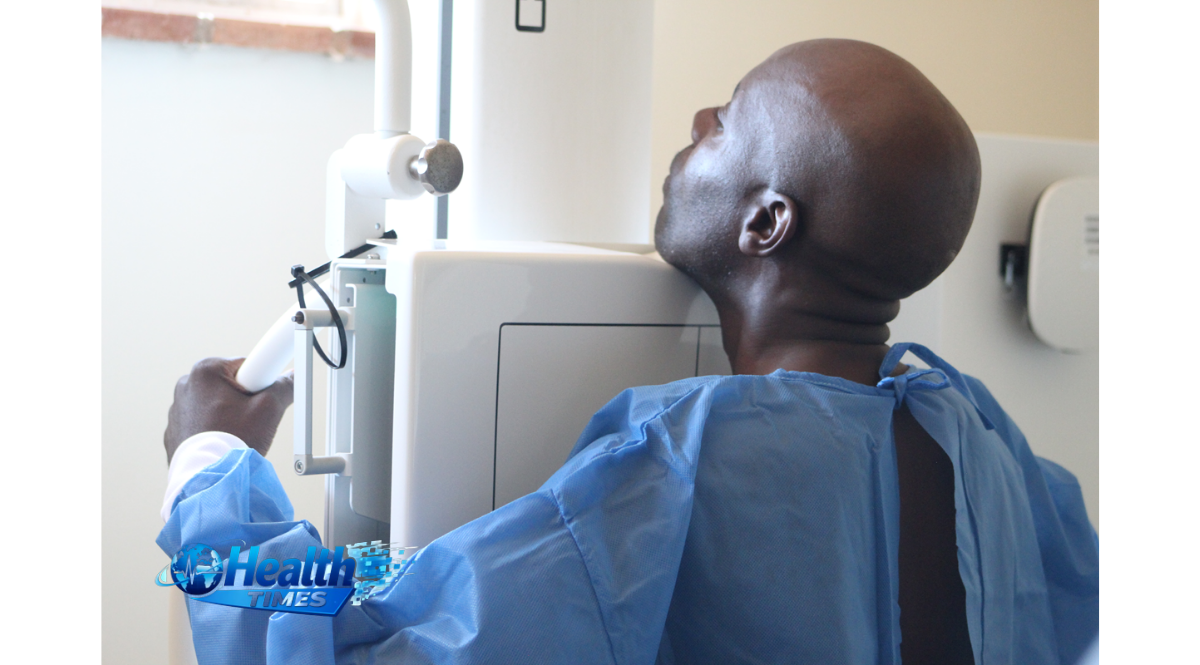
“I have been experiencing difficulty breathing, and sometimes I sweat at night. This has been worrying me and I want to understand what could be causing it,” he says, as a nurse quickly refers him for an X-ray scan.
Minutes later, he emerges from the imaging room with visible relief. The scan and results have taken just three minutes.
“I am glad I came for this scan. I now have my results and I am relieved,” he says, clutching his report.
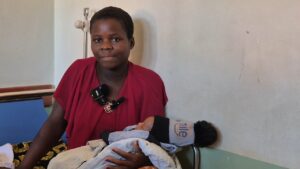
As he leaves, another patient walks in, a baby strapped to her back, also seeking X-ray services.
Gogo Chido Samanga, 62, who is living with HIV, says she recently underwent tuberculosis screening after falling ill and fearing the worst.
“I got an X-ray after I became unwell. I was not sure what I was feeling, but I know that people living with HIV like myself are at higher risk of TB. I decided to get screened, and I am relieved that the results showed I do not have TB,” she says.
Stories like these are becoming increasingly common at Hauna District Hospital, where access to modern diagnostic services is reshaping how diseases are detected and managed.
Bernard Kwaramba, an X-ray operator at the hospital, says the shift from analogue to digital technology has drastically reduced turnaround times.
“Previously, we used analogue systems. They were slow and difficult to use. It would take between 15 and 25 minutes to produce results. Now, with digital X-ray machines, it takes about three minutes,” he says.
The improvement has also increased the number of patients screened each day.
“We used to screen between five and 10 patients a day. Now we can attend to more than 20. The machine is accurate and allows us to detect conditions such as TB quickly, with results available immediately,” he adds.
Tendai Serere, the hospital matron, says the introduction of digital X-ray machines has significantly strengthened diagnostic capacity.
“The availability of X-ray services has greatly improved our ability to diagnose patients on time. Previously, patients had to travel long distances to access these services, which often delayed treatment. Now we are able to screen and make decisions much faster,” she says.
The X-ray machines were procured by the Government of Zimbabwe and installed in more than 30 health facilities across the country. To further enhance diagnostic capacity, the Global Fund supported the upgrade of digital X-ray services through its COVID-19 Response Mechanism programme.
Under this initiative, 31 X-ray units have been constructed and equipped nationwide, supported by infrastructure upgrades including radiation shielding, electrical systems and ventilation improvements.
These investments are improving early detection of diseases such as tuberculosis, pneumonia and COVID-19, strengthening clinical decision-making and patient outcomes.
Since 2020, Zimbabwe has received over US$180 million under the programme to support pandemic response efforts and broader health systems strengthening. Approximately US$51 million was managed by UNDP, mainly for infrastructure development, while the Ministry of Health and Child Care implemented the remaining funds.
The machines are now distributed across district hospitals, mission hospitals, provincial centres and institutional facilities, helping to decentralise diagnostic services and bring care closer to communities.
At St Peter’s Checheche Mission Hospital in Chipinge South, the impact is already visible.
Dr Steven Mbiri, the Medical Superintendent, says the facility has screened more than 200 TB cases since the installation of the digital X-ray machine.
“This hospital also serves patients from Mozambique and surrounding districts. The digital X-ray machine has significantly improved our TB diagnostics. We are now able to detect more cases and respond more effectively,” he says.
He adds that the facility is now identifying an average of three TB cases per day, a marked improvement from the past when diagnosis relied heavily on clinical judgement and outdated analogue equipment.
“At that time, it was difficult to detect cases accurately. Now, with digital imaging, we are picking up more cases and starting patients on treatment much earlier,” he says.
Dr Ayodele Odusola, UNDP Zimbabwe Resident Representative, says the investment reflects the strength of partnerships driving health sector transformation.
“This is a clear example of how partnership between the Government of Zimbabwe, the Global Fund and UNDP is strengthening the health system. It is not just about infrastructure, but about building a more resilient and equitable system that translates global financing into real impact at community level,” he says.
In Manicaland province, the benefits extend beyond speed and access to cost efficiency.
Dr Cephas Fonte, the Acting Provincial Medical Director, says digital X-ray technology has significantly reduced operational costs for health facilities.
“It has really cut costs associated with film development, which used to be a major challenge. At times, facilities simply did not have the resources to purchase film,” he says.
“With digital systems, images are processed and shared instantly without the need for printing. This allows clinicians to review results immediately and make timely decisions.”
He adds that integration with GeneXpert machines has further strengthened TB diagnosis, particularly in detecting drug-resistant strains.
“With improved diagnostics, we are now able to determine whether a patient has drug-resistant or drug-sensitive TB and start the correct treatment without delay. TB services, including diagnostics, are provided free of charge, and this technology ensures patients receive the care they need more efficiently,” he says.
Across Zimbabwe, what once took hours or even days can now take minutes. For patients like Nyatsanza, those minutes can mean the difference between uncertainty and clarity, and between delayed care and timely treatment.