THE World Bank (WB) has handed over a consignment of Intensive Care Unit (ICU) equipment to the Ministry of Health and Child Care (MoHCC) to enhance the healthcare sector’s emergency response capacity.
By Michael Gwarisa
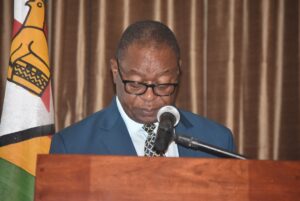
Speaking on behalf of the World Bank Zimbabwe Country Manager, World Bank Health Specialist , Chenjerai Sisimayi said, “I am very pleased to be joining you today on this important occasion as we handover COVID-19 critical care equipment to the Ministry of Health and Child Care as part of support from the Health Sector Development Support Project (HSDSP). This project is being funded by a US$25 million World Bank additional financing grant from the Global Financing Facility to the Government of Zimbabwe.”
As part of a US$5 million component of the grant allocated to complement the national COVID-19 response efforts, the project has procured, amongst other key equipment and materials, Intensive Care Unit (ICU) kits comprised of beds, ventilators, multi-parameter monitors, syringe and infusion pumps. Procurement of additional equipment to support the emergency response is also underway.
The World Bank is proud to have partnered with the Government over the past 10 years and collaborated with other development partners to respond to the health needs of women and children in Zimbabwe. Since its inception in 2011, the project has focused on accelerating access to quality maternal and child health services through a results-based financing mechanism.
“The initial grant and four successive additional financings were supported by the Health Results Innovation Trust Fund (HRITF) with counterpart financing from the Government of Zimbabwe for a combined total of US$71.2m from 2011 to 2020,” said Sisimayi.
Meanwhile, the World Bank’s support towards Zimbabwe’s healthcare sector has seen more than one million women receiving antenatal care services through at least one visit at supported facilities and more than 100,000 pregnant mothers have delivered in the clinics and hospitals on an annual basis.
“To date, the cumulative number of births attended by skilled health personnel for
all participating rural and urban districts is over 920,000 and a total of over
800,000 children completed the primary course on immunization since inception.
In addition, through the innovative urban voucher-quality based Results Based
Financing (RBF) program, more than 25,000 poor mothers in Harare and Bulawayo have
benefited from a package of maternal health services covering antenatal care to
institutional delivery in selected urban health facilities since 2014.”
Following early indications of success after being introduced in 2011, the RHF approach was expanded from the original two rural districts to 18 rural districts supported under the World Bank project to the remaining 42 rural districts with financial support from the Health Development Fund. An Impact evaluation of the RBF approach in the 18 districts showed that it had been effective in improving coverage and quality of key maternal and child health indicators. Furthermore, a Cost-Effectiveness Analysis study classified the RBF program in Zimbabwe as highly cost effective.
“The quality of services provided by facilities in supported districts have also shown improvements as assessments of structural and process quality reflect average quality scores that range between 80% and 85% from 2018, comparing favourably to previous averages that fell below 75%. However, the progress that has been witnessed in the health sector faces a heightened risk of reversal due to the ongoing COVID-19 pandemic.
“I am, therefore, pleased that we are able to continue this partnership. The US$25 million fifth Additional Financing from the Global Financing Facility (GFF) and Government counterpart financing of US$24.6 million have been timely to support measures to sustain gains and minimise the effects of economic, climatic and health emergency shocks. These efforts complement the available resources from Government and other stakeholders in the health sector including development partners and the private sector to ensure better health outcomes for Zimbabwe’s population.”
In line with World Bank’s vision to end extreme poverty and promote shared prosperity; and that of the GFF – “to support countries to end preventable deaths of women, children, and adolescents, and make progress towards universal health coverage by 2030.”; the additional financing seeks to catalyse collective efforts to address inequities, gaps in coverage and quality of care of health services to vulnerable groups in Zimbabwe.
“The inclusion of support to the National COVID-19 response is contributing to efforts to mitigate the effects of the pandemic on the health and wellbeing of the population of Zimbabwe. Similar to previous additional financings, this fifth additional financing has been designed to introduce innovations — informed by lessons from implementation experience and adjusted to Zimbabwe’s current context.
“Some innovations related to the COVID-19 response include the use of a performance-based mechanism for contact tracing, piloting of digital based tools to strengthen governance and accountability as well as strengthening of partnerships together with coordination and accountability mechanisms across Government, development partners, private sector and civil society. With complementary technical assistance support, it is anticipated that the desired catalytic effect of this funding will be realised,” added Sisimayi.
He also applauded the Zimbabwean Government for its commitment in driving the RBF institutionalisation agenda and increasing its financial commitment, resulting in 18 rural districts receiving direct support from treasury with plans to scale-up to all 60 rural districts.