Michael Gwarisa
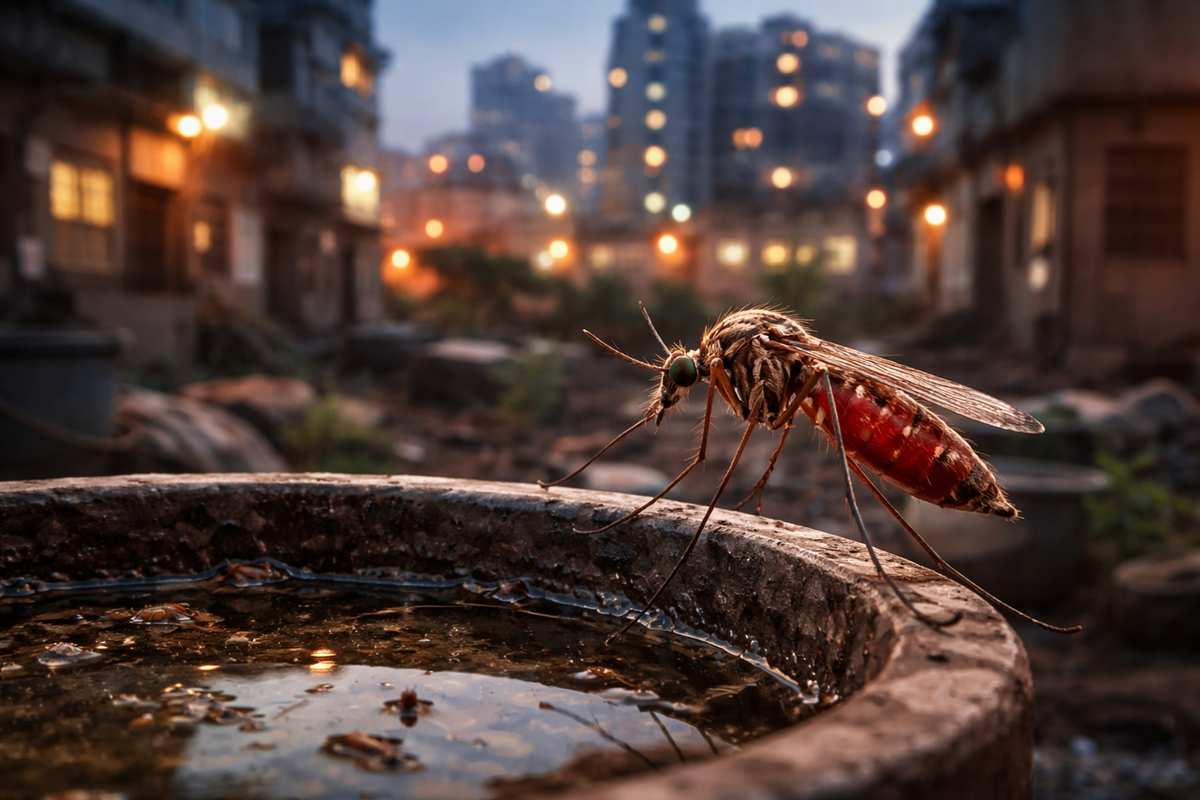
Malaria experts have raised alarm over an emerging invasive mosquito species capable of thriving in hot, densely populated urban environments, warning that it could complicate already fragile malaria control efforts across Africa, HealthTimes has learnt.
The mosquito, known as Anopheles stephensi, originates from Southeast Asia and has, over the past decade, been detected in parts of the Horn of Africa. Its presence in the region has triggered concern among scientists, who say the species could spread further into East and Southern Africa if not closely monitored.
Speaking during a Johns Hopkins Bloomberg School of Public Health media briefing ahead of World Malaria Day 2026, Professor Jane M. Carlton, director of the Johns Hopkins Malaria Research Institute, warned that the invasive mosquito presents a unique and growing urban malaria threat.
“It ideally grows in urban areas, and that’s why we’re particularly worried,” said Carlton, noting that surveillance efforts remain in their early stages and that the full extent of the mosquito’s spread is not yet known.
Unlike traditional malaria vectors, which are largely associated with rural environments, Anopheles stephensi is highly adaptable to urban settings and warmer temperatures. These conditions are common in many African cities. Experts say this could accelerate malaria transmission in densely populated areas that have historically experienced lower levels of the disease.
Carlton also highlighted additional challenges undermining malaria control efforts, including increasing resistance to insecticides used in treated bed nets and growing concerns over the accuracy of some diagnostic tests.
While the invasive species has not yet been identified in Southern Africa, existing threats are already straining malaria programmes. Professor William Moss, deputy director of the Johns Hopkins Malaria Research Institute, pointed to rising insecticide resistance in Zimbabwe, particularly against pyrethroids, which are widely used in mosquito control.
“There’s certainly insecticide resistance in Zimbabwe,” Moss said. “The Ministry of Health and Malaria Control Programme has had to use different insecticides to address this problem.”
He added that although Anopheles stephensi has not yet been detected in Zambia or Zimbabwe, surveillance efforts remain limited, leaving room for uncertainty.
The potential spread of a mosquito species that thrives in urban environments, combined with increasing resistance to insecticides, could significantly undermine progress made in reducing malaria cases across the region.
According to the World Health Organization (WHO), malaria remains one of the deadliest and most burdensome diseases globally. In 2025 alone, an estimated 80 million cases and more than 600,000 deaths were recorded, the majority among children under the age of five.
Malaria is endemic in about 80 countries worldwide, with nearly half located in Africa. Five countries, Nigeria, the Democratic Republic of Congo, Uganda, Ethiopia and Mozambique, accounted for roughly half of all malaria cases in 2024.
The disease is caused by parasites that infect human blood and are transmitted through the bite of infected mosquitoes. Although malaria is preventable and treatable if detected early, progress toward elimination faces several persistent threats.
Among these is growing resistance to anti-malarial drugs. The parasite has shown resistance to artemisinin, the frontline treatment for malaria, which has now been reported in several African countries.
Amid these challenges, experts say vaccines remain a critical tool in reducing malaria deaths, even as efforts continue to improve their effectiveness.
Moss described the development of a safe and effective malaria vaccine as a long-standing scientific goal that is now beginning to yield results.
“Safe and effective malaria vaccines have been a holy grail for malaria control for many decades,” he said. “Our current malaria vaccines are good and can prevent tens of thousands of deaths each year, but there is still a lot of room for improvement.”
He noted that the two currently approved vaccines, RTS,S and R21, are the result of decades of research and both target the same protein found on the surface of the malaria parasite during the stage when it enters the human body through a mosquito bite.
The RTS,S vaccine, first developed in 1987 through a partnership involving GSK and the Walter Reed Army Institute of Research, was only recommended for use by the WHO in 2021 after more than three decades of research and trials.
Clinical trials showed that when four doses were administered to children aged between five and 17 months, the vaccine reduced the risk of malaria by 39 percent and severe malaria by 31 percent. While this efficacy is lower than that of many other childhood vaccines, Moss said the high burden of malaria means the public health impact is still substantial.
“Because of the huge burden of disease in high transmission settings, this results in a significant public health benefit,” he said.
The newer R21 vaccine, developed by the University of Oxford’s Jenner Institute, has shown higher efficacy in Phase III trials and was recommended for use by WHO in 2023.
Global health alliance Gavi, the Vaccine Alliance has projected that immunising 50 million children with malaria vaccines between 2026 and 2030 could save more than 170,000 lives.
However, Moss stressed that the real challenge lies not just in developing vaccines, but in ensuring they reach those who need them most.
“As the old quip goes, vaccines don’t save lives, vaccinations save lives,” he said. “We have to get these vaccines into children who are at the highest risk.”
So far, at least 25 countries in sub-Saharan Africa have introduced malaria vaccines either nationally or in targeted regions, marking a significant step forward in the fight against the disease.
Even so, experts warn that the convergence of emerging threats, including invasive mosquito species, insecticide resistance, diagnostic challenges and drug resistance, means sustained investment and vigilance will be essential to prevent a reversal of hard-won gains in malaria control.