Michael Gwarisa in Midlands Province
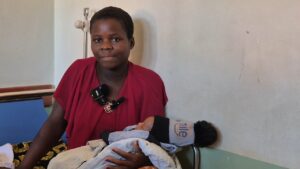
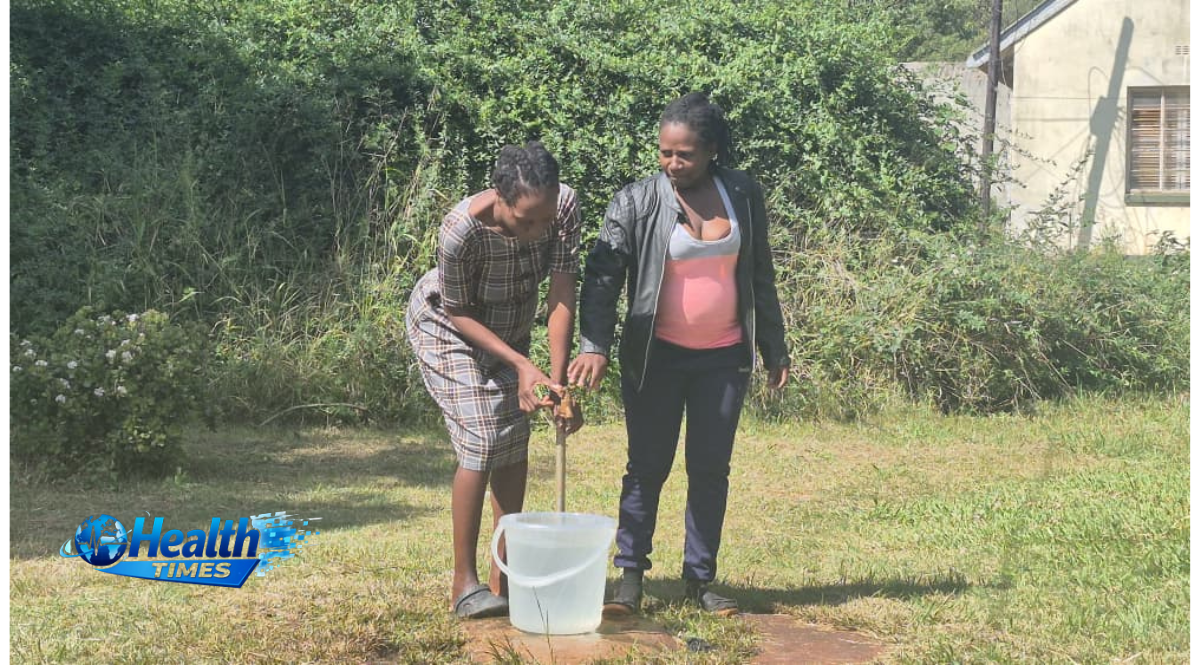
Moments after washing a bucket at Shurugwi District Hospital’s maternity wing, pregnant mother Martha Macheka carefully closes the tap before calling another expectant woman to help her carry the water back to the waiting mothers’ shelter.
Just a few years ago, such a simple act would have been impossible.
Before 2023, persistent water shortages at the Midlands hospital meant pregnant women often struggled to access clean water before and after giving birth. Toilets frequently ran dry, laundry piled up for days and infection risks remained high in one of the busiest sections of the hospital.
For mothers preparing to deliver babies, the shortages added fear and uncertainty to an already vulnerable moment.
“This borehole is helping us a lot,” says Macheka. “Some years back, we struggled even to bathe after giving birth. A lot happens in the labour ward and after delivery, a mother needs to clean herself properly.”
She says conditions inside the maternity wing have improved significantly since the installation of a solar-powered borehole.
“The wards and toilets are now clean and we no longer fear infections like before,” she says.
Across Zimbabwe, healthcare facilities have long battled unreliable water supplies, a challenge that has placed pregnant women and newborn babies at particular risk. Without running water, healthcare workers struggle to maintain hygiene standards essential for safe deliveries, infection prevention and postnatal care.
At facilities like Shurugwi District Hospital, the consequences were once severe.
Today, however, clean water is flowing steadily through taps at the hospital because of a solarised borehole installed under Zimbabwe’s COVID-19 Response Mechanism programme, commonly known as C19RM.
The initiative is being coordinated by the Ministry of Health and Child Care with financial support from the Global Fund and implementation support from the United Nations Development Programme (UNDP).
Originally established to strengthen Zimbabwe’s response to the COVID-19 pandemic, the programme has evolved into one of the country’s most significant long-term health systems strengthening investments in recent years.
Through the partnership, health facilities across Zimbabwe are receiving solar-powered boreholes, renewable energy systems, upgraded pharmacies, diagnostic equipment and healthcare waste management infrastructure aimed at improving healthcare delivery far beyond the pandemic.
For expectant mothers like Macheka, the impact is immediate and deeply personal.
Masilia Sibanda, who is also waiting to deliver at the hospital, says access to clean water has eased one of the major stresses faced by pregnant women admitted at the facility.
“This borehole is helping us a lot,” she says. “We now have running water all the time. We can bathe, wash clothes and clean properly without struggling to look for water.”
Reliable access to water is particularly critical in maternity wards where hygiene can mean the difference between life and death.
Medical experts say poor sanitation and lack of clean water increase the risk of maternal sepsis, surgical site infections after caesarean sections and infections among newborn babies.
At Shurugwi District Hospital, officials say improved water access has strengthened infection prevention and contributed to better maternal health outcomes.
Matron Eunice Vhiriri says the hospital has not recorded a maternal death since 2025.
“As a referral hospital, we handle many complicated deliveries, including caesarean sections,” says Vhiriri. “For us to perform surgeries safely, we need a reliable water supply all the time.”
She explains that infection prevention measures depend heavily on access to running water.
“When mothers undergo caesarean sections, they can develop surgical site infections if infection prevention and control measures are compromised. Conditions such as sepsis can lead to maternal deaths,” she says.
“As long as we have water, we are able to maintain hygiene standards, clean equipment properly and protect both mothers and babies.”
Shurugwi District Hospital serves as a referral centre for 37 health facilities across the district, receiving pregnant women with high-risk pregnancies from surrounding clinics and rural health centres.
The maternity department handles an average of 160 deliveries every month and accommodates dozens of women at various stages of labour, postnatal recovery and antenatal care.
Without clean water, Vhiriri says the risks would multiply rapidly.
“We would end up with dirty linen piling up, compromised cleaning standards and increased cases of neonatal sepsis. Water is central to everything we do in maternal healthcare,” she says.
Before the borehole installation, hospital staff were forced into desperate measures to keep services running.
Margaret Angela Ngwenyama, Administration Assistant at Shurugwi District Hospital, recalls how the hospital relied on inconsistent municipal water supplies that were only available for a few hours each day.
“This place needs water constantly because deliveries happen day and night,” says Ngwenyama.
“The council water was only available for about two hours daily. During the rest of the day and throughout the night, we would have no water while maternity services still had to continue.”
The shortages forced workers to ferry water manually from another section of the hospital using vehicles and large containers.
“We would transport water from the B Section using bins and vehicles, but it was a serious challenge,” she says. “Labour wards generate soiled linen every hour and sometimes the linen would pile up, creating huge infection risks.”
At times, the hospital had to send linen to Gweru Provincial Hospital for laundering because local cleaning systems could not cope with the shortages.
The situation changed dramatically after the installation of the solarised borehole.
“With water now constantly available, linen is washed daily, wards are cleaned properly and bathing patients has become much easier,” says Ngwenyama.
“It has strengthened infection control and also reduced operational costs because we no longer need to transport water or send laundry to Gweru.”
The borehole has also brought relief to surrounding communities that previously faced chronic water shortages.
Shurugwi District has an estimated population of more than 231,000 people, many of whom depend heavily on public health facilities for maternal and child healthcare services.
In Lower Gweru, another solarised borehole installed under the same programme is transforming services at Lower Gweru Hospital, a mission facility serving approximately 11,500 people.
Nurse-in-Charge Eva Tendai Sithole says the intervention ended years of water insecurity at the facility.
“Our old borehole was shallow and would quickly dry up during summer,” says Sithole. “UNDP drilled a 60-metre borehole for us and now water shortages are largely a thing of the past.”
The improvements have been particularly important in maternity services.
“Heavily pregnant women used to walk long distances looking for water while admitted here,” she says. “Now they can focus on preparing for delivery instead of worrying about water.”
Healthcare workers have also benefited.
“As nurses, we no longer spend time hunting for water. We can now concentrate fully on patient care,” says Sithole.
Lower Gweru Hospital delivers an average of eight babies every month, with demand for maternal services continuing to grow.
District Medical Officer Dr Chandiwana Nyachowe says the programme has strengthened healthcare delivery across Shurugwi District, not only at the main referral hospital but also at smaller clinics.
“We are now able to provide water throughout most parts of the day and night because of the boreholes drilled under this programme,” says Dr Nyachowe.
“This has significantly improved service delivery. Previously, many clinics stored water in buckets due to shortages, but now most facilities have running water.”
Beyond water systems, the broader partnership has upgraded other aspects of healthcare infrastructure in the district.
“UNDP has assisted us in several ways under the coordination of the Ministry of Health and Child Care,” says Dr Nyachowe. “They have built a pharmacy, installed solar systems at hospital wings and drilled boreholes at the maternity section.”
Zimbabwe’s national solarised borehole programme forms part of wider health systems investments under the C19RM initiative.
Under the first phase, 447 solar-powered boreholes were installed at health facilities nationwide. Through the second optimisation phase of the programme, an additional 150 boreholes are being implemented, with 115 already completed.
Each site includes a solar-powered pump, water storage tanks and distribution systems supplying clean water directly into health facilities.
Dr Ayodele Odusola, UNDP Zimbabwe Resident Representative, says the programme reflects a broader effort led by the Ministry of Health and Child Care to address multiple weaknesses within Zimbabwe’s healthcare system simultaneously.
“This partnership with the Government of Zimbabwe is addressing the interconnected challenges affecting healthcare delivery, including water access, diagnostics, renewable energy and healthcare waste management,” says Dr Odusola.
He says the initiative demonstrates how international financing can be translated into practical improvements at community level.
“The Ministry of Health and Child Care is leading and coordinating this process, with support from the Global Fund and implementation assistance from UNDP,” he says.
“Although the programme was initially introduced as an emergency COVID-19 intervention, it has evolved into a long-term investment that is transforming healthcare delivery across Zimbabwe.”
Back at Shurugwi District Hospital, water continues flowing steadily from taps inside the maternity wing.
For mothers waiting to deliver, it may appear ordinary.
But for healthcare workers who once struggled through sleepless nights without water, and for mothers who once feared infections after childbirth, the sound of running water now represents something much bigger.
It represents safer births, cleaner wards and a stronger chance at survival for both mothers and newborn babies.