By Kudakwashe Pembere
At a time when Zimbabwe lacks legal frameworks to address the sale and distribution of falsified and substandard medicines, the country remains at a disadvantage in fighting this growing problem.
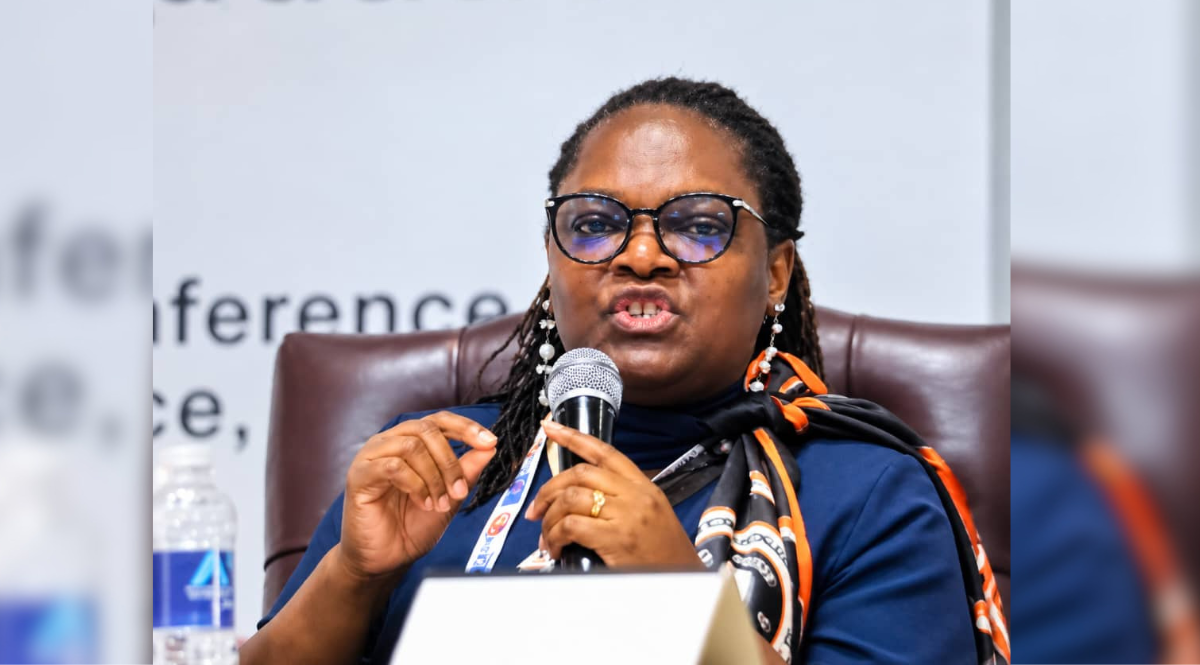
This was said by Medicines Control Authority of Zimbabwe (MCAZ) board member Nancy Samuriwo during the Authority’s 7th annual general meeting held last Friday.
Her remarks followed those of MCAZ Director General Richard Rukwata, who highlighted that the Authority is working with the Zimbabwe Republic Police (ZRP) to curb the distribution of counterfeit medicines.
Rukwata also noted that public demand for cheaper, unregulated medicines continues to fuel the market for counterfeits.
Mrs. Samuriwo said Zimbabwe does not have deterrent penalties for offenders.
“I just wanted to comment further on the issue that was raised on the readily accessible counterfeit medicines on the streets.
“And just to add on to what the DG validly said. I mention this because in this room, we do have stakeholders and we can face the problem head on. I think one of the problems that we have with the police is that we do not have the enabling framework for that,” she said.
“I think most of you know that if the police raid, either if a person is prosecuted, they get away scot-free or the penalties are just not deterrent enough. So I think the challenge really is that we do not have an anti-counterfeiting piece of legislation.”
She added that other countries already have legal frameworks to combat counterfeit medicines.
“For example, South Africa, Algeria, Morocco, Egypt, Tunisia, they have them. Because if you put anti-counterfeiting medicines under that framework, it is actually easier to now address the issues that need to be dealt with to enable us to actually have substantive actions taken. For example, capacity building of the police. Most of them do not understand the nature of this criminal animal that we’re dealing with,” Samuriwo said.
“Because I think as the DG said, it appears to be a willing buyer, willing seller kind of transaction. Because there is somebody who’s selling these counterfeit medicines and there is somebody buying. And sometimes people do know that these are counterfeits because they are cheaper than what they would be in the official channels.”
Samuriwo said an anti-counterfeiting law would help capacitate law enforcement agencies and streamline prosecution. She described the current legal process as frustrating and exhausting.
“So I think that Act would actually help to train the police, train the value chain as to what counterfeit medicines are, what the challenges are. And again, it would also have proper procedures. Right now it takes forever to get a criminal prosecution.
“If you’re a complainant, I think most of us have been, and you find that it’s very tiresome. You have to go to the Magistrate’s court maybe five, 10, 15 times. You’re actually treated as a criminal yourself.
“And nobody wants to be doing that. But under an anti-counterfeiting piece of legislation, the procedures, the timelines, they are sensitized towards quick action, and that would help. And also the punitive measures, they are actually high because we’re dealing with public health,” she said.
Samuriwo also suggested that seized counterfeit medicines could be repurposed rather than incinerated.
“We’re dealing with matters of life and death. You cannot have a person getting an acquittal or a warrant that you shouldn’t do this, a caution, or a fine of $20 because that’s actually what is happening. But we do need under that Act penalties that are sufficient to punish and deter this egregious animal that we are actually dealing with.
“And also there’s the issue of what do we do with these counterfeit medicines if we seize them? Sometimes we burn them. But is burning medicines safe for the environment? Does it also not take time? And there are all sorts of arguments that are coming through. We do know that there are best practices which the Anti-Counterfeiting Act would be able to deal with, like second use purposes.
“I do know that I think we were working with North Africa. In South Africa, I mean just there, they are now repurposing some of these things. And they make tennis courts, they make other things.
“But there has to be an Act that actually integrates all these issues which right now are just falling under different ministries and stakeholders. And I only thought I should add this because this is the platform where we have the stakeholders and I think where all of us, we should be able to come together. Because the issue of counterfeit drugs, the issue of drugs just amongst our youth, our kids, and even innocent people who cannot differentiate a legitimate drug and a counterfeit drug is really killing.