By Kuda Pembere in Mash Central
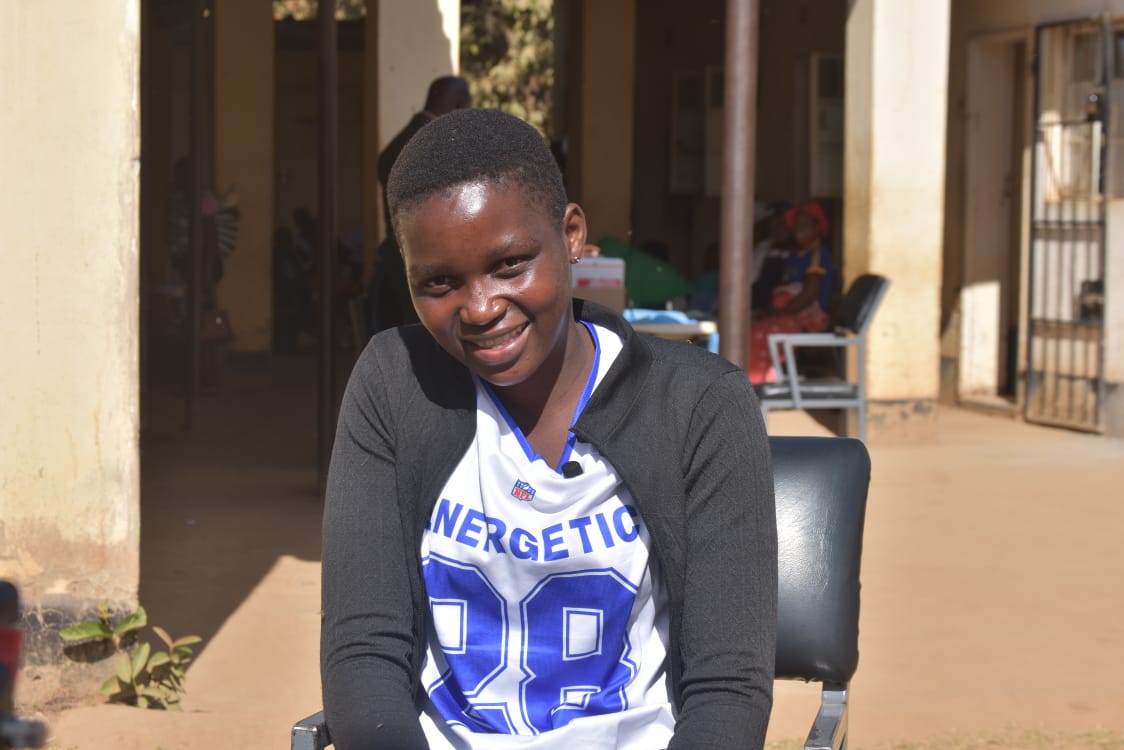
On a cool Monday morning, Christabel Chiweso arrives at Wadzanayi Clinic, a health facility run by the Shamva Rural District Council. This time, she is not seeking a family planning method for herself.
Instead, she has accompanied her sister-in-law, who wants to start using contraception.
The two women have travelled from Nherera at New Brimstone Farm, each paying US$2 for transport to the clinic.
As they wait to be attended to, Christabel reflects on her own family planning journey, one marked by persistence, disappointment and ultimately success.
“When one contraceptive method does not work, use another,” she says with a smile.
For Christabel, that simple statement has become a personal philosophy. It mirrors the familiar lesson taught to young children: if at first you do not succeed, try again.
And try again she did.
The soft-spoken young woman has never given up on finding a family planning method that suited her needs. Despite limited formal education, she has become knowledgeable through experience and a willingness to learn.
She left school while in Form Six after her parents could no longer afford her fees. Shortly afterwards, life took a different path.
At just 17 years old, she gave birth to her first child, forcing her to put her education on hold.
Today, she earns a living selling various wares in the bustling mining town of Shamva, where she has come to appreciate the value of education and still hopes to return to school one day.
For Christabel, family planning is more than preventing pregnancy. It is about creating space to pursue her ambitions, care for her family and plan for the future.
“I had my first child on February 28, 2020, when I was 17 years old,” she recalls.
After giving birth, she started using oral contraceptive pills known as Secure.
“The side effect I experienced was acid reflux, or what we call nyon’o. Because of that, I stopped using it and switched to Control.”
The change did not bring the results she hoped for.
“I used Control until I weaned my first baby, but I later became pregnant with my second child while using it.”
Following the birth of her second child, Christabel continued searching for a method that would work for her.
“After my second child, I went back to Secure but it still was not working for me. I returned to Control and was still not satisfied. I then heard about Depo-Provera and decided to try it.”
But even the injectable contraceptive presented challenges.
“I received the Depo injection, but I continued having my menstrual periods.”
As she explains her journey, Christabel removes her jacket and points to her upper left arm.
It is a small mark, barely noticeable, but for her it represents the answer to years of frustration.
“I then heard about Implanon and decided to come to the clinic for it. I asked the nurses about the available methods and they explained that Implanon was one of them.”
Implanon is a small, flexible plastic rod, roughly the size of a matchstick, that is inserted beneath the skin of the upper arm. It slowly releases a hormone called etonogestrel, which prevents ovulation and thickens cervical mucus, making it difficult for sperm to reach an egg.
The method is more than 99 percent effective and can provide protection against pregnancy for up to three years.
“I decided to try it. They inserted it into my upper left arm on July 13 last year. This year it will be one year since I got it,” she says.
The difference has been remarkable.
“Implanon is working for me. I have not experienced any side effects so far. Even other women in my community say it is a good contraceptive.”
As a married woman, Christabel says discussing family planning with her husband has always been important.
While he supported her efforts, some of the challenges she experienced with previous methods sometimes caused tension.
“There were times we argued because I would continue having periods while using some methods. When I learnt about Implanon, I informed my husband and he agreed that I should try it,” she says, laughing softly.
Today, she says, they are both happy with the outcome.
Implanon has also reduced her expenses.
“I come from New Brimstone Farm. To travel to Shamva costs me US$2 going and another US$2 coming back. When I was using Depo, I had to keep returning for injections. Now I no longer need to spend that money every few months. I am grateful that Implanon works for me.”
Along the way, Christabel encountered numerous myths and misconceptions about family planning methods.
“There are many stories people tell in my area. Some say if you use Jadelle and it expires, you will never conceive again. Others say it should be removed before the recommended period ends because it will stop working.”
Despite such claims, Christabel continued seeking information from health workers rather than relying on rumours.
Her determination eventually paid off.
“Using several family planning methods taught me that if one does not work, you should not give up. If I had ignored family planning altogether, I could have ended up with many children before I was ready.”
She says spacing children is important for both mothers and families.
“If you have a five-month-old baby and become pregnant again, it becomes difficult because that child still needs attention and care. Every child deserves proper nurturing. What I do not want is to have children without adequate spacing.”
Her message to other women is simple.
“Do not give up. There is always a method that can work for you. If one does not suit your body, seek advice and try another until you find the right one.”
Anasthancia Masembura, the nurse-in-charge at Wadzanayi Clinic, says the facility offers a range of family planning options to cater for different needs.
Short-term methods include Secure and Control oral contraceptive pills, Depo-Provera and Sayana Press injections, as well as condoms. Long-term options include Implanon, which lasts up to three years, Jadelle, which lasts up to five years, and the intrauterine device, commonly known as the loop, which can provide protection for up to 10 years.
“We offer all these family planning methods at the clinic and spend a lot of time addressing myths and misconceptions,” says Masembura.
“Some people believe an implant can travel through the bloodstream and end up elsewhere in the body. That is not true. The implant remains where it is inserted under the skin and slowly releases the hormones needed to prevent pregnancy.”
She says another common misconception is that women who use Jadelle or Implanon may never conceive again after removal.
“We explain that fertility returns once the device is removed. For those who want Jadelle or Implanon removed, we provide that service at the clinic.”
The loop, she says, remains one of the least understood methods in many communities.