By Kuda Pembere
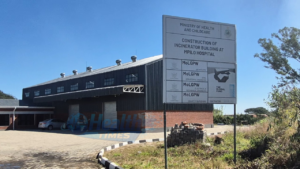
At a time when medical waste is being cited as one of the major contributors to climate change, Zimbabwe’s Health and Child Care Minister Dr. Douglas Mombeshora and Ireland’s Minister of State at the Department of Foreign Affairs and Trade, Neale Richmond, commissioned a state-of-the-art incinerator at Sally Mugabe Central Hospital.
The incinerator was installed by BoltGas with funding from the Global Fund. The United Nations Development Programme (UNDP) served as the implementing partner for the Ministry of Health and Child Care.
Speaking after the commissioning of the facility, Minister Mombeshora said the incinerator has the capacity to process up to 950 metric tonnes of waste annually.
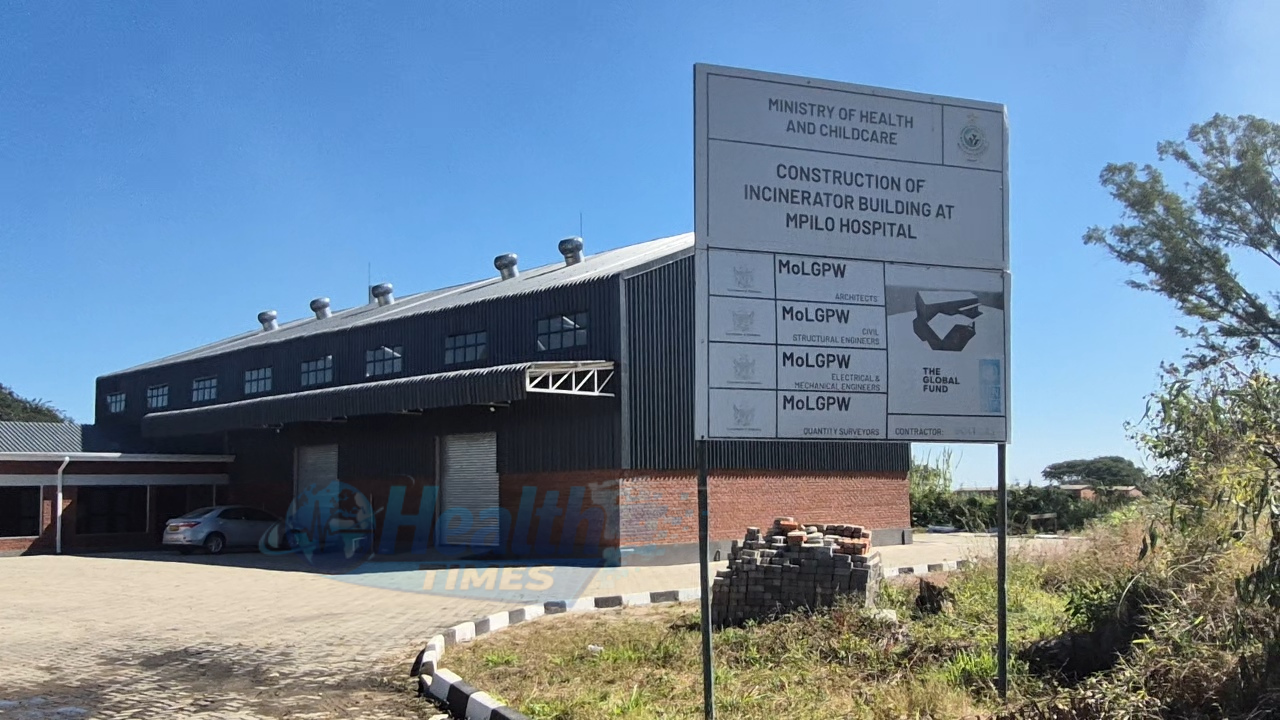
“I think there are only two in this country. One is here at Sally Mugabe Central Hospital and the other one is at Mpilo Hospital in Bulawayo. This is so huge and is capable of dealing with all medical waste, liquid and solid.
“And it’s not only going to service this Sally Mugabe Central Hospital, but also a lot of other hospitals surrounding in other provinces because it has got a huge capacity. It can process over 950 metric tons of waste per year, which is quite, quite huge. So this is quite a huge achievement and we are really grateful for this infrastructure that has been put through UNDP and Global Fund,” he said.

During the ceremony, Dr. Mombeshora noted that the investments made toward the incinerator and the solar power system at the National Pharmaceutical Company (NatPharm) warehouse reflect a shared commitment by development partners to improve healthcare in Zimbabwe.
“The 450 kilowatt solar system powering the warehouse at NatPharm and the state-of-the-art incinerator that we have just seen here are not just projects, they are milestones in our journey toward a resilient and sustainable health system.
“Most people think when we talk of health they just think of medicines, they think that is health, but it’s much more than that. Today we are witnessing the support infrastructure that is required to keep the system oiled and to make sure that the health delivery system is complete, and this we are really appreciating our partners who have made it possible.
“These are results of deliberate investments, collaboration and the steadfast support of the Global Fund and its donor partners, including the Government of Ireland. They embody the spirit of innovation and equity that defines our shared vision for public health. They also speak to the development philosophy of His Excellency the President of Zimbabwe, Dr. Emmerson Dambudzo Mnangagwa, whose guiding mantra, I quote, leaving no one and no place behind, end of quote,” the Health Minister remarked.
The Irish Minister of State, Mr. Richmond, said Ireland has contributed US$33 million toward strengthening Zimbabwe’s health system.
“A wonderful opportunity to tour the facilities both at NatPharm and indeed at Sally Mugabe Hospital to see the impact, the really true and powerful impact that is being had on so many different lives of real investment, investment in people.
“But crucially, it is also an important opportunity to celebrate another infrastructural journey. An infrastructural journey that lots of people don’t see but goes to the very real essence of what providing safe, sustainable health care means.
“An incinerator that will absolutely play a real and serious role within the operation of the health system here in Zimbabwe and beyond. Ladies and gentlemen, the Irish Government is extremely proud to support our friends in Zimbabwe and to work with our partners from so many different international organizations. And today’s announcement is merely the latest bit of support from the people of Ireland to our friends in Zimbabwe,” he said.
“But our role within Zimbabwe has evolved crucially over the years. Since 1980, the Irish Government has provided over $250 million worth of development assistance to our friends in Zimbabwe. Since 2015 alone, we’ve provided $33 million in support purely for health systems in Zimbabwe.”
Ada Faye, the Chief Financial Officer at the Global Fund, said the organization has invested over US$2.3 billion in Zimbabwe’s health system over the past 20 years.
“A lot of people think when we talk about Global Fund is around investing in medicines and pharmaceutical. However, the incinerators are part of a broader vision that recognizes that to fight a disease, you need to go beyond medicines and diagnostic,” she said.
She added that the incinerator will play a crucial role in infection prevention and control at health facilities.
“Because this is what we leave behind and this is what the people of Zimbabwe will remember. The infrastructure to protect the health workers, the patients and the community around hospitals.
“Will significantly reduce the risk of disease transmission and environmental contamination. They meet the highest international standard,” added Faye.
UNDP Representative to Zimbabwe, Ayodele Odusola, said the goal is to incinerate approximately 2,700 tonnes of medical waste.
“The funding partners of Global Fund as well as UNDP that is implementing it on behalf of the government and Global Fund. The main thing is for it to address what we call critical healthcare waste management system.
“In Zimbabwe. But one thing that is really very clear is that the high capacity facility we are seeing here is not only improving what we call public health system. But improving environmental safety as well as global standards.
“Adherence to global standards on some of these facilities you’ve seen. I want to really underscore the fact that it is also contributing to the implementation of national determined contribution. For instance, we’re targeting with this about 2,700 tons of medical waste to be incinerated,” he said.