Michael Gwarisa in Bulawayo
For years, families living near Mpilo Central Hospital woke up to the same reality: ash settling on rooftops and washing lines, thick smoke hanging in the air, and fumes so harsh they sometimes forced residents indoors.
Today, many say that has changed.
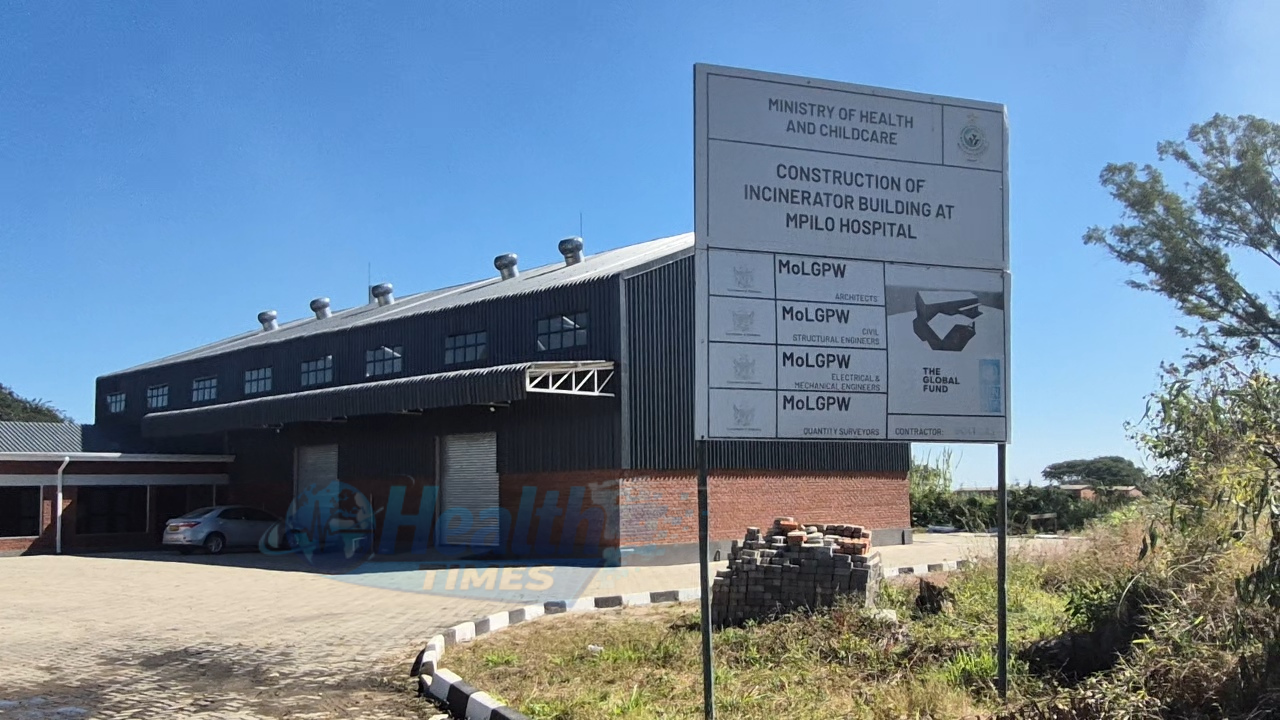
A newly constructed high-capacity medical waste incinerator, built under a Ministry of Health and Child Care (MoHCC) project financed by the Global Fund and implemented by the United Nations Development Programme through the COVID-19 Response Mechanism (C19RM), is transforming healthcare waste management in southern Zimbabwe while addressing long-standing environmental concerns from surrounding communities.
Unlike older incinerators blamed for releasing smoke and toxic emissions, the new plant uses built-in air purification technology designed to filter hazardous fumes before they are released into the atmosphere. Hospital authorities say the facility, which has the capacity to safely incinerate 250 kilograms of waste per hour, now allows safer disposal of infectious medical waste not only from Bulawayo, but also from provinces across the southern region.
Residents living near the hospital say the difference has been dramatic.
“We used to wake up and find ash all over the yard and the roof,” said Mr Thabo Dlodlo, a resident who grew up near the hospital. “Sometimes the smoke was so heavy you could not even leave windows open. But now, things are much better.”
The Global Fund’s COVID-19 Response Mechanism has supported one of the largest health systems strengthening programmes implemented in Zimbabwe in recent years. Through the partnership between MoHCC, the Global Fund and UNDP as principal recipient, investments have been made to strengthen health infrastructure, improve diagnostic capacity, expand access to water and renewable energy at health facilities, and modernise healthcare waste management systems.
Safe disposal of healthcare waste remains critical for protecting both public health and the environment, particularly at major referral hospitals handling large volumes of infectious waste daily.
Under the programme, modern incinerator systems have been installed at major referral hospitals including Mpilo Central Hospital and Sally Mugabe Central Hospital. The Ministry of Health and Child Care led the project while UNDP supported civil and construction works.
At Mpilo, the facility is expected to strengthen healthcare waste management capacity for Bulawayo, Matabeleland North, Matabeleland South, Midlands and Masvingo provinces. The incinerator will also handle waste from private health institutions through a fee-based system aimed at supporting long-term operations and maintenance.
According to hospital officials, the technology represents a significant shift from older waste disposal systems that exposed nearby communities to smoke, ash and untreated emissions.
The incinerator operates through a controlled automated system using a Human Machine Interface (HMI), replacing the largely manual processes associated with older systems. Waste is loaded onto a conveyor belt before being transported into the incinerator, which consists of two chambers.
In the first chamber, temperatures rise to about 800 degrees Celsius, enough to reduce infectious healthcare waste to ash. However, the burning process also generates toxic flue gases. These gases are then channelled into a second chamber where temperatures can reach up to 1,100 degrees Celsius, allowing harmful emissions to be neutralised before release into the atmosphere.
“The beautiful thing about this incinerator, as opposed to the old incinerator that we had, is that once we have burnt the waste, the system extracts all the gases and particles that may affect people when they breathe because those are neutralised and made harmless. They are no longer toxic,” said Bongani Dhlamini, the incinerator manager at Mpilo Central Hospital.
“The particles that would also affect people when they breathe are trapped within the system, so when the air is finally emitted, it is now as clean as the air we breathe.
“People in surrounding communities used to be affected whenever the old incinerator was operating because smoke would drift into their homes. Having this new incinerator has greatly improved the environment here.”
Studies have linked prolonged exposure to toxic emissions from older incinerators to increased risks of respiratory and cardiovascular diseases, developmental complications, neurological effects and certain cancers. While deaths linked specifically to incinerator emissions are rarely tracked separately, air pollution from combustion processes remains a major global public health concern.
Mr Phenias Sithole, Acting Director of Operations at Mpilo Central Hospital, said the project has significantly strengthened healthcare waste management systems at the institution and across the southern region.
“This is a modern incinerator for disposing of medical waste. The giant incinerator was completed and started functioning at the end of December 2024. To date, we have incinerated around 13,000 kilograms of medical waste, which is quite significant,” said Mr Sithole.
He added that Mpilo had previously struggled with the disposal of medical waste, mainly due to ageing infrastructure and obsolete systems that were no longer adequately destroying hazardous waste.
“The fact that this incinerator does not produce smoke makes it ideal for modern times,” he said.
Mr Sithole said the facility has also become a critical regional resource for healthcare institutions in southern Zimbabwe.
“Health facilities from Midlands Province, United Bulawayo Hospitals, Gwanda and even Masvingo are bringing medical waste for incineration here,” he said.
The incinerator handles a wide range of hazardous healthcare waste, including expired medicines, amputated limbs, torsos and other infectious materials. The project also provided specialised waste collection vehicles for both liquid and solid waste, including tipper trucks, open skippers and liquid waste collection units.
According to the World Health Organization, poor management of medical waste increases the risk of infections, injuries, chemical and toxic exposure, environmental contamination and antimicrobial resistance. These risks affect patients, healthcare workers, waste handlers, scavengers and surrounding communities.
Dr Ayodele Odusola, the UNDP Zimbabwe representative, said the investment reflects broader efforts to strengthen Zimbabwe’s health systems while protecting communities and the environment.
“Under the healthcare waste management system, we now have two giant incinerator systems, one at Sally Mugabe Hospital and the other at Mpilo Hospital. We have already commissioned the one at Sally Mugabe, while the one at Mpilo is ready for commissioning depending on the availability of key stakeholders,” said Dr Odusola.
“This is something we have been able to do in a way that helps accelerate the kind of progress Zimbabwe needs, not only in terms of meeting the National Health Strategy, but also the targets outlined under National Development Strategy 1 and National Development Strategy 2.
“This initiative is not only helping to strengthen the health system in Zimbabwe, but it is also helping us address multiple bottlenecks affecting healthcare delivery. Issues around energy, diagnostics and healthcare waste management are now being tackled in ways that help sustain health services at community level.”
As the giant incinerator hummed in the background at Mpilo Hospital, residents living nearby said the difference was no longer just technical or statistical. For many families, it meant cleaner air, quieter nights and the end of waking up to ash-covered homes.