As African health authorities intensify surveillance following a hantavirus outbreak linked to an international cruise ship, many people across the continent are asking the same question: what exactly is hantavirus, and should Africa be worried?
The outbreak, which involved passengers travelling aboard the Dutch-flagged cruise ship MV Hondius from South America to Cape Verde, has already resulted in several confirmed infections and one death in South Africa. Although no confirmed local transmission has yet been recorded in Africa, the incident has placed health systems on alert.
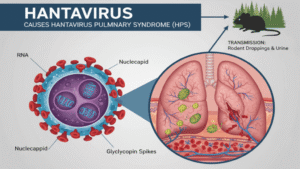
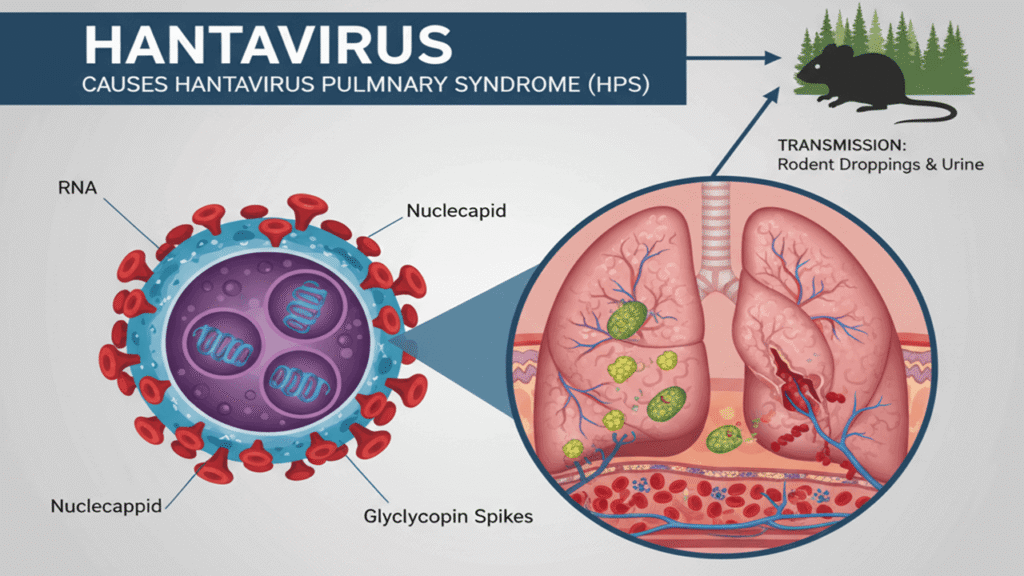
According to the World Health Organisation (WHO), hantaviruses are a group of viruses carried mainly by rodents and can cause severe disease in humans. People become infected after coming into contact with infected rodent urine, droppings, or saliva, often through contaminated dust or poorly ventilated spaces.
The virus is not new. Hantaviruses have been documented in Asia, Europe, and the Americas for decades, but public health experts say increasing human interaction with wildlife and environmental disruption are creating conditions for more zoonotic spillovers worldwide.
In the Americas, hantaviruses can cause a dangerous condition known as hantavirus cardiopulmonary syndrome (HCPS), a rapidly progressing respiratory disease that affects the lungs and heart. WHO says the syndrome can carry a fatality rate of up to 50 percent.
The strain linked to the current outbreak is believed to be the Andes virus, found mainly in Argentina and Chile. Unlike most hantaviruses, Andes virus is one of the few known strains capable of limited human-to-human transmission through close and prolonged contact.
WHO says investigations suggest exposure may have occurred before passengers boarded the cruise ship, particularly during visits to rodent-infested areas in Argentina, Chile, and Uruguay.
Experts say hantaviruses spread primarily through exposure to contaminated rodent waste. Activities such as cleaning enclosed spaces, farming, forestry work, or sleeping in rodent-infested buildings can increase the risk of infection.
Symptoms usually appear between one and eight weeks after exposure and often begin like common viral illnesses. Patients may experience fever, headaches, muscle pain, nausea, vomiting, and abdominal discomfort.
However, in severe cases, the illness can rapidly progress to coughing, breathing difficulties, fluid build-up in the lungs, and shock. In Europe and Asia, some hantavirus strains also cause haemorrhagic fever with renal syndrome (HFRS), which affects the kidneys and blood vessels.
Public health specialists warn that diagnosing hantavirus can be difficult because the early symptoms resemble influenza, COVID-19, pneumonia, dengue, and other infectious diseases. Laboratory confirmation usually requires specialised testing such as RT-PCR or antibody detection.
There is currently no licensed antiviral treatment or vaccine for hantavirus infection. WHO says patient care focuses on supportive treatment, including intensive monitoring of respiratory, cardiac, and kidney complications. Early access to intensive care significantly improves survival chances.
Prevention remains the most effective defence against infection.
WHO advises communities to reduce contact with rodents by keeping homes and workplaces clean, sealing holes that allow rodents into buildings, storing food securely, and practising proper hygiene.
Health authorities also warn against dry sweeping rodent droppings because it can release contaminated particles into the air. Instead, contaminated areas should first be dampened before cleaning.
The current outbreak has renewed discussions around Africa’s preparedness for emerging zoonotic diseases. Experts say many African countries still face gaps in disease surveillance, laboratory capacity, genomic sequencing, and outbreak coordination.
WHO says it is working with countries to strengthen surveillance systems, laboratory diagnostics, infection prevention, risk communication, and community engagement.
The organisation is also promoting a One Health approach, which recognises the connection between human health, animals, and the environment in preventing future outbreaks.
Although experts say the current hantavirus outbreak is not comparable to COVID-19 and does not presently pose a major global pandemic threat, they warn that it serves as another reminder of how quickly infectious diseases can cross borders in an interconnected world.