STAFF WRITER
ZIMBABWE’S deepening economic crisis is severely affecting the government’s ability to fund public health delivery and restricting poor people’s access to health care, economists, government officials and health experts agree.
The southern African country’s economy had shown signs of modest improvement under the government of national unity (GNU) between 2009 and 2013, when President Robert Mugabe and his long-ruling Zanu-PF party shared power with the opposition Movement for Democratic Change (MDC).
However, industry has been performing poorly and company closures have picked up since Zanu-PF won general elections in July 2013.
Statistics from the central bank show that over 6 400 companies have closed shop in the past four years pushing unemployment rate spiraling over 85 percent while the few remaining firms are operating at 34,2 percent capacity utilisation according to the Confederation of Zimbabwe Industries.
Economic commentator Francis Mukora said the deteriorating economic conditions were sending thousands of people –especially HIVinfected – into early graves due to lack of medical attention.
“It is not surprising that people’s right to health has been compromised by the state of the economy. Health services are suffering a funding deficit because of the current economic crisis, which has worsened in the post-GNU period,” he said.
As more people have been pushed into joblessness or working in the informal economy, the country’s tax base has dwindled and government is struggling to collect sufficient revenue to pay for public programmes and civil servants’ salaries.
Zimbabwe once had a health system that was the envy of southern Africa. Yet, fueled by Aids and also by increasing poverty and economic and political instability, illness has begun to overcome the country. Tuberculosis, hepatitis, malaria, measles and cholera – all wholly preventable – have surged mercilessly.
So have infant mortality, stillbirths and sexually transmitted diseases.
Declining revenue streams have seen government allocating too little to health in its 2016 national budget, but it is failing to fund that budget.
Treasury allocated the health sector $208 million this year down from $300 million last year and from $330 million in 2015 and $407 million in 2014, which amounted to less than eight percent of the 2017 budget.
Health ministry strategy and policy development officer Tonderai Kadzere said the underfunding has left poverty-stricken citizens, who constitute the majority, more impoverished as they pay for services when they fall ill.
“Government funding in 2009 was at 12 percent and now it’s down to 7, 4 percent against the Abuja Declaration target of 15 percent,” he said.
“In monetary terms it means this year we were allocated $300 million, so from that I don’t think we have even received $200,000 and we are already in September and that has been the trend,” Kadzere added.
The country’s public health sector receives most of its funding from the donor community.
For the past 15 years, Zimbabwe has received a total of $709 million from the Global Fund, of which $611 million goes to HIV, $59 million to malaria and $39 million to TB, over the period 2014 to 2017
Health experts, however, noted that in the absence of adequate support from the government, international aid would not be enough to help fight the HIV scourge in the country.
The savage virus has left few people untouched – it has devastated families, communities and cities. Official United Nations figures show that at the peak of the epidemic in Zimbabwe in the late 1990s nearly 30 percent of the population was living with HIV and AIDS was declared a national emergency. That unleashed a massive effort that halved the size of the epidemic.
Currently, there are 915 000 Zimbabweans now on antiretroviral treatment – two thirds of them with medicines supplied through Global Fund resources.
But at least 300 000 more need to be on treatment as soon as possible so they can look forward to a normal lifespan, according to the United Nations.
With the country’s economic woes worsening by the day, the dream of eradicating Aids seems very far-fetched.
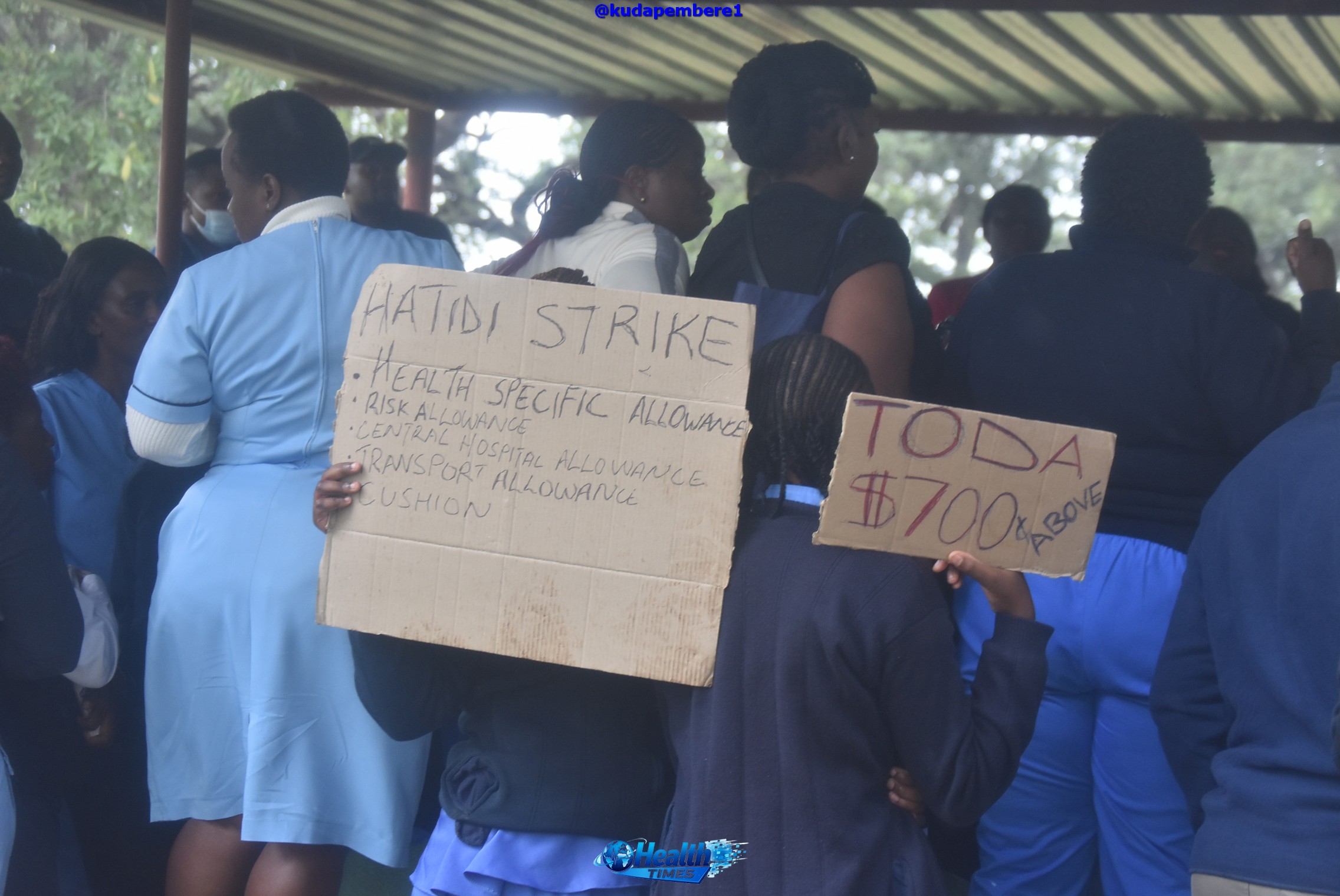
In the last two months, Zimbabwe’s two largest hospitals – United Bulawayo Hospitals and Harare Central Hospital – indefinitely suspended all elective surgeries owing to stock-out of drugs.
The latest development deals a blow to the enjoyment of the right to health by thousands of predominantly poor people in a country with a high disease burden and just four central hospitals for a population of 13 million people.