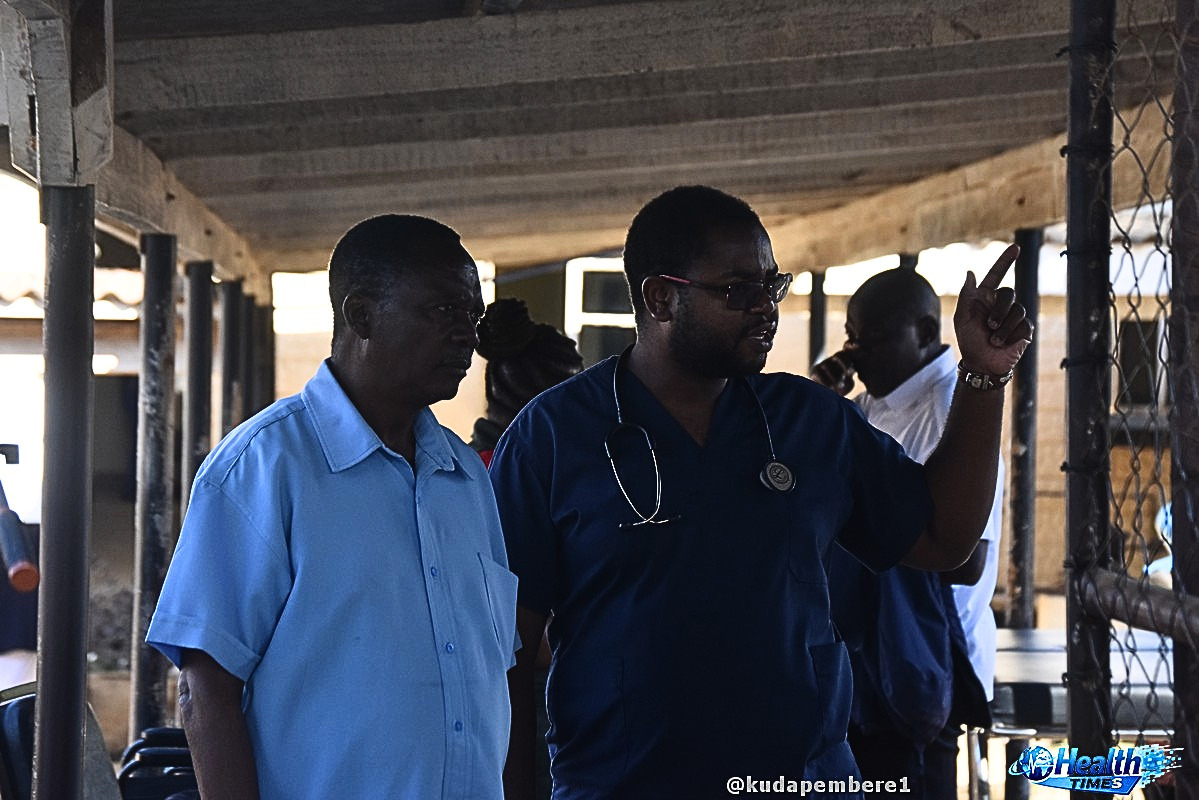
The Medicines Control Authority of Zimbabwe (MCAZ) on Monday launched its #MedSafetyWeek awareness campaign urging Zimbabweans to report any undesired side effects of medicines they take.
By Kudakwashe Pembere
With most of the people locally and globally now virtually savvy, MCAZ joins the rest of the world in the #MedSafetyWeek social media campaign which is in its seventh year running.
This year’s #MedSafetyWeek comes as MCAZ witnessed a colossal jump in the number of adverse events following immunization (AEFI) during 2021 when 445 cases were reported compared to 51 the previous year.
“Every report to the MCAZ helps to improve the safety of medicines for all patients People are encouraged to report suspected side effects of medicines as part of the global #MedSafetyWeek social media campaign Launched today by the MCAZ. the seventh annual #MedSafetyWeek is running until 13 November to encourage everyone to report suspected side effects of medicines. This year’s global campaign involves medicines regulators from 81 countries and focuses on the key role of every healthcare professional, patient, and carer who reports a suspected side effect and contributes to using medicines safely,” said MCAZ.
The Authority whose guiding mandate is to protect and safeguard public and animal health says their Clinical Trials and Pharmacovigillance Division has helped identify safety concerns previously overlooked.
“All medicines may cause side effects in some patients, so there are steps in place to continuously monitor their safety after they are placed on the market. The purpose of safety monitoring is to gain more information about known side effects and find out about new ones. Regulators operate systems to detect and analyze those side effects and prevent harm to future patients. The Pharmacovigilance and Clinical Trials Division (PVCT), which is the National Pharmacovigilance Centre, under the MCAZ, collects, organizes, and investigates reports of suspected side effects. Since it was created, it has helped identify several safety issues which were not previously recognized as being linked to a particular medicine until the MCAZ received information from reports. By reporting suspected side effects to the MCAZ, you are actively participating in identifying emerging safety issues, so that the MCAZ can take action when necessary and protect you and others from harm,” MCAZ said.
MCAZ Public Relations officer Mr Davison Kaiyo, said, “Every report made by a patient, a healthcare professional, or a carer plays a key role in gaining more knowledge about the benefits and risks of medicines in clinical use and allows action to be taken to minimize risks.
“Reporting suspected side effects to the MCAZ helps to improve the safety of medicines for all patients and. in some cases, can result in better tailored prescribing advice, which can improve patient outcomes. -If you or a patient you are supporting experience a side effect with a medicine, make sure to report it to us promptly.”
The MCAZ says people can submit a report in many ways such as:
• Using the MCAZ electronic reporting system on the MCAZ website – pv.mcaz.co.zw/
• Using the MCAZ mobile applications, available for Android and iOS on the Google Play Store and Apple App Store respectively
• Using the paper reporting forms available at most health facilities and the MCAZ offices at 106 Baines Avenue, Harare • Using pdf versions of the reporting forms available from the Downloads page of the MCAZ website – https://www.mcaz.co.zw
• Using telephone +263772145191-3 • Using email — pvct@mcaz.cozw