By Kuda Pembere
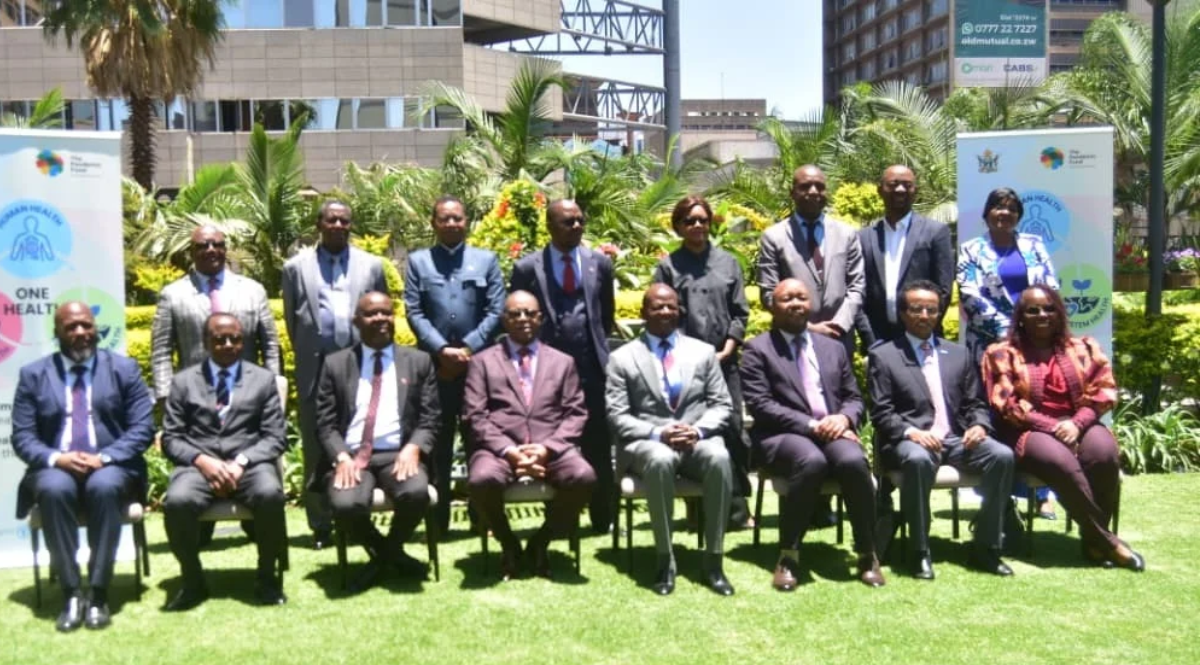
Zimbabwe has launched two Pandemic Fund projects worth a combined US$16.82 million to strengthen disease surveillance, laboratory capacity and emergency preparedness amid growing concerns over climate-related health threats.
The projects will adopt the One Health approach, which recognises the links between human, animal and environmental health and promotes coordinated action to prevent, detect and respond to disease outbreaks.
The launch comes as Zimbabwe faces the effects of drought, extreme heat and below-normal rainfall, while recurrent outbreaks of cholera and measles continue to highlight the need for stronger public health preparedness.
Officiating the launch on Monday, Health and Child Care Minister Dr Douglas Mombeshora said the projects would require coordinated action across government, the private sector and communities to ensure the country could identify and respond to health threats before they escalated into emergencies.
“I extend our appreciation to the Pandemic Fund and all implementing partners for their support towards strengthening our capacity to prevent, detect, and respond to public health threats,” he said.
Mombeshora said protecting public health was central to national development, warning that disease outbreaks could disrupt livelihoods, trade, agriculture, education and essential public services.
“Preparedness is therefore not simply a health sector priority, it is a national development imperative,” he said.
The projects will be implemented through a multi-sectoral arrangement led by the Ministry of Health and Child Care, working with the Ministry of Agriculture on animal health, the Ministry of Environment, Climate and Wildlife on environmental health, and the Ministry of Local Government and Public Works on disaster preparedness and management.
Technical partners include the World Health Organization (WHO), the United Nations Children’s Fund (UNICEF) and the Food and Agriculture Organization (FAO). The Ministry of Finance and the African Development Bank will support resource mobilisation.
Mombeshora said Zimbabwe had received approximately US$2.49 million under a US$35.8 million regional grant supporting eight countries to strengthen disease surveillance and response, particularly in the face of climate-related health threats.
The country’s national grant is worth approximately US$14.33 million and will run until 2029.
Government has committed approximately US$91.8 million in domestic resources, while development partners have pledged about US$49 million in co-financing.
“These are significant commitments, accompanied by an equally significant responsibility to deliver results and ensure that investments strengthen systems that Zimbabwe can sustain beyond the funding period,” Mombeshora said.
The two grants are expected to strengthen disease surveillance, laboratory capacity and emergency response structures, while improving the use of climate information to anticipate health risks.
They will also support coordination between human, animal and environmental health services at points of entry and at provincial, district and community levels.
Mombeshora said Zimbabwe’s experience with cholera outbreaks and the re-emergence of measles had demonstrated the importance of early detection and timely response.
He added that, although Zimbabwe had no confirmed Ebola case, Government had approved an Ebola Preparedness Contingency Fund and strengthened surveillance measures.
“Preparedness is not about creating alarm. It is about ensuring that when a threat emerges, our institutions are ready to respond before it escalates into a wider emergency,” he said.
Local Government and Public Works Minister Daniel Garwe said the initiative came at an important time, following the conclusion of the National Multi-Hazard Contingency Planning Workshop convened by the Technical Committee on Environment, Emergency Preparedness, Disaster Prevention and Management.
Garwe said planning for the forecast severe El Niño required a coordinated and proactive system capable of protecting vulnerable communities, preserving economic stability and maintaining essential services during emergencies.
“Addressing them requires sustained investment in prevention, in safe water, sound waste management, functional drainage and empowered communities. These are core Local Government functions,” he said.
WHO representative to Zimbabwe Dr Desta Tiruneh said the combined US$16.82 million investment offered an opportunity to translate lessons from the COVID-19 pandemic and other health emergencies into stronger systems and better preparedness.
He said early detection, reliable laboratory networks and timely information-sharing were essential to identifying threats and responding before outbreaks escalated.
Tiruneh added that resilient health systems also needed sustained investment in primary healthcare, a skilled and protected health workforce, and dependable supply chains to ensure essential services continued during emergencies.
UNICEF representative Etona Ekole said the effectiveness of public health responses depended not only on the strength of health systems but also on public trust, access to reliable information and communities’ ability to act promptly.
“What is particularly encouraging is a strong national ownership underpinning this investment,” Ekole said.
She said government leadership and cooperation among ministries, communities, implementing partners and development partners would be critical to ensuring that systems strengthened through the programme were maintained beyond the funding period.