By Michael Gwarisa in Buhera
In Mubvirwi Village, Buhera under Chief Nyashanu, tales of how one family lost five members within a space of five days will forever be told decades from now. Even though this tragic incident occurred five months ago, when the Cholera outbreak was at its peak in Buhera District, one can easily sense the sadness and sombre atmosphere that has engulfed the once vibrant and happy village of Mubvirwi.
The new graves that have sprouted across Villages in Buhera over the past few months are a constant reminder of the horror that befell the village in September 2023. Sitting under a semi-mature Murumanyama (Xeroderris Stuhlmannii) tree, hiding from the blazing heat, Joseph Mubvirwi (55), gazes into the future. He can’t help but wonder what the future holds after losing his father the village head and his beloved mother and sister who all succumbed to Cholera.
After exchanging greetings, he accompanies us to the burial site where his parents and sister are buried. In Buhera, just like many communal areas, villagers bury their loved ones in the yard or just a stone’s throw from the homestead. His parents and sister are buried at the late Village head Mubvirwi homestead. The entrance to the homestead from the southern side is greeted with three neatly plastered graves bearing the remains of his father, mother and sister.
Following the demise of his father, Joseph who is the younger son of the late Village Head Mubvirwi, was appointed Village head. He is lucky to be alive following his protracted battle with cholera.
My mother was the first person to die from Cholera in this village,” said a teary Mubvirwi.
“We were not aware that what my mother was experiencing was Cholera, so we cared for her at our house for three days until she died. I am sure I contracted Cholera while caring for my mother.”
Because people were not aware of the cause of his mother’s death, relatives performed funeral rituals including washing the body, cooking food and eating at the funeral. Since his mother was still a devoted apostolic sect member, they turned away Village Health Workers who had come to assist with the burial and funeral proceedings in line with the Ministry of Health Requirements for Cholera deaths.
Unbeknown to them, this funeral would mark the genesis of an outbreak the Village would endure for three months. The following day, Joseph ferried about 16 villagers who were experiencing Cholera symptoms to Mudhanda clinic in his T35 truck.
When he returned home, he also started exhibiting severe signs of Cholera including diarrhoea and vomiting. He was rushed to Murambinda Hospital where a Cholera Treatment Centre has been established. By then Cholera had spread in his family like wildfire. Around that same time, his elderly father who was supposed to be mourning the death of his wife was hit by severe diarrhoea and died within 24 Hours.
“My father and his twin brother also got sick on the same day as myself. My father and his twin died a day apart and then followed by my sister and my uncle’s wife, by uncle’s wife I mean my father’s twin brother’s wife. They are all dead now. We lost another villager around the same time,” said Mubvirwi.
Painful as it is, Joseph is trying to pick himself up and be the leader he was chosen to be by his village.
Before his Cholera experience and before losing five family members to Cholera, Village Head Mubvirwi never believed in vaccination. He was born and bred under strict apostolic beliefs and they still influence his day to day life and decisions. The same goes for most people in his village. 85 percent of villagers in Mubvirwi and those in surrounding areas belong to white garment sects.
Today, the tragic story that befell the Mubvirwi family and many other villagers who lost their loved ones to the outbreak has given the community a fresh perspective on vaccines and vaccination in general.
During the just ended Oral Cholera Vaccination campaign, Mubvirwi used his influence as
village head to encourage his people including members of apostolic sects to get
vaccinated.
“I got vaccinated against Cholera. If we were to make a head count, I am sure this village I am head of has the highest number of people vaccinated here in Buhera. A day after it was announced that health workers would be coming to vaccinate people, we were the first village to go and queue to get our dosses at Mudanda clinic,” he added.
Mubviriwi Village has 76 households and approximately 300 villagers, and a majority of them have been vaccinated. Nearby Villages have also seen an increase in vaccination coverage. The Ministry of Health and Child Care (MoHCC) working with partners, World Health Organisation (WHO), UNICEF, Zimbabwe Red Cross Society (ZRCS), Merci Corps and others have set up Cholera Treatment centres and Oral Rehydration Points in Buhera district.
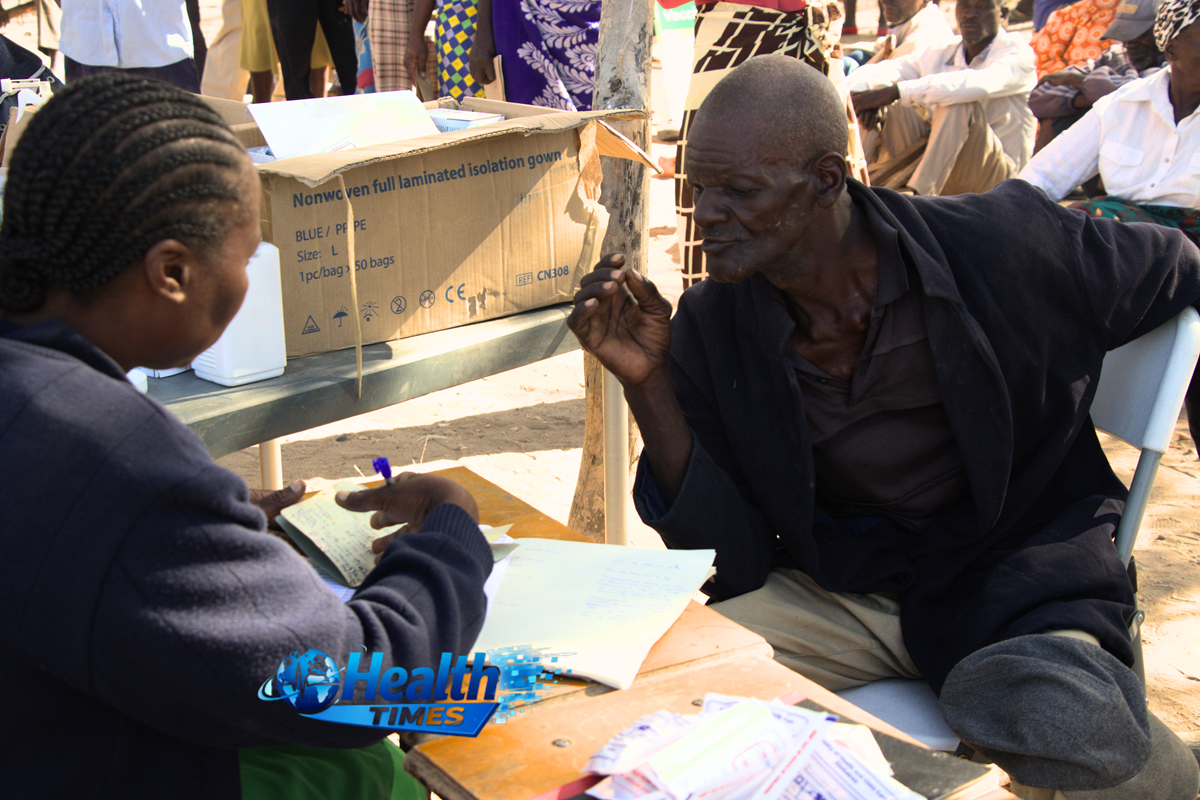
The first port of call for all villages including Mubvirwi, Chikuwa, Wenhira, Maisiri, Chikaka, Tikiza, Tabarira, Sunduza, Zingwini among others is Mudanda Rural Health Clinic. Working with Village Health Workers (VHWs), the Clinic has successfully responded to the Cholera outbreak. The Village Health Workers provide relevant health information about Cholera and Oral Cholera Vaccination Mubvirwi and surrounding communities. Information, Education and Communication (IEC) materials are being distributed with health promotion officers on the ground to continue community sensitisation.

Mrs Mavies Machoko, a Village Health Worker manning Mubvirwi, Chikuwa, Bika and Wenhira villages attested to how villagers from Mubvirwi took the initiative to get vaccine without being reminded by healthcare workers.
“Following the outbreak that hit Mubvirwi village and also looking at the treatment and response that we rendered, villagers are now appreciative of our work. As a village health worker, I did not struggle to mobilise people to get vaccinated against cholera, they walked from Mubvirwi and other surrounding villages to come and get the vaccine here at the clinic. These people witnessed Cholera first hand and they know how deadly it is,” said Mrs Machoko.
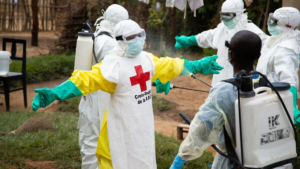
VHWs have also been equipped with hydration salts and necessary personal protective equipment (PPE) to help patients while waiting for transportation to facilities.
Nyengeterai Mutero, the Sister in Charge for Mudanda Health Centre Buhera said following government and partners’ interventions, they last recorded Cholera cases on November 29, 2023.

“We first got our case on 15 September from one of the Villages, that’s is Mubvirwi Village. Cases started increasing from September 22, 2023, up to November 29, when we last admitted a case here at the facility. We recorded 207 cases from the beginning up to the time we stopped having cases here. We didn’t record a death at the facility but four community deaths of people who were objectors from Mubvirwi village,” said Sister Mutero.
According to data from the Ministry of Health and Child Care, 2,223 people were infected with cholera in Buhera district and 44 people have died. Across Zimbabwe’s 10 provinces and 62 districts, 24,885 people have been infected and there have been 501 deaths since the first cases were identified in February 2023. Manicaland commenced its Oral Cholera Vaccination campaign on February, 6 and ended on February 11 2024. A vaccine mop up exercise was conducted on February 12.
Manicaland Province Medical Officer (PMD), Dr Munyaradzi Mukuzunga said the province has recorded 97.6 percent Oral Cholera vaccination coverage and uptake was also high among vaccine objecting communities.
“In Buhera we had 16 wards which is where we have the biggest burden of Cholera. We had a coverage of about 94 percent of the targeted population who did receive their Oral Cholera Vaccine,” said Dr Mukuzunga.
In Chimanimnai, five wards had the OCV rolled out with a 100 percent of the target population being reached with vaccines. Six wards were targeted in Mutare rural, Mutare City nine Wards and seven in Chipinge. Both Mutare City and Chipinge had 100 percent coverage of the Oral Cholera Vaccine while Mutare Rural had 99.8 percent.