
WHEN Nelson Mwanawenyu, a nurse at a plantation estate clinic in Manicaland province applied for a position with a private health institution in the city of Mutare, he was told the interview would be conducted through the Skype social media platform.
By Caiphas Chimhete, CWGH
He innocently asked the secretary who had phoned him to give exact directions to Skype, which he thought were some magnificent building in the mountainous city. Mwanawenyu’s enquiry sent the secretary into a bout of laughter. She however later explained to him that Skype was neither a venue nor building but a digital platform that allows communication among people on a computer or mobile device.
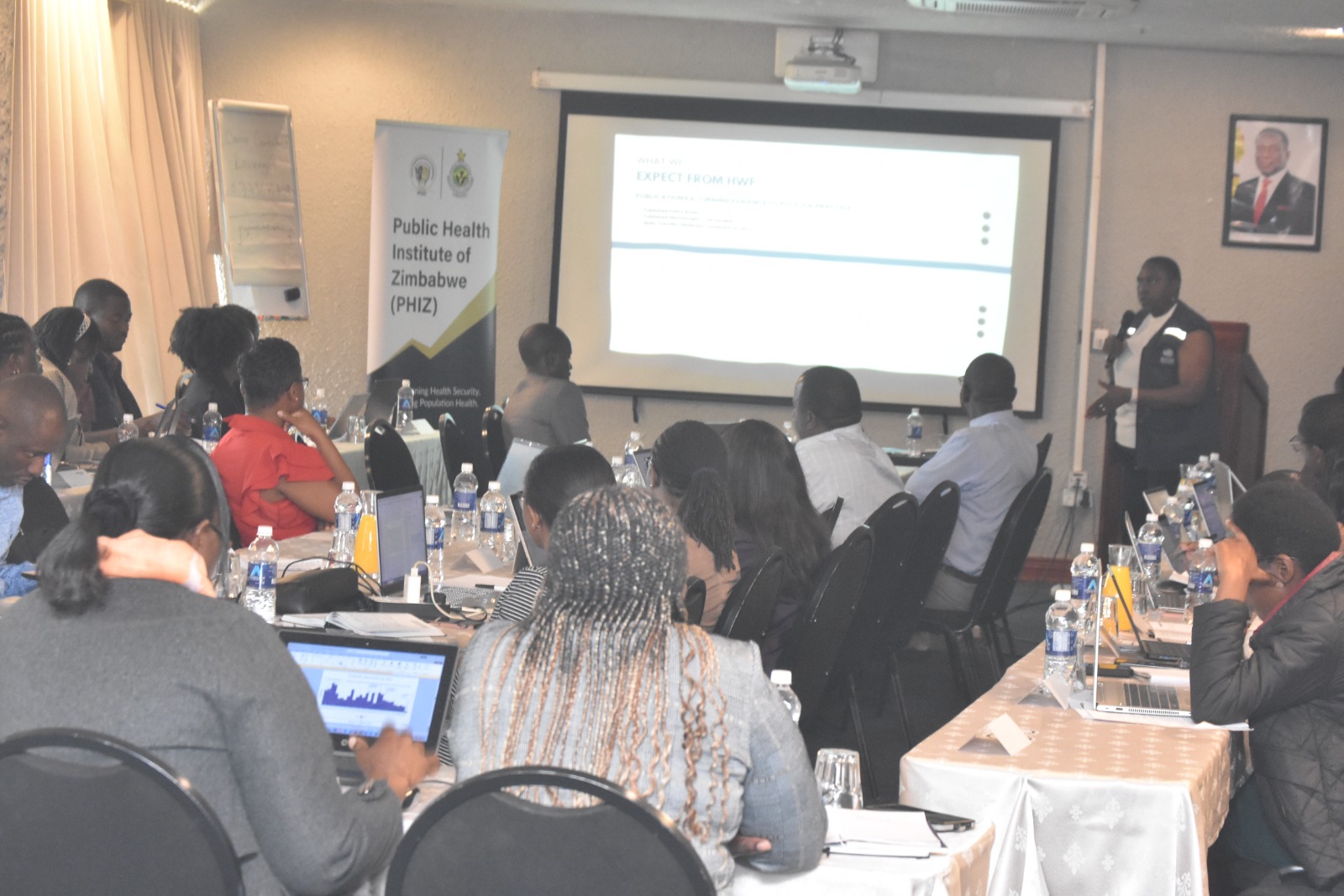
“This was one of the most embarrassing moments in my life,” Mwanawenyu confessed at a workshop on Capacitating Community Health Structures on Digitalisation during Covid-19 conducted by the Community Working Group on Health (CWGH) in partnership with the Ministry of Health and Child Care (MoHCC) in rural Mutasa district in Manicaland province recently.
The workshops, which also focused on responsible use of social media, were attended by nurses, environmental health technicians and community health workers from plantation estates.I did not get the job because I did not know anything about Skype. This is why I am more than happy to take part in this workshop,” he said.
The workshops which took place at clinics and plantation estates in Mutasa and Nyanga districts were designed to build the capacity of community health workers (CHWs) on access to information through digitalized social media platforms such as Zoom, Skype, Whatsapp, Facebook, Instagram, among others.
It was noted that under the current Covid-19 lockdown measures, it would be prudent for CHWs to keep abreast with latest social media platforms to enable easier communication with their clients and among themselves.
Just one month after the digitalization training workshop, some CHWs have mastered the art of social media communication. Health Centre Committee (HCC) chairperson Shupikai Saidi at Selborne Esate in Mutasa district took part in NEC wage negotiations through the Zoom platform. Estate managers, union leaders and workers’ representatives participated in the meeting.
“The training was an eye-opener for me,” she said. “Now we can have our meetings without going to meet at a central place like we used to do. I can do it in the comfort of my home without having to be in contact with anybody during this time of Covid-19.”
Before the social media training, most wage negotiations for farm workers were held in the city of Mutare where the participants had to bear the high cost of transport.
General Plantations Workers’ Union of Zimbabwe (GAPWUZ) representative for Manicaland province James Goneso, who took part in the training workshops, said capacitation of CHWs on digitalization was set to revolutionize communication and way of doing business in the farming communities in the province.
“Knowledge of digitalisation makes a difference in their lives and their community. In simple terms, it makes life easier in a number of ways. It’s fast and cost effective at times,” he said.
Use of social media platforms bring the opportunity for direct access to education and health care for rural residents who are forced to travel long distances for medical treatment.
Goneso was however quick to point out that CHWs earn very little money and could hardly afford data bundles to chat or holding meetings on social media platforms without the assistance of other stakeholders.
Connectivity is another major challenge in some areas in Manicaland. This calls for the installation of more signal boosters to advance the rural communities development and provide access to networks that will enable ease of communication.
The training workshops are in line with the government’s new information communication technology policy (ICT) which provides direction for sustainable economic growth through coordinated use of technology. The policy puts in place institutional and legal frameworks aimed at promoting growth, inclusiveness, innovation and partnerships in the ICT sector and the economy at large.
The government must speed up implementation of the electronic governance programme to enhance communication between it and business, employees and citizens including people in remote rural communities.
Community Working Group on Health (CWGH) Executive Director, Mr Itai Rusike urged government to speed up implementation of the ICT policy, not only for the benefit of CHWs, but for ease business operations at all levels.
“The policy documents must not gather dust in high offices,” he said. “Once such policies are in place, they must be implemented for the benefit of all Zimbabweans, including those in remote farming communities like Nyanga and Mutasa districts.”
Mr Rusike said efforts should be made to extend network infrastructure and increasing public awareness about the importance of digitalization in rural communities.
Formulation of innovative initiatives to keep the price of internet affordable is imperative to ensure that everyone has access to digital services without financial strain. COVID has demonstrated that there is much more that needs to be done to strengthen our health systems at community level as the community health workers are an integral part of the health systems and should be supported with affordable ICT to fully respond to the pandemic.
The Community Working Group on Health (CWGH) is a network of national membership
based civil society and community based organizations who aim to collectively enh-
ance community participation in health in Zimbabwe.