

By Michael Gwarisa
Smallholder livestock farming remains a cornerstone of livelihoods, food security, and rural economies across sub-Saharan Africa. Millions of households rely on animals such as chickens, goats, sheep, and cattle not only for daily nutrition but also as a critical source of income. In recent years, the sector has expanded rapidly, driven by population growth, rising urban demand for animal protein, and the relatively low barriers to entry associated with backyard farming.
Backyard and small-scale livestock production, particularly poultry farming, has become one of the most popular ventures in rural and peri-urban communities. In countries such as Zimbabwe, smallholder farmers dominate broiler and chick production, drawn by quick production cycles, modest start-up costs, and the promise of steady returns even during periods of economic uncertainty. For many families, a small flock in the backyard can mean the difference between chronic food insecurity and survival.
Yet beneath this success story lies a growing and often overlooked public health threat. The widespread and poorly regulated use of antibiotics in backyard livestock farming is quietly accelerating antimicrobial resistance, a phenomenon already responsible for hundreds of thousands of deaths across Africa each year. As resistant infections increase and treatment options become less effective, projections point to a far deadlier future. When antibiotics intended to protect animal health are misused and withdrawal periods are ignored, resistant bacteria can move silently from farm to food to people, threatening to undo decades of public health progress.
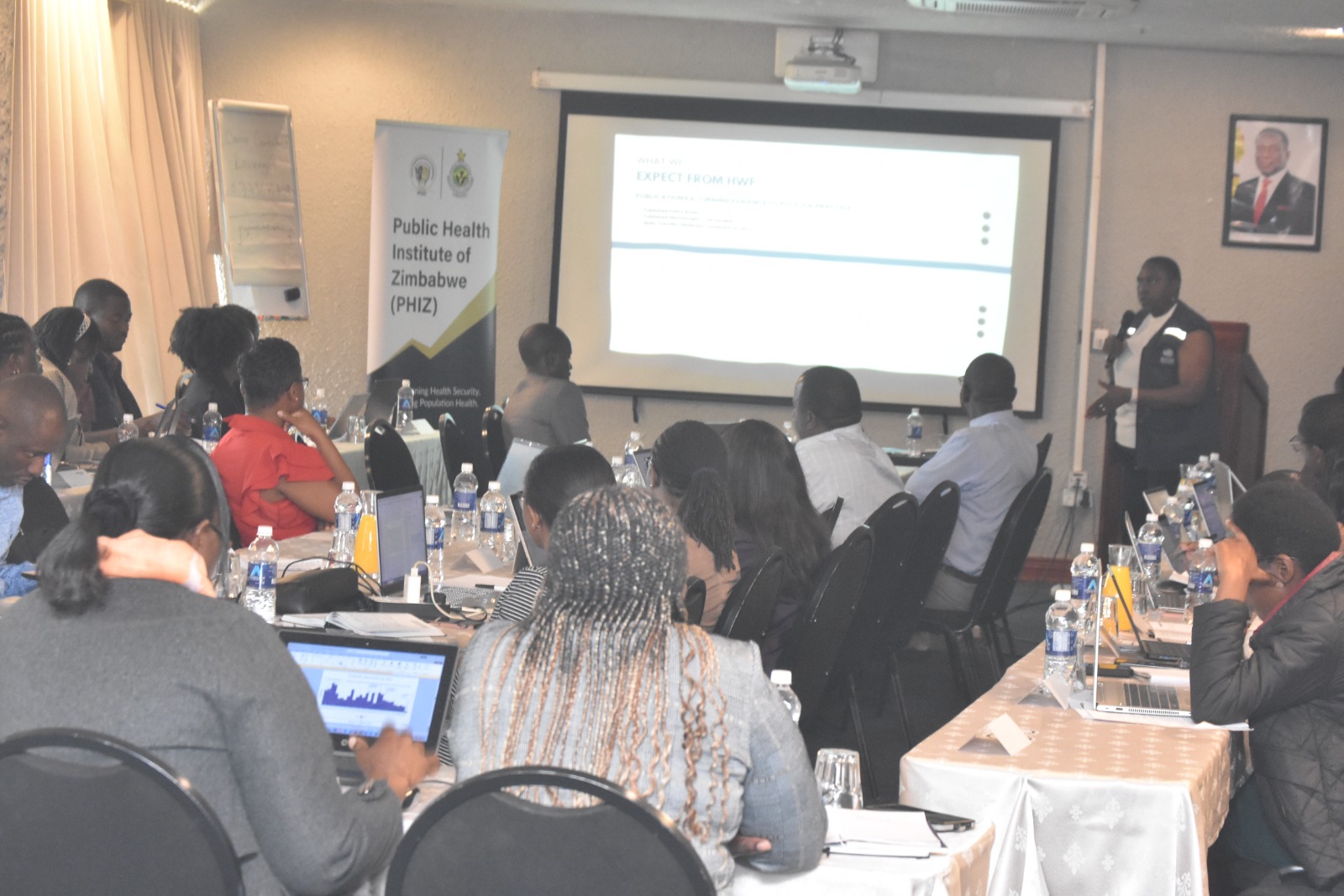
Speaking to HealthTimes on the sidelines of a One Health Science-Media Cafe in Harare, Dr Margaret Karembu, Director of the ISAAA Africa Centre, said that limited access to information among smallholder farmers is fostering conditions where antimicrobial resistance can thrive.
“The problem of backyard livestock production is huge, not only in Africa but globally,” said Dr Karembu.
“In Africa, we have a very high number of small-scale farmers, and our agricultural extension systems have failed many of them. Farmers often do not get the information they need. Sometimes it is simple lack of awareness, and other times it is pressure to get products to the market as quickly as possible.”
She added that regions with strong agricultural extension services tend to record lower levels of antimicrobial resistance.
“When farmers receive proper guidance from extension officers, antibiotic misuse is reduced. However, where this support is absent, the problem continues to grow, especially because small-scale farming systems dominate our food production,” she said.
Antimicrobial resistance is already a major public health burden in sub-Saharan Africa. Projections indicate a sharp rise in deaths linked to resistant infections in the coming decades. The Global Research on Antimicrobial Resistance Project, cited by Deutsche Welle, estimates that more than six million people in the region could die from AMR-related infections between 2025 and 2050 if current trends continue.
Antibiotics used in livestock reach humans through several pathways, with the food chain being the most direct. Animals treated with antibiotics can retain drug residues in their meat, milk, and eggs. When these products are consumed before the drugs have fully cleared from the animal’s system, people may ingest trace amounts of antibiotics. Poor handling, processing, and cross-contamination in slaughterhouses and dairies can further spread these residues to other food products.
Environmental contamination presents another significant risk. Livestock excrete antibiotics through urine and faeces, which are often applied to fields as fertiliser. This practice introduces antibiotic residues into the soil, where they can be absorbed by crops. Water systems are also affected, as these drugs can leach into rivers, lakes, and groundwater, exposing communities through drinking water and domestic use.
Beyond chemical residues, antibiotic-resistant bacteria that develop in animals can be transferred directly to humans through contact with livestock, contaminated animal products, or farm environments. These bacteria can also circulate more widely through ecosystems, creating what experts describe as a silent spillover from farm to table and into the broader environment. This interconnected risk highlights the urgency of strengthening regulation, improving farmer awareness, and promoting safer livestock production practices across Africa.
Dr Karembu explained that misuse of antibiotics in animals mirrors misuse in humans, with similar consequences.
“Sometimes antibiotics are used in livestock, but farmers do not complete the full course of treatment,” she said. “As a result, animals begin to develop resistance. The same thing happens in humans. When people do not complete their medication or take incorrect doses, antibiotics become less effective over time. The body adapts, and the next time those drugs are needed, they no longer work as intended.”
One of the most critical but poorly understood aspects of livestock antibiotic use is the withdrawal period. Many smallholder farmers fail to observe this requirement, often due to financial pressure or lack of knowledge. The withdrawal period refers to the minimum time that must pass after an animal has been treated with a veterinary drug before its products can be safely consumed by humans. This allows the drug to be metabolised and eliminated from the animal’s body, reducing residues to safe levels.
Dr Tinashe Hodobo from Zimbabwe’s One Health Secretariat stressed the importance of respecting this period.
“When you treat an animal, there must be enough time before slaughter or sale,” he said. “Some medicines require a waiting period of up to 14 days. This gives the drug time to clear from the system. If that does not happen, residues remain in the meat or milk, and people end up consuming them. That is a serious food safety concern.”
Experts agree that addressing antimicrobial resistance in backyard livestock systems requires coordinated action on several fronts. Dr Karembu emphasised the urgent need to restore effective agricultural extension services and build awareness among smallholder farmers about responsible antibiotic use and the risks AMR poses to human, animal, and environmental health.
“There must be awareness because ignorance is not a defence,” she said. “The media has a very important role to play here. Journalists are able to translate complex scientific information into simple language that ordinary people can understand and act on.”
She added that governments must also tighten control over the sale and distribution of veterinary drugs.
“Some antibiotics that should be restricted are still readily available in agro-vets and pharmacies,” she said. “It is the responsibility of governments to enforce regulations, crack down on misuse, and ensure that only appropriate medications are accessible.”
Another critical intervention involves rapid government response when contamination or disease outbreaks are suspected. Authorities, she said, must act quickly to prevent further exposure.
“When there is a suspected outbreak or poisoning, communities need to pause,” she explained. “Whether it involves water sources, animal products, or milk, use should be stopped immediately until investigations are completed. Clear communication, strong policy, advocacy, and enforcement are essential in such situations.”
Dr Karembu also highlighted the importance of continued research and innovation to reduce reliance on antibiotics. She pointed to vaccination as a key alternative strategy.
“Vaccines play a critical role in reducing infections,” she said. “When animals and people are vaccinated, disease rates go down, and the need for antibiotics decreases over time. Innovations in biotechnology and other bio-based solutions are already making a meaningful contribution to reducing health risks across humans, animals, and the environment.”