By Michael Gwarisa
The approval of the first generic version of the twice-yearly HIV prevention injection could accelerate access to one of the most significant advances in HIV prevention, particularly for women and other vulnerable populations in low- and middle-income countries.
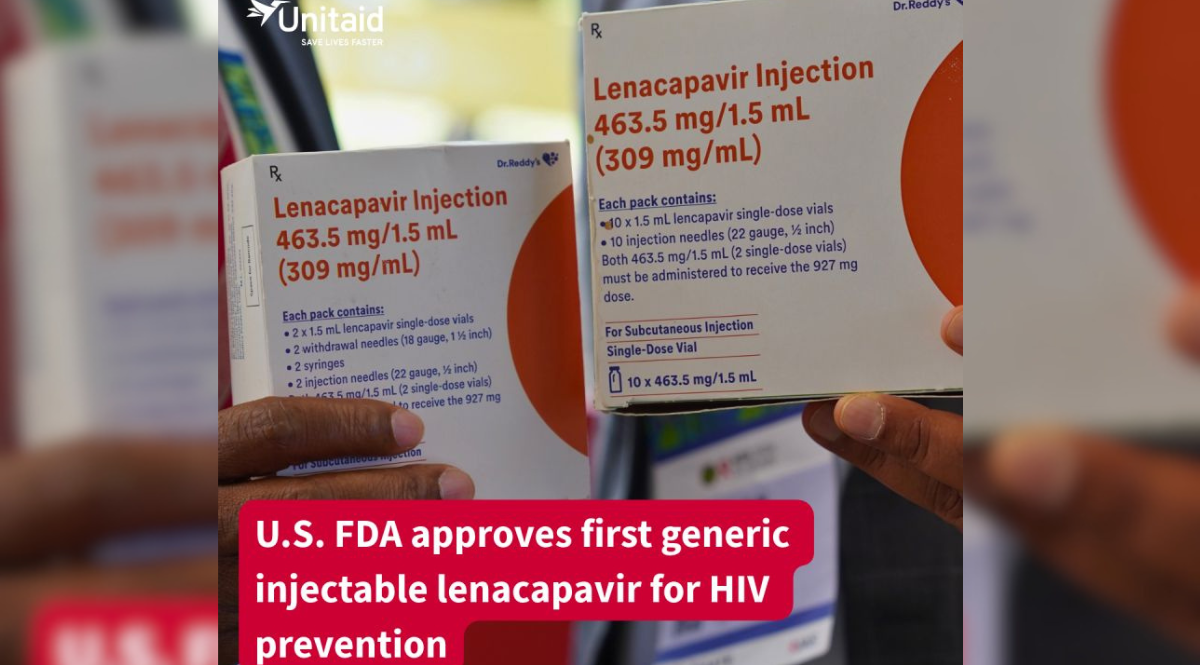
The United States Food and Drug Administration (FDA) has granted tentative approval to the first generic version of lenacapavir, a long-acting injectable drug that offers protection against HIV with just two injections a year.
Developed by Indian pharmaceutical company Dr. Reddy’s Laboratories, the generic version is expected to cost US$40 per person annually in 120 low- and middle-income countries covered by Gilead Sciences’ voluntary licensing agreement.
The approval, announced on Monday, 2 November 2026, comes just 16 months after the FDA approved Gilead’s original lenacapavir product for HIV prevention in June 2025, marking an unusually rapid transition from an innovative HIV prevention medicine to an affordable generic alternative.
Initial supplies are expected to reach countries before the end of 2026, with wider availability anticipated in 2027.
For countries struggling to sustain HIV prevention programmes, particularly in sub-Saharan Africa, the development could represent a significant opportunity to expand access to alternatives to daily oral pre-exposure prophylaxis (PrEP).
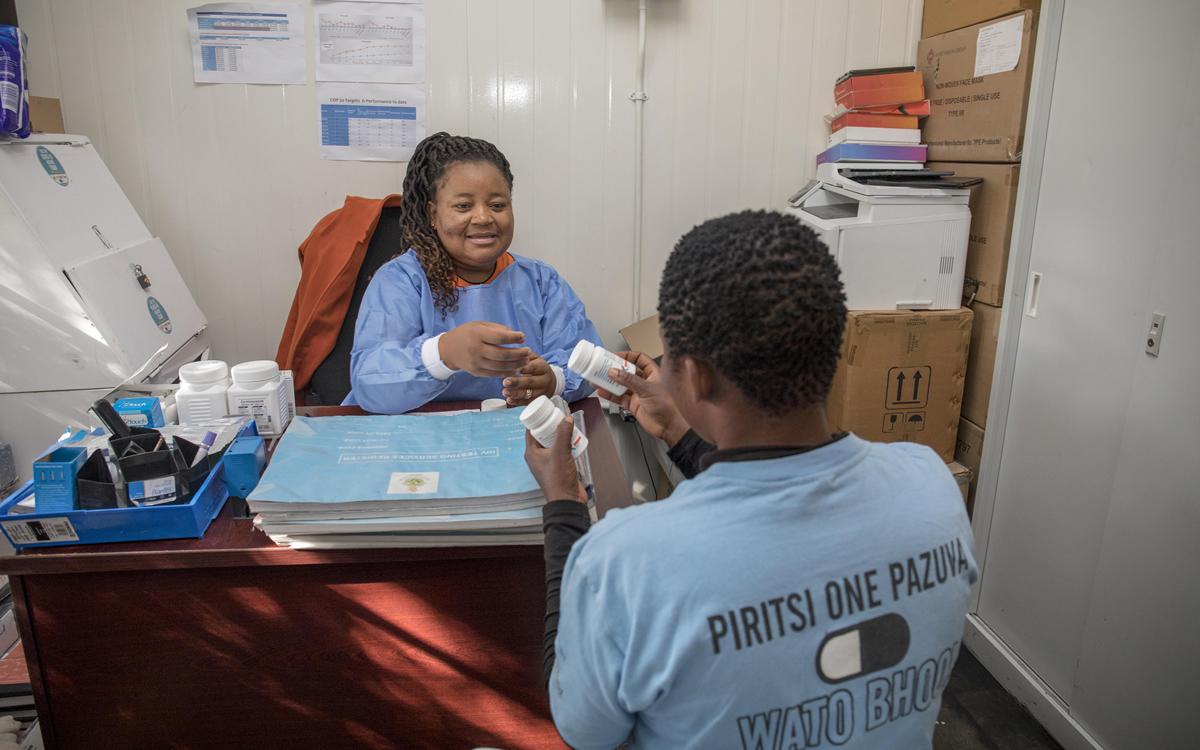
Unlike conventional oral PrEP, which requires people to take a pill every day to prevent HIV infection, lenacapavir is administered twice yearly, potentially reducing the challenges associated with daily adherence.
The original lenacapavir formulation demonstrated near-complete protection against HIV in clinical trials, making it one of the most promising developments in HIV prevention in recent years.
Demand for the injectable has already emerged across the continent. According to Unitaid, more than 125,000 people in 10 early-adopter African countries had started using Gilead’s original lenacapavir even before the generic version became available.
The introduction of a generic alternative at US$40 per person annually could significantly change the economics of making the medicine available at scale.
Dr Philippe Duneton, Executive Director of Unitaid, said the accelerated development demonstrated how early investment and strategic partnerships could shorten the time between scientific breakthroughs and access in developing countries.
“Now, with lenacapavir, we have helped shorten that timeline to just over a year. For young women in Africa, this translates into faster access to a groundbreaking HIV prevention option, with the potential to avert countless infections and drive meaningful change in the HIV response,” he said.
Dr Neil Buddy Shah, Chief Executive Officer of the Clinton Health Access Initiative (CHAI), said the twice-yearly injection could overcome some of the difficulties associated with daily HIV prevention medication.
“For someone at risk of HIV, taking a pill every day to prevent a disease they don’t have is a hard thing to ask. Two injections a year, of a product that is almost 100% effective at preventing HIV, changes that entirely,” Shah said.
He said securing generic approval just 16 months after the originator product demonstrated what could be achieved when access was considered early in the development of new medicines.
How the generic was developed
The accelerated approval followed a partnership involving Unitaid, the Wits Reproductive Health and HIV Institute (Wits RHI), CHAI and Dr. Reddy’s Laboratories.
The collaboration combined financial investment, technical expertise and regulatory support to accelerate the development and filing of the generic formulation.
The initiative builds on Gilead Sciences’ decision in late 2024 to grant voluntary licences to six generic manufacturers, including Dr. Reddy’s, allowing them to develop and supply generic versions of lenacapavir to eligible low- and middle-income countries.
A key factor in accelerating the regulatory process was a novel application strategy that combined lenacapavir’s HIV prevention and treatment indications into a single submission.
This enabled Dr. Reddy’s to use the FDA’s 505(b)(2) regulatory pathway and secure priority review, helping compress a process that would ordinarily take several years.
The FDA’s tentative approval means the generic has met the regulator’s requirements for quality, safety and efficacy, but its commercial marketing in the United States remains subject to the relevant patent and exclusivity restrictions.
However, the designation provides an important regulatory foundation for procurement and introduction in eligible countries.
Deepak Sapra, Chief Executive Officer of API and Services at Dr. Reddy’s Laboratories, said developing an affordable, long-acting injectable required considerable scientific and manufacturing expertise.
He said the approval brought the company closer to making the twice-yearly prevention option available to millions of people across low- and middle-income countries.
Approval is only the beginning
Despite the breakthrough, public health experts caution that affordable medicines alone will not guarantee widespread access.
Countries will need to prepare their health systems, train healthcare workers, strengthen supply chains and engage communities to ensure that people who could benefit from lenacapavir can access it.
Professor Saiqa Mullick, Director of Implementation Science at Wits RHI, University of the Witwatersrand, said the approval was a significant milestone but warned that countries needed to prepare for effective delivery.
“An affordable drug alone is not enough,” she said.
“Countries need health systems that are ready to deliver new prevention options, providers who are confident in offering them, and communities that are engaged as partners in their introduction and scale-up.”
Unitaid, Wits RHI and CHAI are working with governments, communities, the Global Fund, the US Bureau of Global Health Security and Diplomacy, the Gates Foundation and other partners to support the introduction of generic lenacapavir.
Their work includes supporting national introduction plans, community engagement and generating evidence on how the injectable can best reach underserved populations.
For countries in sub-Saharan Africa, where young women and adolescent girls continue to face a disproportionate burden of new HIV infections, the prospect of a long-acting prevention option at a price comparable to oral PrEP could be particularly significant.
The immediate challenge, however, will be translating regulatory approval and affordable pricing into actual availability at clinics and other points of care.