
By Staff Reporter
A new study conducted by the Africa Centres for Disease Control and Prevention (Africa CDC) in collaboration with the UK Public Health Rapid Support Team (UK-PHRST) has confirmed the critical role international health teams have played in strengthening outbreak response across the African continent. The study also underscores the need for more strategic and context-specific support models to ensure long-term sustainability and resilience in national health systems.
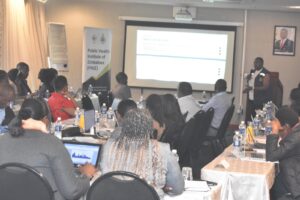
Presented and validated during a high-level virtual workshop held from 23 to 24 June 2025, the study offers one of the most comprehensive assessments to date of international technical deployments and their impact on national outbreak preparedness and response systems in African Union (AU) Member States between 2020 and 2023.
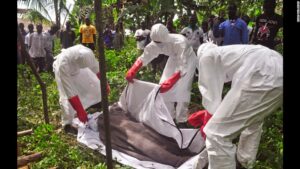
The findings indicate that international teams provided essential short-term surge capacity in several public health areas, including surveillance, laboratory systems, epidemiology, infection prevention and control (IPC), clinical care, and risk communication. Nearly half of all deployments supported two or more of these domains, highlighting their effectiveness in tackling complex, multi-layered outbreak challenges.
These deployments have delivered vital expertise, resources, and rapid response capacity at crucial moments,” said Dr Radjabu Bigirimana, Programme Lead for Africa CDC’s African Volunteers Health Corps (AVoHC). “However, they also raise important questions about sustainability, coordination, and how we strengthen long-term national preparedness systems.”
Beyond emergency response, the study illustrates how international teams contributed to health system strengthening through the provision of equipment and infrastructure, development of operational protocols, transfer of skills via training, enhancement of coordination structures, and deployment of skilled personnel during critical capacity gaps.
“This workshop reinforces the need for global partnerships to evolve, where international deployments are not just reactive measures, but deliberate investments in national systems, tailored to local realities and long-term goals,” said Dr Edmund Newman, Director of the UK-PHRST.
While the contributions of international teams were widely appreciated by national stakeholders, the study also gathered feedback from international partners, emphasizing the importance of aligning deployments with national priorities, existing capacities, and broader health security strategies. The report found that the effectiveness of deployments often hinged on the expertise of personnel and their seamless integration into national response systems.
“Evidence-informed learning must guide how we improve emergency public health deployments,” added Dr Femi Nzegwu, Assistant Professor at the London School of Hygiene & Tropical Medicine and Monitoring, Evaluation and Learning Lead at UK-PHRST. “The findings of the report validate experiences across Africa but also point to what must change to ensure deployments are more effective, context-specific, equitable, and empowering for Member States.”
The workshop culminated in the collaborative development of a roadmap to operationalise the report’s recommendations. This roadmap serves as a good practice guide for enabling sustainable solutions in outbreak response and management among AU Member States. The report also lays a foundation for reducing long-term reliance on external surge capacity by building stronger, more self-sufficient national health systems.