By Michael Gwarisa
WHO has officially declared the recent hantavirus outbreak over after the last person known to have been exposed to the virus completed quarantine and tested negative.
Announcing the development, World Health Organization Director-General Tedros Adhanom Ghebreyesus said the final identified contact linked to the outbreak had safely completed the required monitoring period.
“Today, the final contact of a person exposed to #hantavirus on the cruise ship MV Hondius completed their quarantine period, tested negative and returned home,” Tedros said.
“No further cases have been reported since the 25th of May. Therefore, WHO considers the hantavirus outbreak over.”
According to WHO, no new infections have been recorded since May 25, allowing the organization to formally declare an end to the outbreak.
The declaration marks the successful conclusion of public health measures implemented to prevent further transmission of the virus.
Throughout the response, health authorities closely monitored individuals who had contact with confirmed cases during the virus’s incubation period to ensure that no additional infections developed.
The outbreak triggered a coordinated response involving national health authorities, WHO and the operator of the cruise ship MV Hondius. Authorities worked together to identify people who may have been exposed, monitor their health, and implement appropriate infection prevention measures.
Response activities included contact tracing, health monitoring, diagnostic testing where necessary, and quarantine for individuals considered to be at risk of infection.
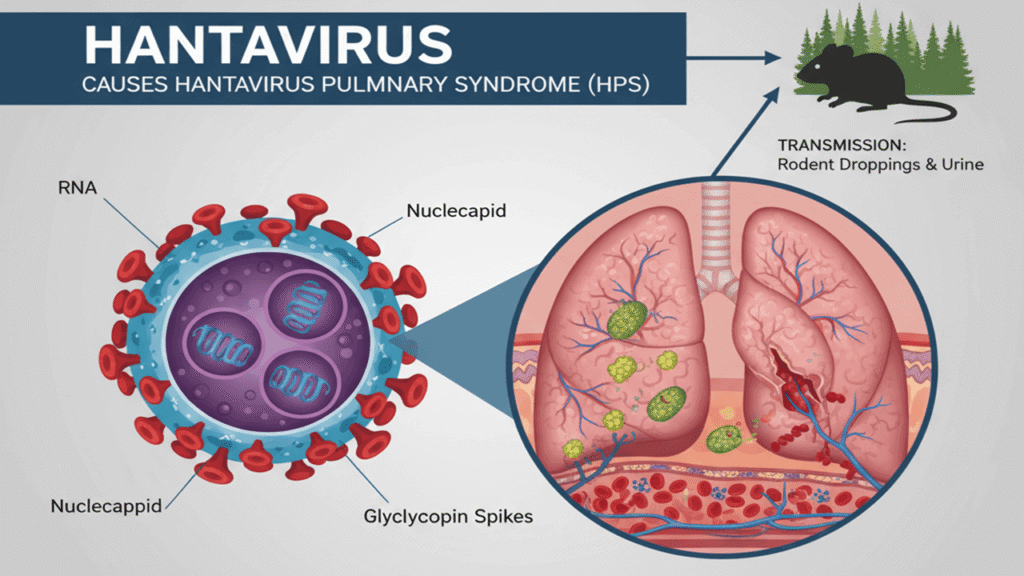
Hantaviruses are a group of viruses primarily carried by rodents. People can become infected through contact with infected rodents or by exposure to their urine, droppings or saliva.
The virus is most commonly transmitted when contaminated particles become airborne and are inhaled. Less frequently, infection can occur through rodent bites or by touching contaminated surfaces before touching the eyes, nose or mouth.