By Michael Gwarisa
HARARE – Zimbabwe’s commitment to investing domestic resources in family planning is paying dividends, with the United Nations Population Fund (UNFPA) increasing its financial support for reproductive health commodities under a financing arrangement now being recognised as a regional success story.
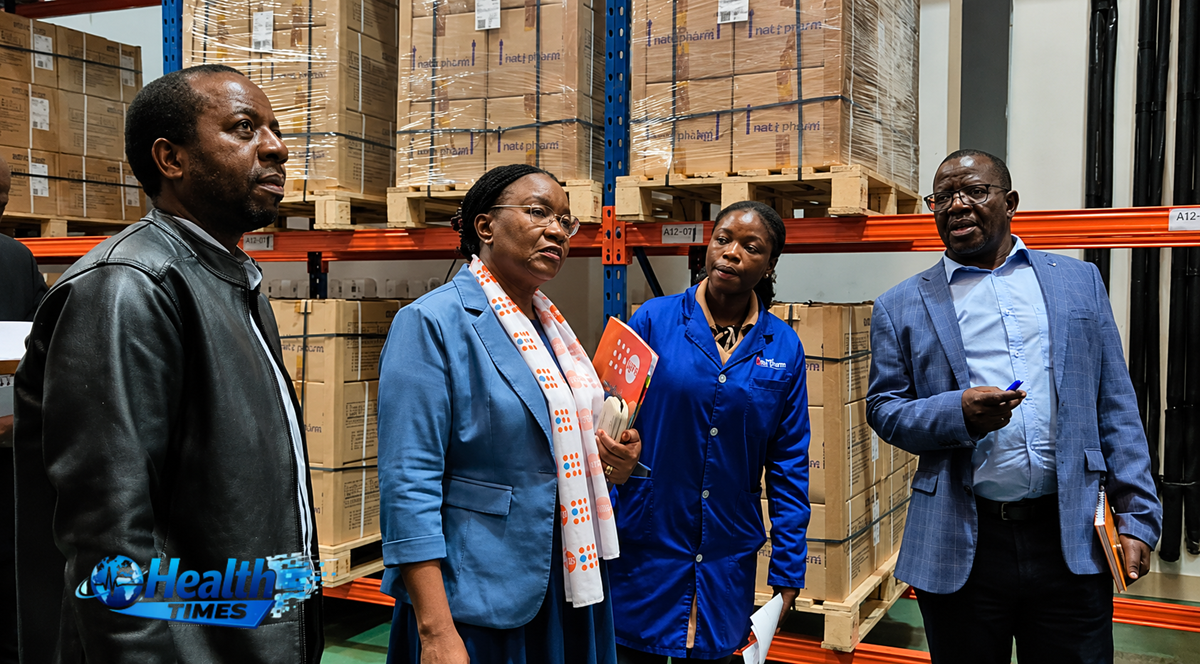
Speaking during a visit to the National Pharmaceutical Company (NatPharm) in Harare, UNFPA Regional Director for East and Southern Africa Lydia Zigomo commended Zimbabwe for honouring its commitments under the Family Planning Compact, a co-financing mechanism that matches government investment with donor-supported funding.
“We have what we call a Compact for family planning supplies, which allows governments to put in money into family planning products, and the United Nations Population Fund matches that through funding that it receives from a variety of donors,” Zigomo said.
The Compact is supported through the UNFPA Supplies Partnership, the agency’s flagship initiative to strengthen national supply chains, policy frameworks and accountability systems in 54 countries. Through its Match Fund, which contributes US$2 for every US$1 invested by participating governments, up to US$2 million, government spending on contraceptives has increased fivefold since 2020, reaching a record US$52 million in 2024.
Zimbabwe has demonstrated its commitment by increasing domestic financing for contraceptive procurement. At the International Conference on Family Planning in Bogotá, Colombia, in November 2025, the government pledged an additional US$2.25 million annually for contraceptive procurement in 2026 and 2027, at a time when global funding for reproductive health was declining.
Zigomo said the country’s sustained investment had enabled it to access greater financial support for reproductive health commodities.
“This has been working very well in Zimbabwe. Zimbabwe is one of the countries which has been doing well on the Family Planning Compact, and it has allowed Zimbabwe to actually access a greater amount of funding for supplies for family planning,” she said.
She said Zimbabwe’s achievements had attracted regional attention, with more countries adopting the financing model.
“It’s a good practice that’s been picked up around the region. More countries are actually joining the Compact process,” she said.
Zigomo said Zimbabwe’s experience could also provide a blueprint for a broader health financing model as the Health Resilience Fund comes to an end.
“As the Health Resilience Fund exits and finishes in Zimbabwe, might there be room to be thinking about some kind of a health Compact that goes beyond just family planning supplies, noting that it has been so successful,” she said.
“It’s a model that could be replicated on a larger scale for some type of a health Compact.”
She added that similar approaches had been explored in countries such as Ethiopia and could help ensure uninterrupted health services through pooled financing.
The increased investment is expected to strengthen Zimbabwe’s supply of contraceptives and other reproductive health commodities, with NatPharm responsible for ensuring the products reach health facilities nationwide.
NatPharm Managing Director Newman Madzikwa said the organisation works closely with the Ministry of Health and Child Care and UNFPA throughout the supply chain, from forecasting and procurement planning to warehousing and nationwide distribution.
“Our first role within the supply chain ecosystem is to support commodity security. NatPharm’s primary mandate is the procurement, warehousing and distribution of health products, and I can assure you that every corner of the country, no matter how remote, receives its supplies,” Madzikwa said.
He said close collaboration with the Ministry and UNFPA ensures procurement decisions are guided by accurate forecasting and supply planning, while maintaining product quality from receipt to distribution.
According to Madzikwa, UNFPA remains one of NatPharm’s key partners in securing reproductive health commodities, including oral and long-acting contraceptives, as well as fistula repair kits.