By Kuda Pembere
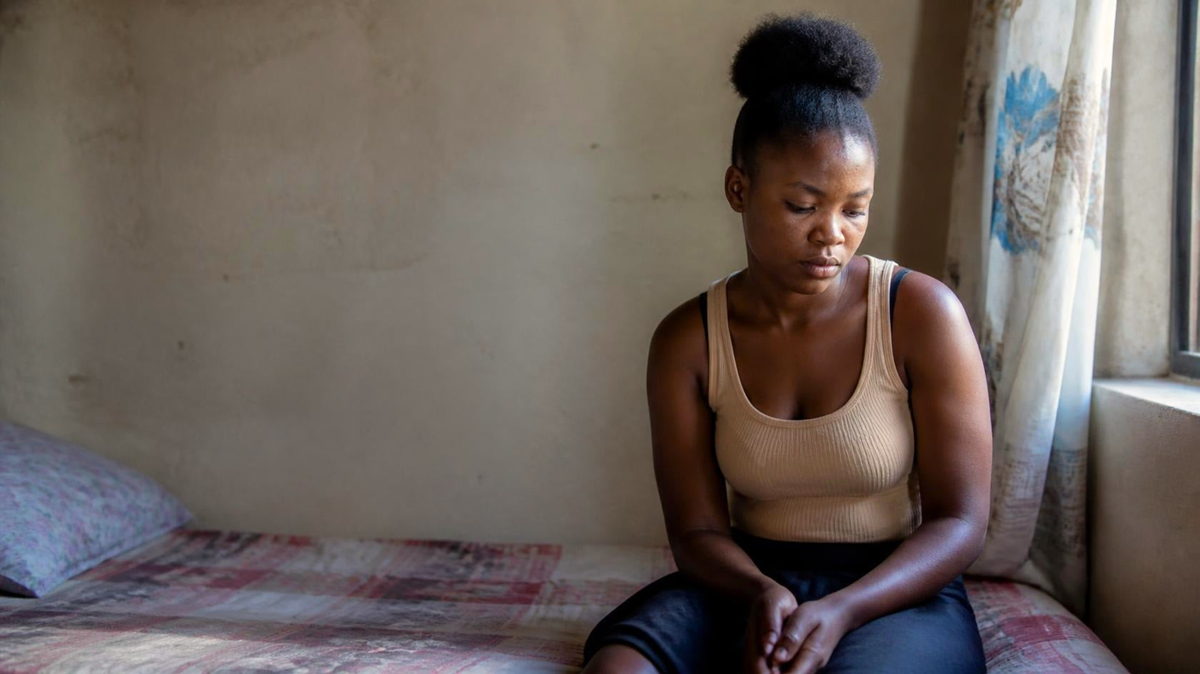
In Highfield, many pregnant learners are quietly disappearing from the classroom. Every day, it is almost impossible not to see Chipo wandering barefoot around the neighbourhood. To strangers, she may appear troubled, yet her mind is sharp and her speech clear.
Chipo became pregnant in 2022 at the age of 14 while attending a private independent college nearby. She has never returned to school, despite being the eldest of ten children.
“I was never that bright in school, so returning is a waste of time. I have to focus on keeping the baby,” she says. “I may work in a tuckshop and find money to take care of my child.”
Life for Chipo after falling pregnant has changed for the worse.
“You know reality is beginning to set in, in that I have a baby to feed. My parents separated recently and my mother doesn’t work. My step-father is a builder relying on piece-jobs,” she added.
“It is kind of difficult for all of us. So when I had the child, it was no big deal. I was still young. I never thought anything about it given my mother was still working and I had support from my father’s family. Now that they have separated,” she paused crying, “I am just as clueless. I have to take care of my child all the same.”
Asked if at school they were taught about sexuality issues, she said at her school they were not taught anything related to that.
“I was impregnated by a boy slightly older than me, I think by five months. We decided as a family to keep the baby since his family is just as poor.
“It was at Sifra College where I learned and got pregnant. It was a makeshift college that has since closed. We were not taught anything, as far as I can recall, on issues of SRH?” she asked, puzzled.
Lisa, also 14 when she got pregnant, gave birth two months ago. She refuses to return to school, fearing how she will be treated.
“I am afraid of what people will say to me and about me at school. The stigma is as high as the one I am facing in the community. I would rather stay home taking care of the baby,” she says.
Lisa hopes her child grows old enough for her to pursue hairdressing.
“I hear of many people making money out of hairdressing in town. So if I do that, I can make a living,” she says.
Not all journeys end in silence. Rudo, born in 2003, defied nearly every odd stacked against her.
She fell pregnant at 16 while learning at a public government school in Chitungwiza. Her petite frame concealed the pregnancy until she was seven months along. Today she is a lively 22-year-old mother of a confident five-year-old girl.
Rudo is light-skinned, with freckles scattered across her face. Her quiet expression hides a sharp mind that reveals itself the moment she speaks.
“I got pregnant at 16, just before I turned 17. My mother only noticed when I was already seven months pregnant. When she found out, she even suggested that I elope with the father,” Rudo says.
She spent two days hiding at her sister’s house before returning home. A friend of her mother intervened and encouraged her family not to force her into eloping. Soon, an organisation in her neighbourhood stepped in to support her education.
Legal Protection, Lingering Stigma
In 2020, Zimbabwe amended the Education Act to protect the right of pregnant students to remain in school. Rudo fell pregnant months after the amendment and clung to the hope that she could still finish her studies.
Her aunt prayed with her and urged her to stay focused.
“I felt I had unfinished business. I didn’t want to leave my story halfway,” Rudo says.
Even with legal protection, school was not easy.
“During practical subjects some students would call me mai nhingi. I ignored them. I had friends, and one of them, a male, was very protective of me,” she says.
The organisation supporting her held resilience sessions to prepare girls for stigma.
“If someone insulted you and you cried, the coordinator would say, ‘Now that you have cried here, out there the world is more vicious.’ After several sessions, we were prepared to face the outside world,” she said.
Rudo passed both her O Levels and A Levels. UNICEF noticed her during a community event where she performed. She is now studying social work at university.
Despite Zimbabwe teaching comprehensive sexuality education under Guidance and Counselling, Rudo says the lessons were far too few.
“At my government school, we only had one or two sessions per term. During A Level, I didn’t have a single session,” she says.
Teen Pregnancies on the Rise
A source from the Ministry of Primary and Secondary Education in Chitungwiza confirmed that teen pregnancies remain a major concern.
“In a single week we recorded four pregnancies and one delivery,” she said. “Usually at the end of O Level and A Level we see the highest figures.”
The Ministry runs awareness campaigns in both public schools and private independent colleges, although many independent institutions do not report cases, which makes the problem harder to track.
Renewed Calls for Stronger Sex Education
Restless Development programmes coordinator Maxwell Changombe says comprehensive sexuality education can shield young people from exploitation, violence and drug abuse.
“CSE also incorporates life skills education, where a young person is taught on career guidance and how to set goals,” he said.
Zimbabwe’s CSE policy is regarded as one of the strongest in the region, but implementation remains inconsistent, especially for out-of-school youth.
Legal Barriers to Youth Health Care
Population Services advocacy and gender advisor Nyasha Mudavanhu says contradictions in the law continue to put adolescents at risk.
“In 2022, Zimbabwe recorded 1 532 maternal deaths and 25 percent were among young women below 24,” she said. “Our laws assume every child has a parent or guardian, yet many minors are heading households. They can receive cash transfers but cannot give consent to access health services.”