By Michael Gwarisa
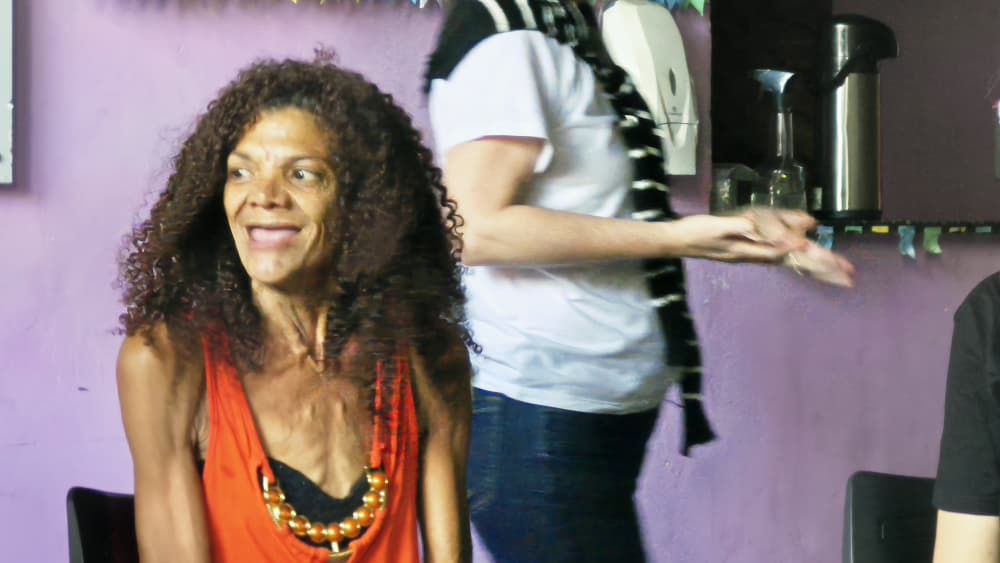
For more than a year, 59-year-old Lilian Leonel has lived on the streets of Maré, one of Rio de Janeiro’s largest favela complexes.
Her journey there, she says, was shaped by a complicated mix of personal struggles, family circumstances and drug use. But Leonel is quick to challenge what she believes is one of society’s biggest misconceptions about people who use drugs and those experiencing homelessness.
“People think we use drugs first,” she said. “Sometimes it’s because of our families. We knew drugs after we were on the streets.”
For Leonel, homelessness and vulnerability came before drug use became a deeper part of her life. Yet neither living on the streets nor using drugs, she insists, has taken away her humanity.
“All I need is to be hugged and told that I am beautiful too,” she says.
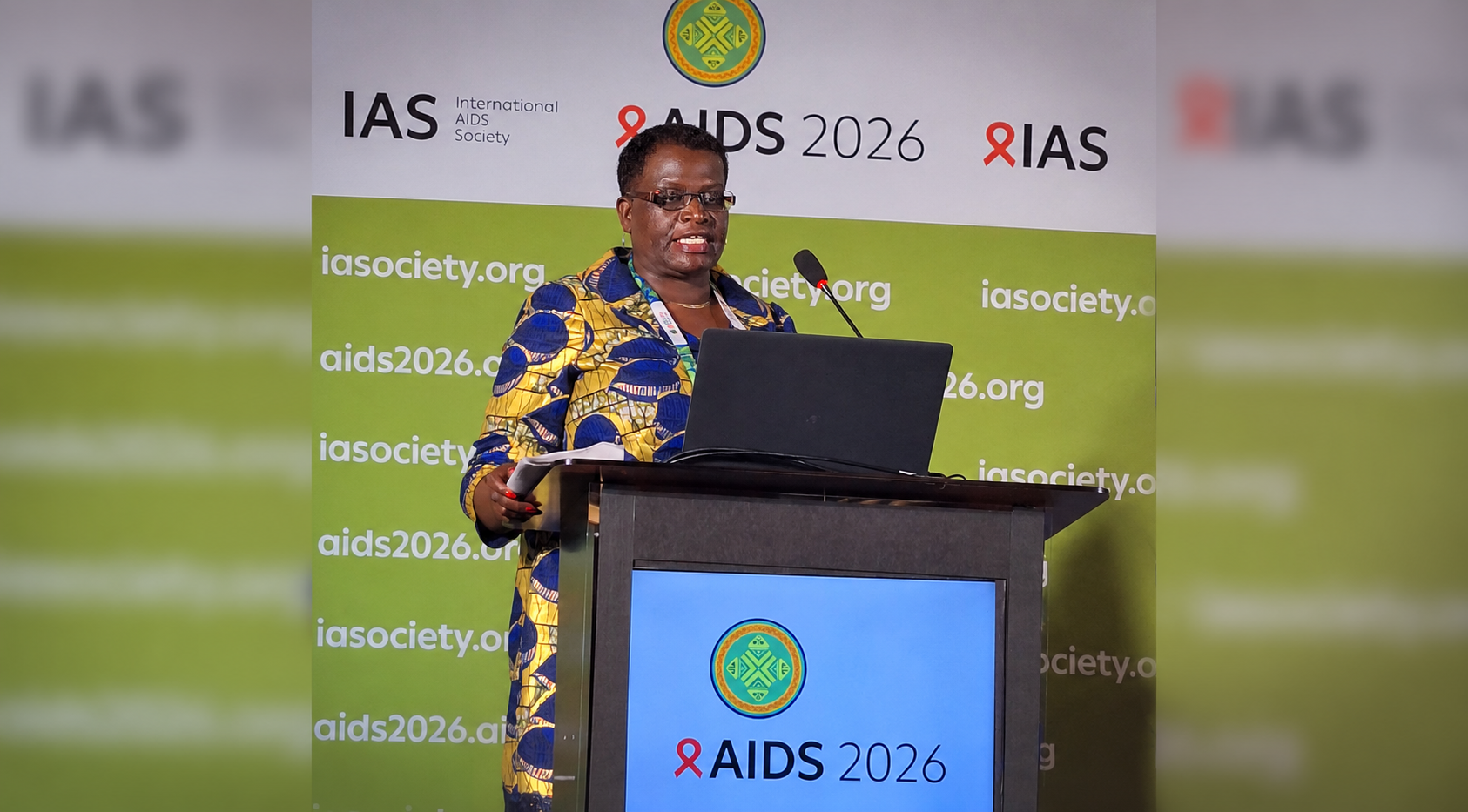
Leonel was speaking to a group of journalists visiting Maré on the sidelines of the 26th International AIDS Conference in Rio de Janeiro. Her words offered a glimpse into a different way of responding to drug use, one that begins not with punishment or condemnation, but with a simple question: what does a person need to survive?
For Leonel, the answer was found at Espaço Normal, a harm reduction and day centre run by community organisation Redes da Maré.
“The work here is to recognise that we are people,” she said. “We like to be fed. We like to be clean.”
Inside the centre, the rhythm of the day is far removed from the chaos of the streets outside. Some people arrive for a hot breakfast or lunch. Others head for the showers or wash their clothes. There are computers, books, workshops and sofas where visitors can sit, rest and, for a while, simply be indoors.
Around 150 people pass through Espaço Normal each day. On Wednesdays, the space takes on a different character. The day is dedicated to women, with around 80 accessing the centre’s services. Condoms and contraceptives are available, while staff also encourage visitors to seek HIV testing and primary healthcare through local family clinics.
For Leonel, however, the centre has become much more than a place to eat or shower.She now volunteers there. Having responsibilities and a routine, she says, has given her structure and purpose. Her drug use has reduced significantly, and at 59, she has returned to school.
“I want to be beautiful and gain weight,” she said.
Her words may sound simple, but they reflect something deeper: the possibility of imagining a future again.
More than telling people to stop
Espaço Normal is part of the work of Redes da Maré, a grassroots organisation founded by residents and former residents of the favela complex. Over the years, it has expanded from education into work on health, rights, public security, culture and gender.
But at Espaço Normal, the philosophy is particularly straightforward. According to Thais Andrade, the centre’s harm reduction coordinator, the programme does not treat drug use as an isolated problem.
The lives of people who arrive at the centre are often shaped by overlapping crises, poverty, homelessness, unemployment, violence, family breakdown and stigma. That is why the response cannot begin and end with telling someone to stop using drugs.
The centre instead offers a safe space and connects people with basic services and healthcare while working with them at whatever point they are in their lives. Visitors also participate in regular meetings and help organise and care for the space, creating a sense of shared responsibility.
For Rodrigo Pereira, coordinator of Espaço Normal, the growing number of people living on Brazil’s streets is not simply a perception. The increase, he says, became particularly visible after the COVID-19 pandemic.
“There are several factors behind this increase, including public policy challenges, lack of employment and broader macroeconomic problems,” he explained.
But statistics alone cannot explain why someone ends up sleeping on the streets. Some have lost family members. Others have experienced the breakdown of relationships, lost jobs or struggled with depression and other forms of psychological distress.
“There are many reasons why people end up living on the streets,” Pereira said.
For some, drug use is part of that story. But as Leonel’s experience illustrates, it is not always where the story begins.
That distinction matters. In Maré, Pereira says marijuana, cocaine and crack cocaine are among the substances commonly used by people accessing the centre. Drug use is closely linked to broader social vulnerability.
Yet responses to drug use can differ sharply. Some programmes place total abstinence at the centre of recovery, sometimes combined with spiritual or therapeutic approaches. Harm reduction, by contrast, does not require a person to stop using drugs before they can receive care, support or dignity.
It asks a different question: How can the risks be reduced while helping a person regain stability and reconnect with society?
Health begins beyond the clinic
For Carolina Dias, Coordinator of the Right to Health Axis at Redes da Maré, that question cannot be separated from the conditions in which people live.
“If you do not have public security, if you do not have education, if you do not have housing, how will this person access health?” she asked.
Maré has health facilities. But Dias argues that health cannot be reduced to the existence of a clinic. A person may technically have access to healthcare, yet still struggle to reach it because they have no stable home, no money, no safety or no support system. That broader understanding shapes Redes da Maré’s work.
The organisation’s programmes extend beyond health to areas such as education, access to justice, public security, culture, urban and environmental rights, as well as race and gender. For a community that has historically had to fight for basic services, the message is clear: health is inseparable from dignity and other fundamental rights. And nowhere is that perhaps more visible than at Espaço Normal.
A shower may not look like a health intervention. Neither may a hot meal, a washing machine or a sofa. But for someone who has spent months or years on the streets, these can be the first steps towards stability. For Leonel, they have helped create space to begin again.
The lesson beyond Rio
Thousands of kilometres from Maré, Zimbabwe is confronting its own debate over how to respond to people who use drugs. Civil society organisations have been pushing for harm reduction approaches, arguing that criminalisation and stigma alone cannot address the health and social consequences of drug use.
Among the interventions being proposed are needle and syringe programmes for people who inject drugs. The idea, however, has faced resistance, reflecting concerns and persistent stigma around whether harm reduction could be interpreted as encouraging drug use. But the experience of Espaço Normal suggests that the debate may be bigger than the syringe.
Harm reduction is not only about the equipment used to prevent infection or reduce the physical dangers associated with drug use. It is also about creating conditions in which people can access healthcare, regain stability and make choices about their own lives. For Zimbabwe, where the conversation remains contested, the lesson from this corner of Rio de Janeiro may not be that Maré’s model can simply be copied. The realities are different. The drugs, policies and social conditions are different too.
But the starting principle is one that can travel across borders: people do not have to prove that they are worthy of care before they receive it.
Before Zimbabwe decides how far it is prepared to go with needle and syringe programmes and other harm reduction interventions, there may be another question worth asking. Where can a person who uses drugs go simply to be safe? Where can they wash, eat, speak to someone, access healthcare and be treated without judgment?
The answer may not solve the country’s drug problem overnight. But it could change the starting point. Harm reduction can begin with a syringe. It can begin with healthcare. It can begin with treatment. But, as Leonel’s story shows, it can also begin much earlier.