By Kuda Pembere recently in Buhera
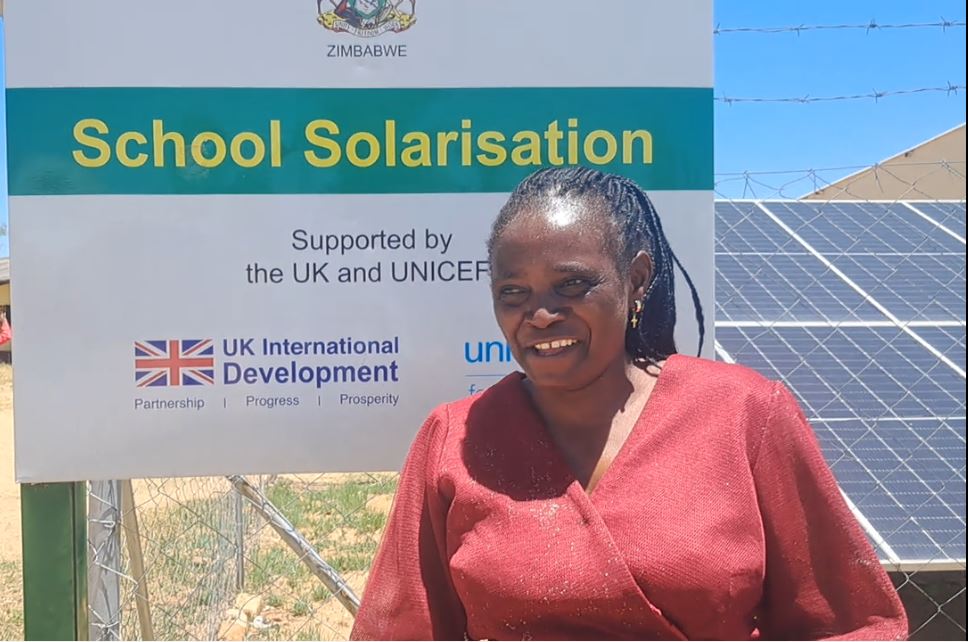
School holidays are usually an opportunity for teachers in rural Buhera to rest, visit relatives and recover from the demands of the school term. But for Mrs Emily Chagwisa, a Grade Six teacher at St Michael’s Mambo Primary School, the holidays often meant spending extra hours preparing lesson plans and teaching materials by hand because of a lack of electricity.
For more than two decades, she relied on pen, paper and daylight to prepare her scheme books, sometimes resorting to candlelight to finish the work at night.
Now, the introduction of solar power and digital learning equipment at the school has changed how she prepares lessons, teaches pupils and spends her holidays.
Chagwisa is among the longest-serving teachers at St Michael’s Mambo, having joined the school in January 2004 after completing her training at Morgenster Teachers Training College.
“I’ve got 22 years here, since 2004 till today. Here the teaching was very difficult before solarisation. We used to write using chalks on chalkboards, and we ended up with some problems using these chalks,” she said, referring to health problems associated with chalk dust.
Preparing scheme books was equally demanding, particularly without electricity.
“We would write with our hands, these scheming books. We would use the daylight and candlelight at night because waiting for the daylight would make the process longer. You wouldn’t finish on time,” she recalled.
Classroom instruction was also constrained by a shortage of textbooks, with teachers often having to share a single book among pupils.
Technology changes the teaching experience
The introduction of digital learning devices has changed that experience.
“Now we just beam the book on the board and they can read. Even if you have a hundred pupils, they can read the book and write school work easily. Others can research for us to keep up with the times,” Chagwisa said.
She cited the introduction of the Heritage-Based Curriculum (HBC) as an example of how digital resources were helping teachers overcome shortages of learning materials.
“When the Heritage-Based Curriculum started, we didn’t have the textbooks. But through these technologies, this has been resolved,” she said.
Despite the challenges, Chagwisa has remained at the school for 22 years, citing the relationship she has built with the surrounding community and fellow teachers.
“I came here in January 2004. Since then, I love the environment. The community does not have problems with teachers. Even with other teachers, we are working together well,” she said.
The arrival of digital learning technology has further strengthened her commitment to the school.
“With the coming in of these technologies, the thoughts of leaving this school have dissipated. It’s wise to stay up to date with the latest technologies here at school and also I will be helping these pupils the same way as those in Harare are being assisted.
“We will also be learning about computers, typing on the computer, researching on the internet because these are things we couldn’t do in the past,” she said.
Through the Ministry of Primary and Secondary Education and UNICEF, with support from the UK Government-funded Teacher Effectiveness and Equitable Access for Children (TEACH) programme, St Michael’s Mambo received seven projectors, seven laptops and 20 tablets in February.
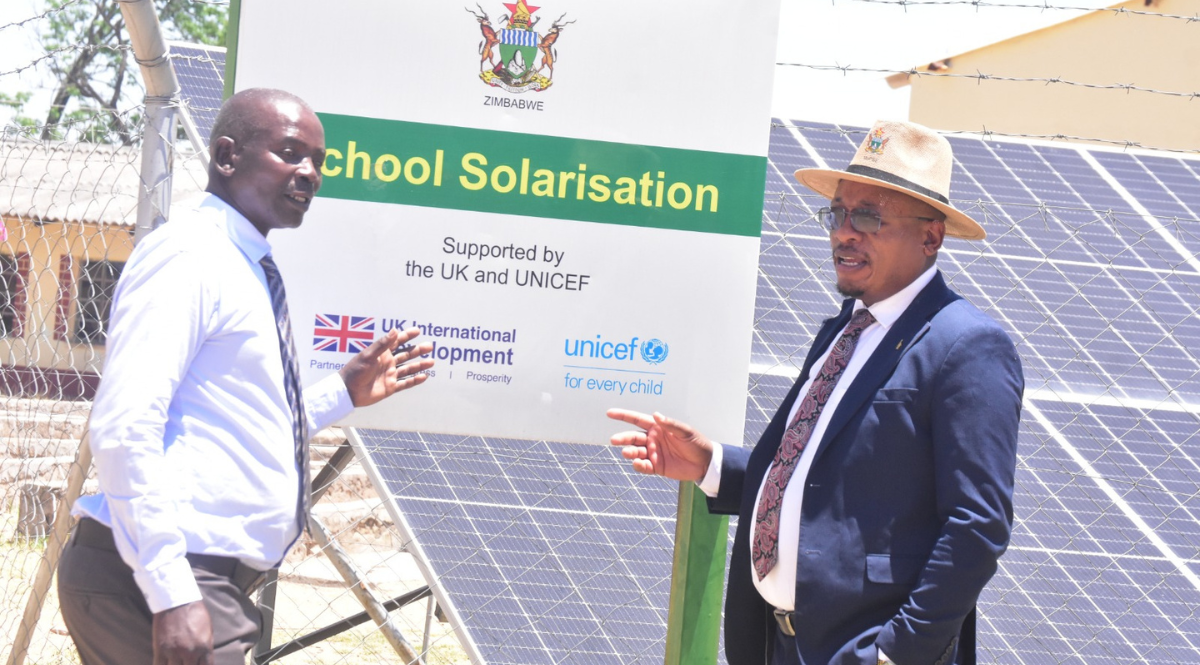
The intervention built on solar power infrastructure installed at the school with UNICEF support in 2023.
For Chagwisa, the technology has also reduced the time she spends preparing teaching materials during school holidays.
“I am grateful for this initiative because we would spend the whole holiday, sadly, writing with pen on paper, but now in about a week I would have finished coming up with the teaching aids,” she said.
Digital devices are also changing how pupils engage with lessons, particularly in the lower grades.
She said learners were increasingly using laptops, tablets and other digital resources to read, type and access learning materials, while Early Childhood Development (ECD) pupils were benefiting from educational videos.
Solar power extends benefits beyond the classroom
The changes at St Michael’s Mambo have also extended to school administration and teachers’ working conditions.
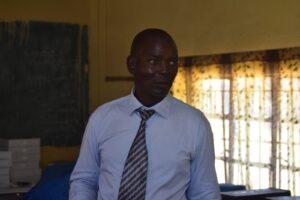
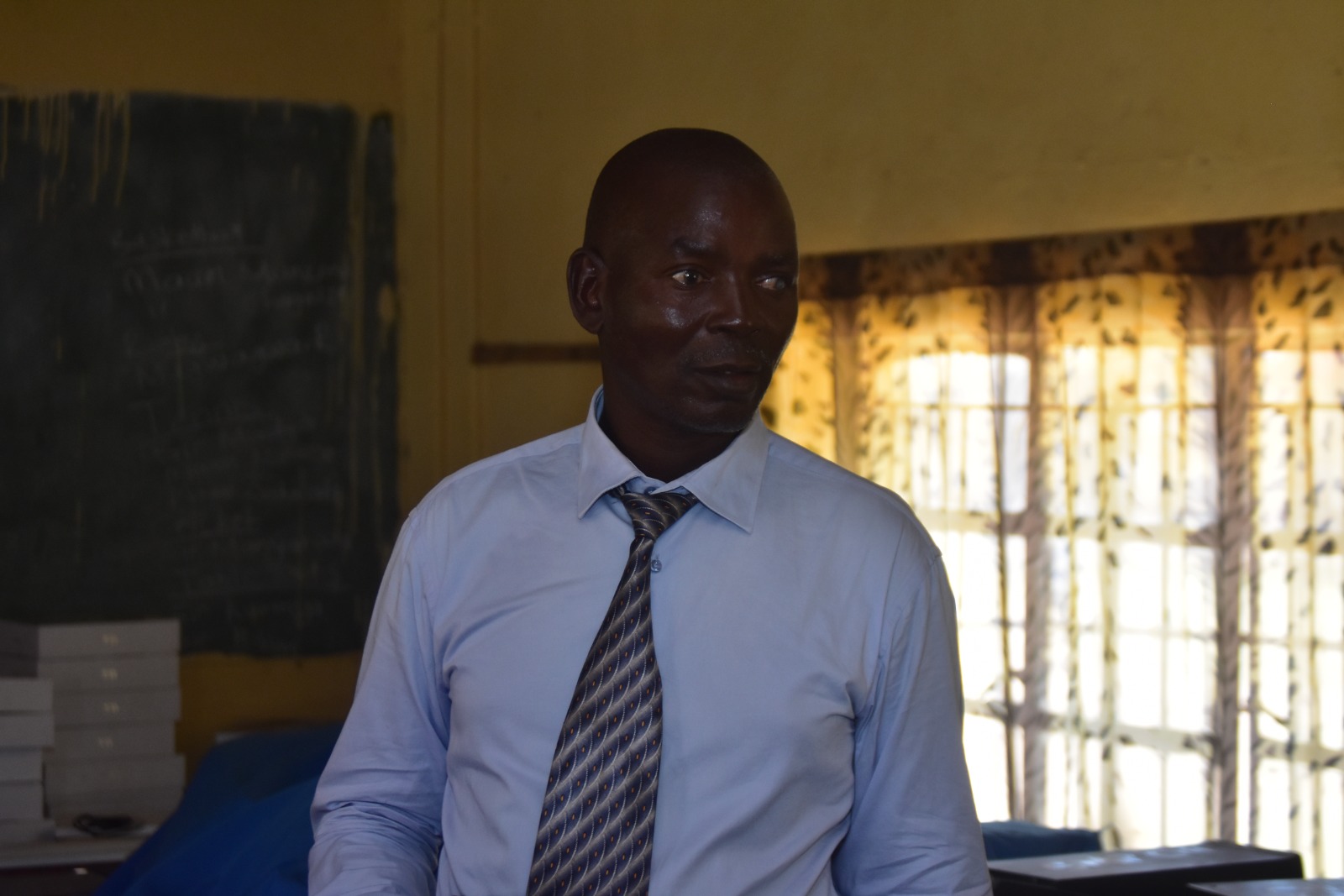
Acting headmaster Denford Basvi recalls the paperwork involved in recording examination results and preparing school reports. Digital tools have made it easier to capture and analyse pupil performance, helping teachers identify progress and areas requiring additional support.
Solar power has also provided electricity to teachers’ houses, where many previously had no access to it.
Basvi said the installation had enabled teachers to continue working after school hours, including preparing lessons, marking books and charging their devices.
“People here are no longer having time to waste, because they are always busy using the gadgets we have provided them. Our teachers lack resources such as textbooks and the like.
“In fact, here at school, most of the teachers’ houses don’t have this electricity. But through solar power, every house now has light and somewhere to charge their phone and the like.
“So, teachers are now doing their work even during the night. They can do their studies, they can mark their books because of solar,” he said.
The solar installation has also improved security at the school, with tower lights illuminating different parts of the premises at night.
Basvi said electricity had been extended to about five classrooms, allowing teachers to operate projectors, charge laptops and use other digital equipment during lessons.
However, infrastructure remains a challenge.
“Only about four classrooms have electricity from the main power line,” he said.
The school has responded by extending solar connections to additional classrooms. Security measures, including burglar bars and the employment of two security guards, have also been introduced to protect the equipment.
Basvi said digital resources were helping teachers introduce pupils to activities that previously required them to rely on limited teaching materials.
He cited traditional dances as an example, saying teachers could download videos of performances from other schools and use them to teach pupils.
“Then, they can copy or they can bring those dances. And the learners will now imitate and practice using such information,” he said.
Government pushes to expand digital learning
The initiative is part of the Government’s wider efforts to expand digital learning, particularly in rural and underserved communities.
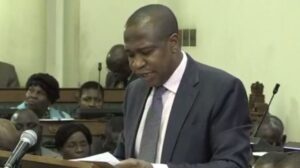
Taungana Ndoro, the Ministry of Primary and Secondary Education’s director of communications and advocacy, said the distribution of learning devices was part of a whole-of-government and whole-of-society approach aimed at ensuring that no school, teacher or pupil was left behind.
He said the Government was working with the Ministry of Energy and Power Development, UNICEF and the UK Government to improve electricity infrastructure in rural schools.
“Together with the Ministry of Energy and Power Development you can see there is electricity at this school but to add on to that we have also had partners who have come on board such as the FCDO and UNICEF to also provide solar farms so that we’ve got backup electricity,” Ndoro said.
He added that the Government had distributed more than 8,000 Starlink kits to schools, particularly those in need of internet connectivity.
“Working together with the Ministry of ICT we have managed to get at least about over 8,000 Starlink kits that have been distributed throughout Zimbabwe particularly to needy schools. We have about 12,000 schools,” he said.
Ndoro said the Ministry, working with UNICEF, had also developed Learning Passport Zimbabwe, an e-learning platform providing teaching and learning materials from Early Childhood Education and Care through to Form Six.
The Government was negotiating reduced data charges to enable teachers and pupils to access the platform more affordably.
He said St Michael’s Mambo had demonstrated that digital learning could also benefit children with disabilities.
“We are happy that they have shown that digital learning platforms are not only for the able bodied. You could see that there were actually also people with disabilities who were also taking part in the digital learning platforms,” he said.
For Chagwisa, the changes have meant more than access to computers and electricity. After 22 years at St Michael’s Mambo, she can now prepare lessons in less time, use digital resources in the classroom and help her pupils access learning materials that were previously beyond their reach.