By Michael Gwarisa
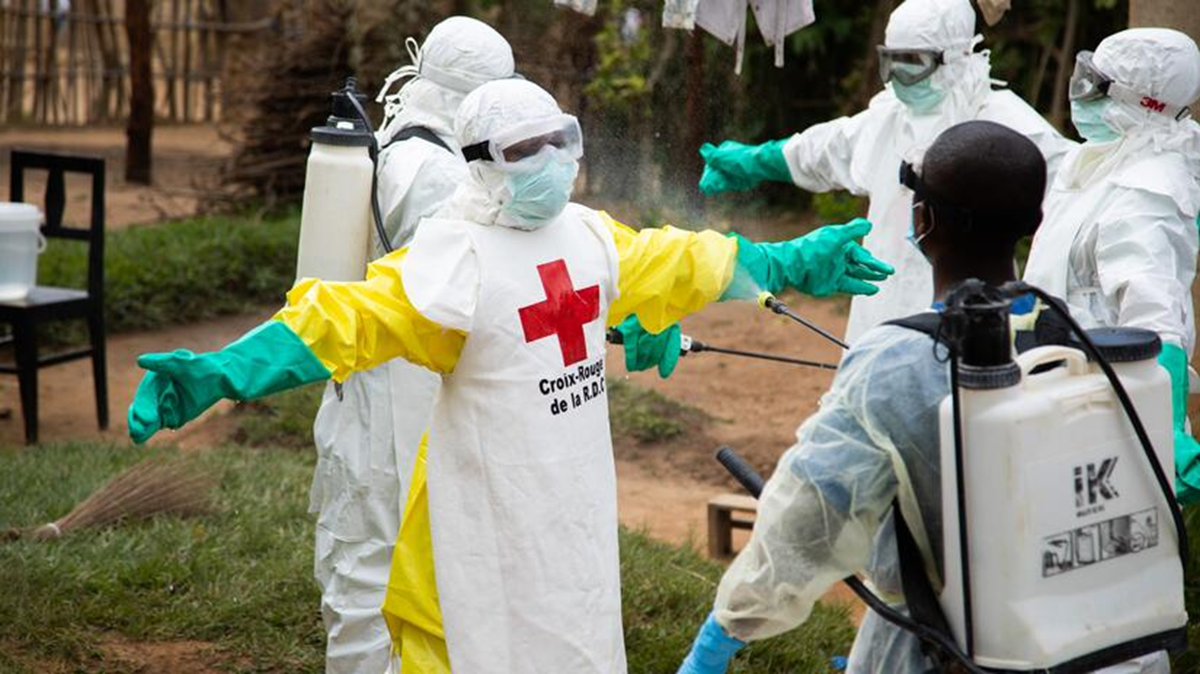
A sharp decline in reported Ebola cases in the Democratic Republic of Congo could be masking continued transmission, with insecurity and community resistance preventing response teams from reaching some of the outbreak’s most affected communities, Africa CDC has warned.
Dr Wessam Mankoula, who leads the Continental Incident Management Support Team (IMST), cautioned against interpreting the latest fall in cases as evidence that the world’s fastest-growing Ebola outbreak is coming under control. Mankoula said security problems and resistance from communities had affected surveillance and response activities in several key health zones, including Katwa, Beni, Butembo, Nizi and Nia-Nia.
The warning comes as the outbreak has expanded from three health zones in May to 63 across seven provinces, with 8,224 confirmed cases and 3,982 deaths recorded by September 29.
In epidemiological week 39, the number of reported cases fell to 278, the lowest weekly total since week 24. But Mankoula said the decline needed to be interpreted with caution because teams were unable to maintain surveillance and response activities in some affected areas.
The implication is significant: fewer reported cases may not necessarily mean fewer infections if response teams are struggling to access communities where transmission is occurring.
“This needs to be interpreted with cautious,” Mankoula said during the Africa CDC press briefing.
He pointed to insecurity and community resistance as among the factors contributing to the apparent decline in reported cases.
45 health zones still actively transmitting
Despite the decline in the latest weekly curve, the outbreak remains widespread. Africa CDC data presented by Mankoula showed that 45 of the 63 affected health zones were still classified as active, meaning they had reported cases within the previous 21 days.
Eleven health zones had gone between 22 and 42 days without reporting a case, while only seven had achieved sustained control, defined as more than 42 days without a reported case.
Mankoula stressed that the response could not succeed unless teams were able to reach every affected health zone and community. “This outbreak cannot be controlled without having safe and secure access for Ebola responders to reach to every health zone, every health area, every health village,” he said.
He also emphasised the importance of rebuilding trust between response teams and communities, saying community engagement was central to the response strategy. The challenge is particularly serious because the virus has continued to expand geographically.
The outbreak has spread along major transit routes, with heavy movement along the Nia-Nia-Wamba corridor contributing to its expansion into new health zones and provinces.
A confirmed case reported in Sud-Ubangi on September 10 involved an extensive travel history across three DRC provinces as well as Rwanda and Uganda. Dungu Health Zone in Haut-Uélé, which borders South Sudan, has also become affected.
Africa CDC has called for intensified cross-border surveillance at key entry points including Mahagi, Aru, Dungu and Ariwara.
The contact-tracing gap
Perhaps the most significant vulnerability exposed during the briefing is the gap between the number of contacts being followed and the number of contacts that should potentially be under surveillance. Africa CDC reported that 78.7% of identified contacts were being followed as of September 29, below the 95% target.
But Mankoula said the headline figure could give a misleading impression if the completeness of contact lists was not considered. The contact-to-case ratio has improved from fewer than 10 contacts per confirmed case to about 14 contacts per case.
However, Africa CDC uses an estimated benchmark of 60 contacts per confirmed case. On that basis, the current follow-up represents only about 23% of the expected contact volume. That means the 78.7% figure refers to the proportion of listed contacts being followed, rather than the proportion of all contacts who would be expected to exist based on the size of the outbreak.
The distinction could prove critical if insecurity and community resistance are preventing teams from identifying contacts in the first place.
Community deaths remain high
Deaths occurring in communities rather than health facilities are another major concern. Africa CDC data showed that weekly confirmed community deaths increased from 144 in late June to a peak of 364 in mid-August before declining to 192 in week 39.
Mankoula said the continued occurrence of deaths in communities demonstrated the need to strengthen the response at village level. The strategy is increasingly focused on moving response activities closer to affected populations, rather than relying primarily on centralised health facilities.
The concern is that community deaths can represent missed opportunities to identify infections, trace contacts and interrupt chains of transmission.
North Kivu records higher fatality rate
The severity of the outbreak is particularly evident in North Kivu, which has recorded the highest case fatality ratio among the provinces with sufficient cases for comparison. The province’s case fatality ratio stands at 59.3%, compared with a national average of 48.4%. Africa CDC recorded 931 deaths among 1,570 cases in North Kivu.
The higher fatality rate comes amid significant security and access challenges in the province. Nationally, 2,121 people had recovered by September 29, while 851 patients were in isolation. The outbreak has also taken a heavy toll on health workers, with 254 healthcare workers infected and 50 deaths recorded among them.
Response capacity expands
There are nevertheless signs that treatment capacity is increasing. Reported bed capacity rose by 68% from August 10 to 1,763 beds. On September 29, 851 patients were in isolation, representing 47.6% occupancy across provinces with comparable capacity data. Vaccination is also progressing. By September 30, a total of 6,300 healthcare and frontline workers had received the Ervebo vaccine, following the start of vaccination on August 27.
Therapeutic research is advancing as well. The remdesivir plus MBP134 trial had enrolled 604 participants by September 30, reaching 24% of its target range, while the obeldesivir post-exposure prophylaxis trial had reached 366 of its 400-participant target, or 92%. Africa CDC said the latter trial’s results were expected within weeks. Yet the epidemiological gains remain fragile.
Africa CDC’s own scientific review earlier in September said declines in cases and deaths in some hotspots were encouraging but that the available evidence did not yet confirm the outbreak had peaked. For Mankoula, the immediate priority is therefore not simply to bring down the number appearing on the weekly case curve.