By Kuda Pembere
When Sarudzai walked into a youth centre in Hurungwe, she was not looking for a debate about Zimbabwe’s abortion laws.
She was looking for help. Four months pregnant with her third child, the 22-year-old mother of two had already made up her mind that she wanted to terminate the pregnancy.
Sarudzai’s husband had left her with two children to care for and little family support. She did not know how she would manage another child.
“I don’t even know where to start to take care of the children that I have since he ran away. I have nowhere to start,” she said.
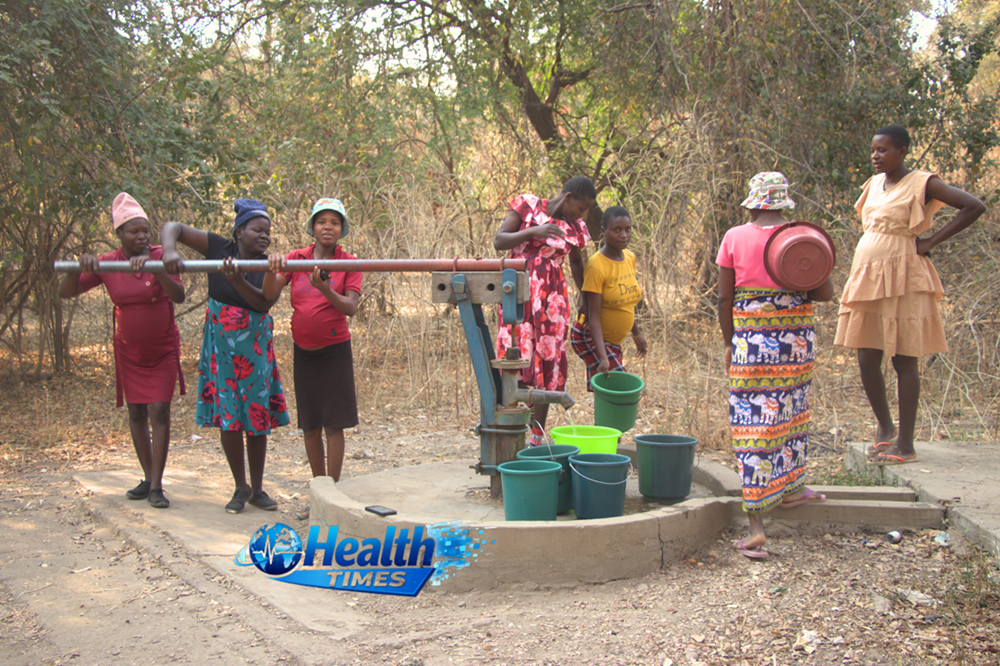
Coming from a rural background with limited education, Sarudzai did not know that Zimbabwe’s Termination of Pregnancy Act allows abortion in certain circumstances. She also did not know where to go or who to approach to establish whether she qualified for a lawful termination.
The youth centre seemed like a logical place to begin. But it could not provide the service she was seeking. The centre offered contraceptive services, but not abortion care. The nurse who attended to Sarudzai said she appeared distressed.
“The woman looked distressed when she came to me, but I could not offer any help because at this centre we deal with contraception,” the nurse said on condition of anonymity.
Sarudzai left without an abortion, a referral or a clear answer about where she could seek help.
She returned home still pregnant and still facing the same question: how would she raise another child?
A marriage that did not provide the security she expected
Sarudzai, from Hurungwe, married when she was 15. She had hoped marriage would give her the stability she needed. Her husband worked on tobacco farms and the couple eventually had two children. But the relationship fell apart.
Her husband lost his job following misconduct at his workplace and later left her. By the time Sarudzai became pregnant again, she was largely on her own.
“My husband left me while carrying this one that I have,” she said.
For Sarudzai, the pregnancy is not an abstract question about reproductive rights. It is another child to feed, clothe and raise when she is already struggling to care for two.
Yet the system she approached for help could not provide the service she was seeking.
Her experience also highlights a gap between knowing that a health service exists in law and being able to find that service in practice.
What does the law allow?
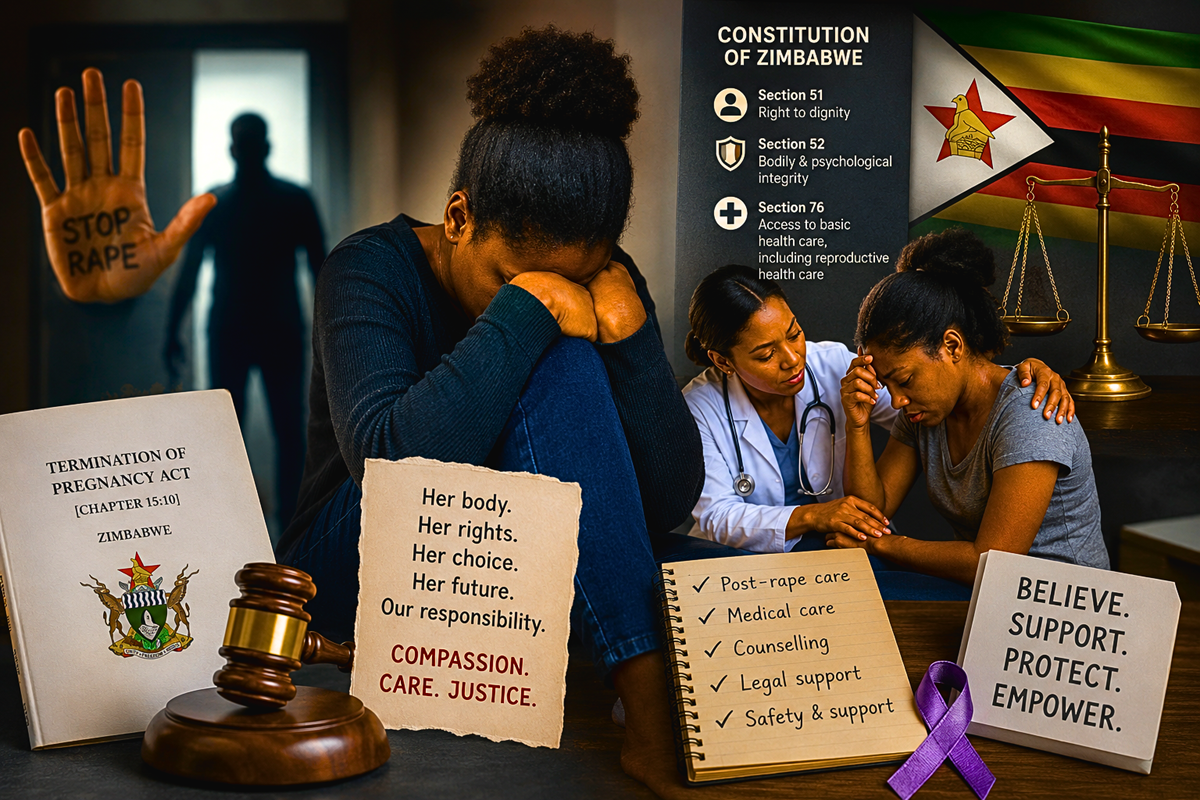
Zimbabwe’s Termination of Pregnancy Act permits abortion only in limited circumstances.
These include specified situations in which continuing a pregnancy poses risks to a woman’s health, as well as pregnancies resulting from rape or incest. Where a pregnancy results from unlawful intercourse, additional legal requirements apply.
For women such as Sarudzai, however, knowing what the law says can be difficult enough.
In rural and low-income communities, reproductive health advocates say distance, limited information, shortages of health workers, stigma and administrative requirements can make accessing services difficult.
The law also allows doctors to decline to provide abortion services on conscientious grounds, creating another potential barrier where alternative providers are not readily available.
For a woman who does not know what services are legally available, where they are provided or whether she qualifies, the legal framework can be difficult to navigate.
Sarudzai did not know any of this when she walked into the youth centre. She simply wanted to know where she could safely end her pregnancy.
A law under scrutiny
Zimbabwe’s abortion law has come under renewed scrutiny following a landmark High Court judgment delivered last November.
Justice Sylvia Chirawu-Mugomba declared parts of the Termination of Pregnancy Act unconstitutional, particularly provisions that excluded mental health from the health-related grounds for accessing a lawful termination.
The case was brought by the Community Working Group on Health and Member of Parliament Nyasha Batisa, who challenged the constitutionality of the law, arguing that it discriminated against women with mental health challenges.
Justice Chirawu-Mugomba found that excluding mental health from the health-related grounds for termination placed women with mental health challenges at a disadvantage.
The court also found problems with the definition of “unlawful intercourse”, particularly in relation to sexual abuse involving women with mental health conditions.
The judge said the omissions affected constitutional rights including the rights to life, dignity, equality and reproductive health. However, the judgment did not immediately change the law.
The declarations of constitutional invalidity were suspended pending confirmation by the Constitutional Court, as required by Section 175 of the Constitution. For Sarudzai, the legal developments in Harare are difficult to translate into practical help in Hurungwe.
She does not know the details of the High Court judgment or the constitutional arguments surrounding the law. She knows she is pregnant and that she does not believe she can manage another child.
When a legal service remains out of reach
Reproductive health advocates argue that the challenge goes beyond what the law technically permits. A service can be lawful on paper and still remain difficult to access for women who live far from facilities, cannot afford transport, do not know where to seek care or encounter providers who do not offer the service.
The problem can be more pronounced in rural areas, where specialist healthcare workers are often limited.
Advocates have also raised concerns about conscientious objection by doctors and the shortage of health workers in the public sector.
They argue that these barriers can push some women towards unsafe abortions when they cannot find or afford lawful services.
A 2016 report by the Guttmacher Institute found that unsafe abortion was common in Zimbabwe, with 40 percent of women undergoing unsafe abortions experiencing complications.
The report also found that stigma, limited resources and restrictions could prevent women from obtaining the post-abortion care they needed.
Those figures are old, but the barriers they describe remain part of the debate over abortion access in Zimbabwe.For Sarudzai, the statistics have a very immediate meaning.She is the woman who walked into a health facility looking for help and walked out without it.
The reform debate
The debate has now moved beyond the courts and into the legislative process.The Ministry of Health and Child Care recently removed Clause 11, which dealt with termination of pregnancy, from the Medical Services Amendment Bill. The decision has renewed calls from safe abortion advocates for broader reforms to the Termination of Pregnancy Act.
Among the proposals is allowing abortion on request up to 12 weeks of pregnancy and up to 20 weeks where continuing a pregnancy poses a risk to a woman’s health, mental wellbeing or socio-economic circumstances.
Advocates also want the process of obtaining an abortion simplified, arguing that decisions should be based more heavily on informed consent and medical circumstances rather than cumbersome administrative or judicial procedures.
They have called for trained midwives to be allowed to provide abortion care, particularly in rural communities where doctors and other specialised health workers are scarce.
“Allowing trained midwives to provide abortion care, especially in rural areas, [would help] address the shortage of medical practitioners,” the advocates said.
They have also called for informed consent to play a central role in abortion decisions, including appropriate provisions for pregnant minors.
But Sarudzai is still waiting
For all the arguments being made in Parliament, the courts and among reproductive health organisations, Sarudzai’s immediate problem remains unchanged.
She is four months pregnant. Her husband is gone. She has two children who depend on her. And the first place she went looking for help could not provide the abortion care she was seeking. She left without knowing where to go next.Her story illustrates the gap that can exist between a right recognised in law and a service a woman can actually find.
As Zimbabwe debates whether and how its abortion laws should change, Sarudzai is not following the constitutional proceedings or waiting for Parliament to settle the issue. She is trying to work out how to care for the children she already has while carrying a pregnancy she says she cannot manage. For now, the question is not only what Zimbabwe’s abortion law allows. For Sarudzai, it is much more immediate: where can she go for help?