By Michael Gwarisa
In August 2027, Dr Tedros Adhanom Ghebreyesus will come to the end of his second and final term as Director-General of the World Health Organization (WHO). Tedros, who was first elected in May 2017, made history by becoming the first African to be elected WHO Director-General through a contested race involving multiple candidates. He began his second five-year term in August 2022 and is not eligible for re-election.
Now, as the WHO prepares to choose his successor, the race for one of the most influential positions in global health is taking shape. The nominations have produced a diverse field of candidates from different regions and professional backgrounds, including current and former WHO officials, health ministers and senior public health figures. Their experiences and priorities offer different visions for an organisation facing a changing global health landscape, financial pressures and questions about its future role in global health governance. So, who is running to lead the WHO, where do they come from, and what do they bring to the race?
Here is a look at the candidates, their countries, backgrounds and what they could represent for the future of the organisation.
| Candidate | Background | Publicly stated emphasis | What may make them a strong contender |
|---|---|---|---|
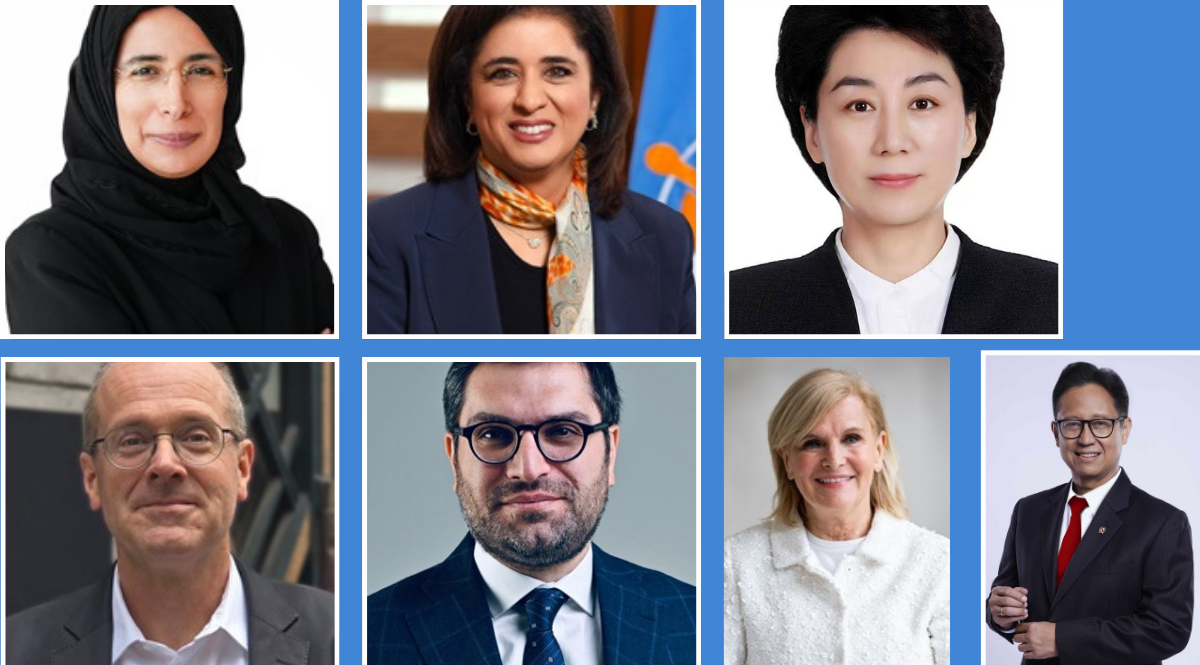
| Dr Hanan Mohammed Al-Kuwari — Qatar | Qatari health-system leader; served as Minister of Public Health from 2016 to 2024 and led Hamad Medical Corporation from 2007 to 2024. She is now an adviser to Qatar’s Prime Minister on public-health affairs. | Qatar has described her vision as bringing countries and communities together to strengthen health systems and improve health outcomes. | Long experience overseeing a national health system and a large healthcare provider, with leadership spanning policy and hospital services. Her stated priorities are broad; more detail will need to be checked against her candidate materials as they become public. qatar-weill.cornell+1 |
| Dr Hanan Balkhy — Saudi Arabia | Saudi physician and infectious-disease specialist. She became WHO Regional Director for the Eastern Mediterranean in 2024, after serving as WHO’s first Assistant Director-General for Antimicrobial Resistance. | Her regional priorities include more accessible care, stronger preparedness for pandemics, conflict and climate-related emergencies, disease prevention, and stronger partnerships. In her campaign comments, she has emphasized trust, country-led priorities and a WHO that listens and enables. | Direct experience leading a WHO region and expertise in antimicrobial resistance, infection prevention and outbreak response. Her current regional role gives her experience working across 22 Member States. emro.who+1 |
| Dr Hans Henri P. Kluge — Belgium | Belgian physician with more than 30 years of public-health experience, including work with Médecins Sans Frontières and WHO. He served as WHO Regional Director for Europe from 2020 to 2025 and was renominated for a second term. | His campaign describes a “country-first, people-centred” WHO focused on partnership. His experience and stated priorities include health-system resilience, primary health care, health security, mental health and responses to emergencies. | He has senior WHO leadership experience and has managed regional responses during COVID-19, mpox, conflict-related emergencies and extreme weather. WHO reports regional achievements during his leadership, including support for 44 national digital-health strategies or plans. who+1 |
| Dr Song Li — China | Senior Chinese public-health official whose career has focused on women’s, maternal and child health. She has held senior roles in China’s National Health Commission and is currently listed as a member of the All-China Women’s Federation secretariat. | Her documented areas of experience include maternal and child-health policy, international cooperation and responses to public-health emergencies, including SARS, avian influenza and COVID-19. I found less publicly available detail about a distinct WHO campaign platform. | More than two decades in maternal and child health policy and experience working in national health administration. Her candidacy also foregrounds those areas of expertise in a race where candidates bring different technical and leadership backgrounds. apnews+1 |
| Dr María P. Neira — Spain | Spanish physician and public-health specialist. She led WHO’s Department of Environment, Climate Change and Health for about two decades and earlier worked in humanitarian health, including with Médecins Sans Frontières. | She has called for stronger primary prevention—addressing causes of illness before people become patients—and highlights climate and environmental health. She has also argued that WHO can use its scientific credibility and convening power to influence action beyond what it can fund directly. | A long WHO career in a major global-health portfolio, combined with field experience and a clearly identifiable focus on prevention and climate-related health risks. cdn.who+1 |
| Mr Budi Gunadi Sadikin — Indonesia | Indonesia’s Minister of Health since 2020. Before government, he worked in banking and corporate leadership. | His campaign’s stated vision is “Healthy Long Lives for All.” Its “Build, Grow, Scale” framework emphasizes stronger country health systems, regional cooperation and WHO-led action on shared global challenges—including prevention, primary care, pandemic preparedness, financing and accountability. | Brings national health-system leadership alongside finance and management experience. His campaign points to Indonesia’s large-scale health reforms and pandemic response as evidence of his ability to mobilize resources and deliver at scale; those figures are campaign claims and should be attributed as such. bgs4who |
| Dr Gevorg Tamamyan — Botswana | Armenian paediatric oncologist and professor who leads pediatric oncology and hematology at Yerevan State Medical University. He has also led cancer-care organizations and international pediatric-oncology groups. | He says WHO should be stronger, more agile and better aligned with current needs, delivering faster and working in partnership with Member States. His campaign stresses equitable access to care, including for children and people in resource-limited settings. | His candidacy brings clinical and health-system experience focused on access to specialized care, alongside international professional and health-cooperation roles. His pitch is notably grounded in the gap between where a child is born and whether they can receive life-saving treatment. worldhealthsummit+1 |