By Kuda Pembere
Drug and substance abuse has been identified as one of the factors contributing to teenage pregnancies in Epworth, with community members raising concerns over unsafe abortions, child neglect and the limited options available to girls who fall pregnant.
Residents are calling for a review of Zimbabwe’s restrictive Termination of Pregnancy Act, arguing that the law should be relaxed to allow access to safer abortion services. They have also called on the Department of Social Development to intervene in cases where young mothers who use drugs are unable to care for their babies.
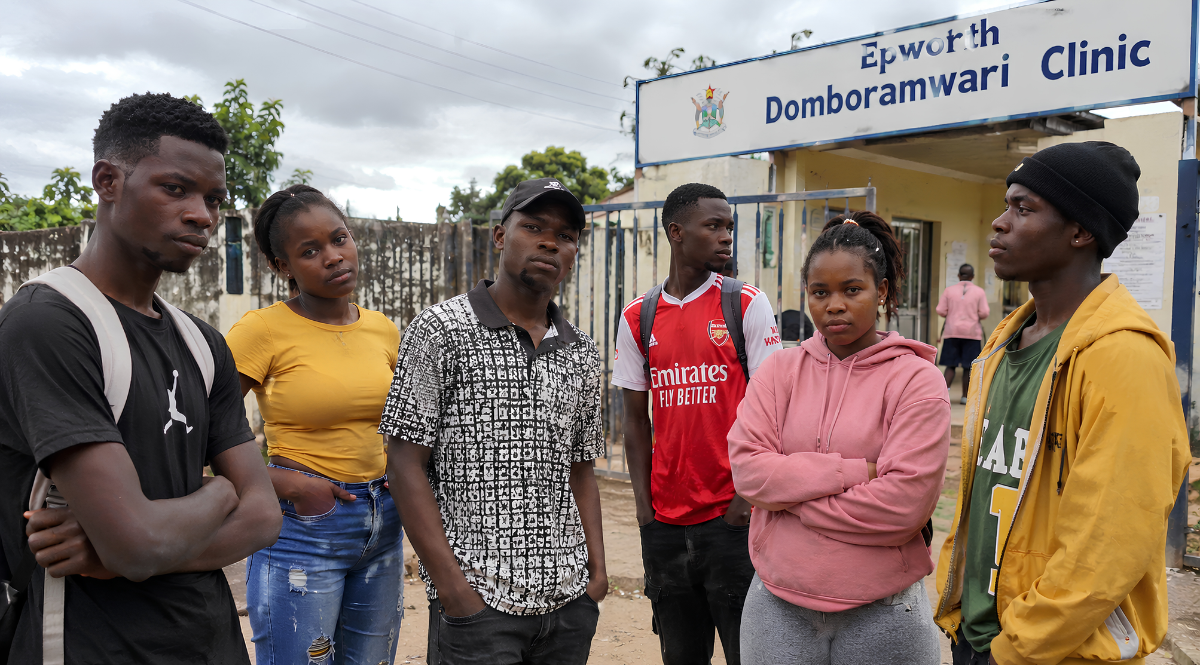
As of June 2026, 324 pregnant teenagers aged between 15 and 19 had been referred for antenatal care at Epworth Polyclinic, while three girls aged between 10 and 14 had also been referred for antenatal services.
“As of the second quarter, we recorded 324 teenage pregnancies and these are of the ages 15 to 19. We also had a few cases of pregnancies of children aged 10 to 14,” said a medical worker at Epworth Polyclinic who requested anonymity.
The health worker said the facility also provides post-abortion care through its sexual and gender-based violence (SGBV) clinic, which handles cases involving rape, including those involving teenagers and children.
“When the cases are complex, we refer to some partner clinics,” the source said.
However, community health worker Beauty says drug and substance abuse is contributing to a growing number of teenage pregnancies in the area, estimating that she encounters about 110 cases every quarter.
“The number is huge. There are some children we refer to the local clinic for antenatal bookings. When you ask their age, you will find that those aged between 16 and 18, the number is nine each week. When you calculate that number for the month and then for the quarter, you will see it is huge,” she said.
Beauty also accused some police officers of turning a blind eye to drug bases in the community after allegedly receiving bribes from those operating there.
“About the police officers, we inform them about these places, also called bases or goshtos, or majabhuna, and they ransack them a little and leave after being given some money. They know of these places. Like today I found two girls there. The oldest one is 18. They are now engaging in sex work. They are too young to negotiate for condoms,” Beauty said.
She said unsafe abortions were also taking place clandestinely in Epworth, with some cases being reported as miscarriages.
“About unsafe abortions, these things are happening but clandestinely. We get to be told about them as miscarriages. These grandmothers are doing it and nowadays these young girls are doing these unsafe abortions. It is just that the laws are restrictive but Government should relax these laws to say at least at 12 or 13 weeks hospitals or clinics can offer safer abortion services. But the hindrance now with the law is that they look at whether the child was raped or incestuous relationship,” she said.
Beauty called for a review of the Termination of Pregnancy Act of 1977, arguing that the current legal restrictions leave some girls with few options when faced with unwanted pregnancies.
She cited the case of a teenage mother who was referred for antenatal care at the age of 17 and gave birth this year. According to Beauty, the young woman continues to use drugs and is putting her baby’s welfare at risk.
“Let me give you another example. This young mother is into drugs, and I referred her at the clinic when she was 17 and she gave birth this year. What she does now is that she expresses her breast milk into a bottle and mixes it with some drugs.
“This young mother at times leaves the baby alone, saying these substances like Broncleer will make it sleep. Now the burden is upon us as community members to ensure proper child care,” she said.
Beauty said the Department of Social Development should intervene and assess cases involving babies whose mothers are unable to provide adequate care because of drug use.
“When we see people like that, it is better for their pregnancies to be terminated but unfortunately it is unlawful. We even suggested that Government take the babies away from the mother. However, there is a lot of paperwork needed, asking about the relatives. So you will find that the babies just die in the camps due to such neglect and when we ask, we are told it was just a short illness,” she said.
Her concerns come amid continuing legal and policy debates over access to abortion in Zimbabwe, including a recent Constitutional Court decision to set aside a High Court ruling that sought to expand the grounds for lawful termination of pregnancy to include mental health.
The case was brought by the Community Working Group on Health (CWGH) and Nyasha Batitsa, who challenged provisions of the Termination of Pregnancy Act which they argued unlawfully excluded mental health as an express ground for termination and failed to cover certain pregnancies arising from sexual conduct criminalised under Section 106 of the Mental Health Act.
The applicants argued that the restrictions infringed constitutional rights, including the rights to life, human dignity, equality and access to healthcare.
They relied on medical, statistical and expert evidence to argue that the restrictions disproportionately affected women with serious mental health conditions, women and girls with mental disabilities, adolescents and economically marginalised women.
The debate over abortion law reform also featured in the proposed Medical Services Amendment Bill, which contained a provision under Clause 11 seeking to amend the Termination of Pregnancy Act. The clause was subsequently deleted.
Among the proposed changes was access to abortion on request up to approximately 12 weeks of pregnancy, without requiring specific risk factors.
The proposal also sought to allow terminations up to 20 weeks where there were risks to a woman’s physical health, mental well-being or socioeconomic circumstances.
It further proposed allowing minors to access termination services on the basis of their own informed consent, removing requirements for parental or guardian consent.
Other proposed changes included removing the requirement for spousal notification, eliminating judicial or magistrate approvals and simplifying medical authorisation. Under the proposals, a single medical practitioner, or trained midwives under specified conditions, could approve and provide termination services without requiring multiple medical approvals.