
By Kuda Pembere
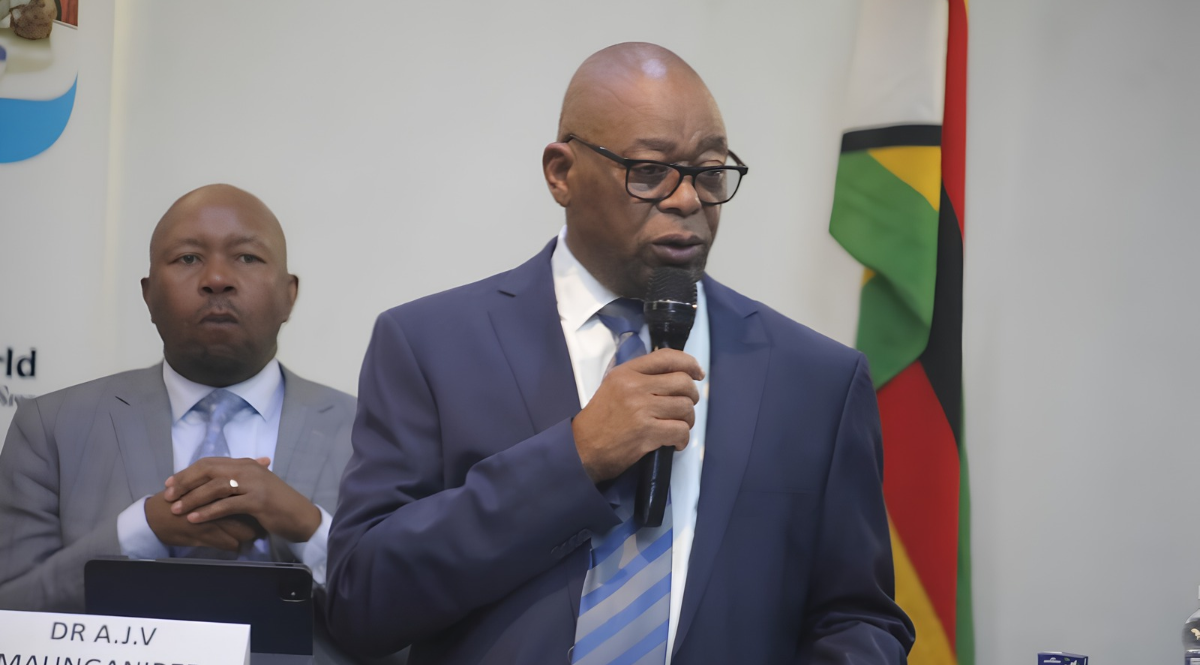
Health and Child Care Minister Dr Douglas Mombeshora says Government is pursuing alternative legal and administrative measures to improve access to lawful termination of pregnancy following the deletion of Clause 11 from the Medical Services Amendment Bill.
The proposed amendment, which sought to expand access to abortion services and remove administrative barriers, was deleted during the legislative process, while a recent Constitutional Court ruling also dealt a setback to efforts to broaden the legal grounds for termination on mental health grounds.
Responding to questions in the National Assembly on Wednesday, Dr Mombeshora said the Ministry was working with other Government departments to operationalise the Termination of Pregnancy Act of 1977 and improve access for women and adolescents who qualify for lawful termination.
He was responding to Hwange Central legislator Hon Daniel Molokele, who had asked what measures the Ministry was taking to address barriers to accessing lawful termination of pregnancy.
“I thank Honourable Molokele for raising this important question. The Ministry acknowledges that barriers continue to limit access to lawful termination of pregnancy under the current Termination of Pregnancy Act, which only permits abortion in cases of rape, incest or where the life of the mother is at risk.
“Clause 11 of the Medical Services Amendment Bill was intended to streamline access, clarify procedures and reduce bureaucratic hurdles. However, the clause was considered misplaced and was therefore deleted,” Dr Mombeshora said.
He said the Government remained committed to ensuring that women and adolescents who meet the legal requirements could access the necessary healthcare services and information.
“The Government’s position on lawful termination of pregnancy, or TOP, is that, within the framework of the existing Termination of Pregnancy Act of 1977, women and adolescents who meet the legal requirements must be able to access the necessary healthcare services and information. At the same time, regulatory and procedural improvements are being pursued to eliminate unnecessary administrative barriers,” he said.
Dr Mombeshora said the Ministry was pursuing five measures to address the barriers, beginning with strengthening clinical guidelines and protocols.
“We are revising the national clinical guidelines to ensure that healthcare workers at district and provincial hospitals are fully conversant with the legal grounds for termination of pregnancy. Training is also being rolled out to strengthen healthcare providers’ capacity to manage lawful cases without unnecessary referrals or delays,” he said.
The second measure involves decentralising services to reduce the distance women have to travel to access care.
“Second, improving access points. The Ministry is decentralising post-abortion care and lawful termination services to more healthcare facilities so that women do not have to travel long distances to access services at central hospitals. We are working with our partners to equip facilities with the necessary skills and resources to provide safe and timely care,” Dr Mombeshora said.
He also acknowledged that limited awareness of the existing legal provisions was contributing to access challenges.
“Many women remain unaware of their rights under the current law. The Ministry, in collaboration with civil society organisations and community health workers, is conducting awareness campaigns to inform women and families about the circumstances under which termination of pregnancy is lawful,” he said.
On partnerships, the Minister said the Ministry would continue working with development partners to strengthen service delivery, particularly for survivors of sexual violence.
“We continue to engage development partners, including UNFPA and Population Services Zimbabwe, to strengthen service delivery and ensure that survivors of sexual violence, in particular, can access lawful services without stigma or unnecessary delays,” he said.
The fifth measure involves policy dialogue and possible future legislative reforms.
Dr Mombeshora said the Ministry was working with the Ministries of Justice and Home Affairs to assess the scope of the existing legal framework and identify ways of simplifying access to services for those who qualify.
“The Ministry is committed to continued dialogue with Parliament, civil society and other stakeholders to explore future reforms that balance public health needs, human rights obligations and cultural sensitivities.
“The Ministry is also working with the Ministry of Justice and the Ministry of Home Affairs to assess the operational scope available under the current legal framework and identify ways of simplifying service delivery for those who qualify,” he said.
He added that the Government was reviewing documentation requirements imposed by healthcare institutions and exploring administrative mechanisms to reduce delays in accessing lawful termination services.
His remarks come amid wider debate over whether the 1977 Termination of Pregnancy Act is adequately aligned with Zimbabwe’s 2013 Constitution and subsequent legislation.
Dzivarasekwa legislator Hon Edwin Mushoriwa questioned whether the Government was taking steps to align the Act with constitutional and legislative developments since 2013.
“The 1977 Termination of Pregnancy Act has not been aligned with our 2013 Constitution. In your response, I wanted to establish the Government’s position on whether there are efforts to ensure that the developments introduced by the 2013 Constitution, together with other legislation passed by this House since 2013, are taken into account.
“Are there efforts to ensure that the law is properly aligned so that affected citizens can engage with a legal framework that reflects the current constitutional and legislative realities?” Mushoriwa asked.
Dr Mombeshora confirmed that the Government was reviewing outdated legislation to bring it into conformity with the current legal framework.
“Yes. As a Ministry, we are now working to align our legislation and review laws that we consider outdated, bringing them into conformity with the current legal framework.
“This is why I indicated that we are engaging the Minister of Justice, the Minister of Home Affairs, development partners and parliamentarians to develop more modern legislation that addresses the concerns of women seeking access to lawful termination of pregnancy,” he said.
Dr Mombeshora said that despite the removal of Clause 11, the Ministry would continue pursuing improvements through clinical guidelines, decentralisation, public awareness and partnerships to ensure that women legally entitled to termination services could access them without undue barriers.