By Michael Gwarisa
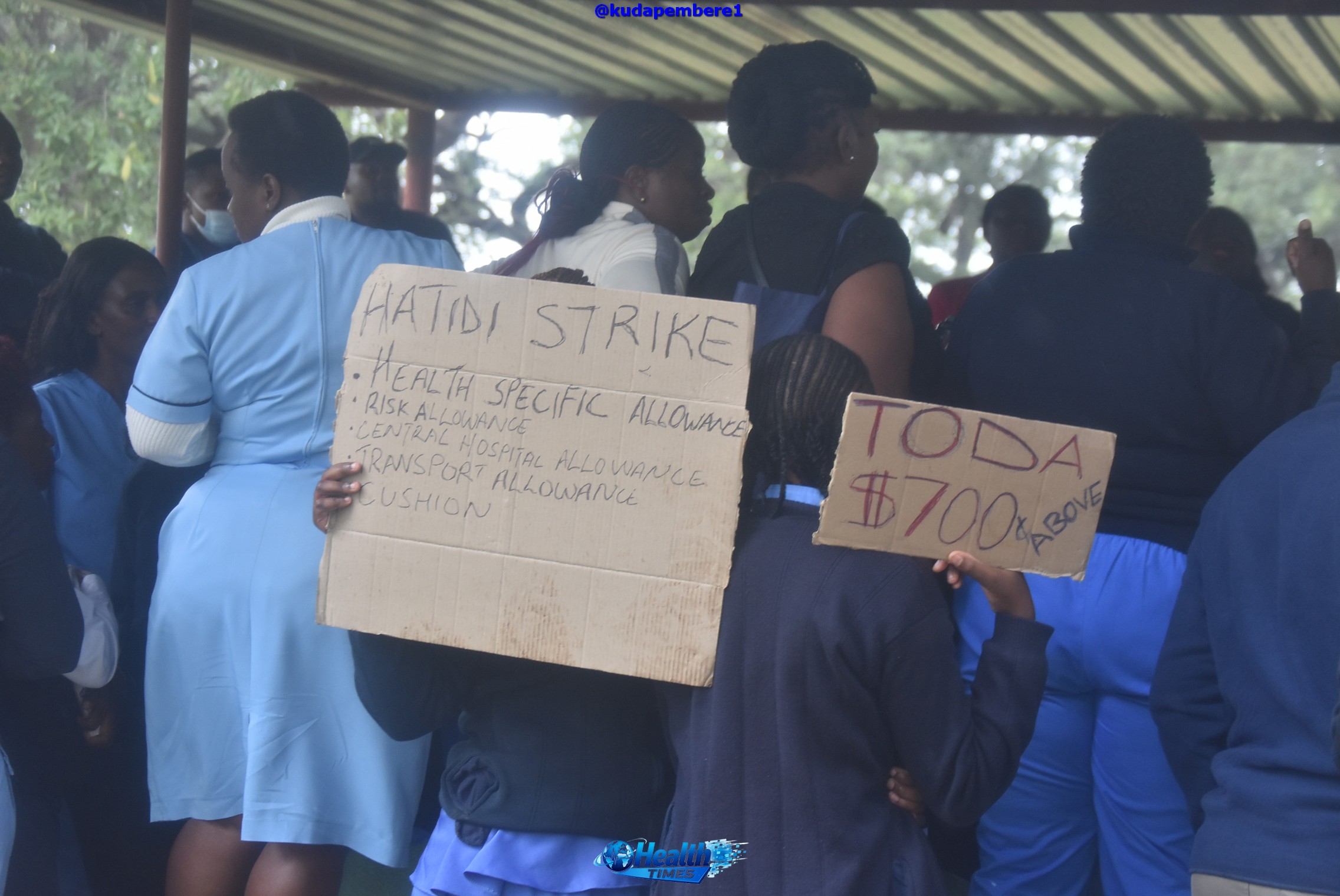
Another nurses’ strike could be looming in Zimbabwe after health workers accused Government of failing to honour agreements on the review of sector-specific allowances and the handling of a controversial job evaluation exercise.
The Zimbabwe Nurses Association, ZINA, together with the Health Apex Team and other health worker representatives, says the continued delays have worsened frustration within the country’s health sector and could leave workers with no option but to consider withdrawing their services.
In a statement issued on August 13, ZINA said Government and health worker representatives had reached an agreement in May through the Health Bipartite Negotiating Forum to review health-specific allowances, with revised payments potentially taking effect from June.
Health worker representatives subsequently submitted their proposals, while the Health Services Commission referred the matter to the Ministry of Finance. However, nearly three months later, ZINA says there has been no substantive response or implementation.
The allowances, which were last reviewed in 2022, cover areas including night duty, on-call and standby duties, nurse managers, post-basic qualifications, mental health, special health duties and uniforms.
ZINA says the rising cost of living has significantly eroded the value of these allowances, leaving health professionals inadequately compensated for demanding working conditions, including night shifts, emergency response and unsocial working hours.
ZINA President and Health Apex Team leader Enock Dongo warned that patience among health workers was wearing thin.
“Dialogue must produce results, promises must be honoured and agreements must be respected,” Dongo said, adding that Government needed to act urgently to prevent further deterioration in health worker morale and service delivery.
The dispute also centres on the recently concluded health sector job evaluation conducted by the Health Services Commission.
According to ZINA, health worker representatives rejected the outcome, arguing that workers were not adequately consulted and that the methodology failed to properly recognise the unique demands associated with healthcare professions.
These include clinical responsibility, professional accountability, emergency response, specialist qualifications, heavy workloads and unsocial working hours.
Of particular concern is the appeals process.
ZINA said an agreement reached in May provided for a 4-4 appeals committee comprising four Government representatives and four worker representatives to consider concerns arising from the job evaluation.
However, the association says it is opposed to reports that the appeals process is instead being handled through the Public Service Commission, arguing that the agreed mechanism cannot be unilaterally changed.
Dongo said health workers were still committed to dialogue and constructive engagement, but warned that unresolved issues could trigger further collective action.
“Should the outstanding issues remain unresolved, health workers may be left with no option but to consider further collective action, including withdrawal of services,” he said.
ZINA is now demanding the urgent implementation of revised health-specific allowances, a clear Government response to proposals already submitted and the immediate establishment of the agreed appeals committee.
The association has also called for meaningful engagement with health worker representatives, warning that continued delays could further weaken morale across the health sector and ultimately affect service delivery.