
By Michael Gwarisa
Zimbabwe is set to take part in a major Africa-led clinical trial testing whether long-acting injectable HIV treatment can help prevent mothers living with HIV from passing the virus to their babies during pregnancy and breastfeeding.
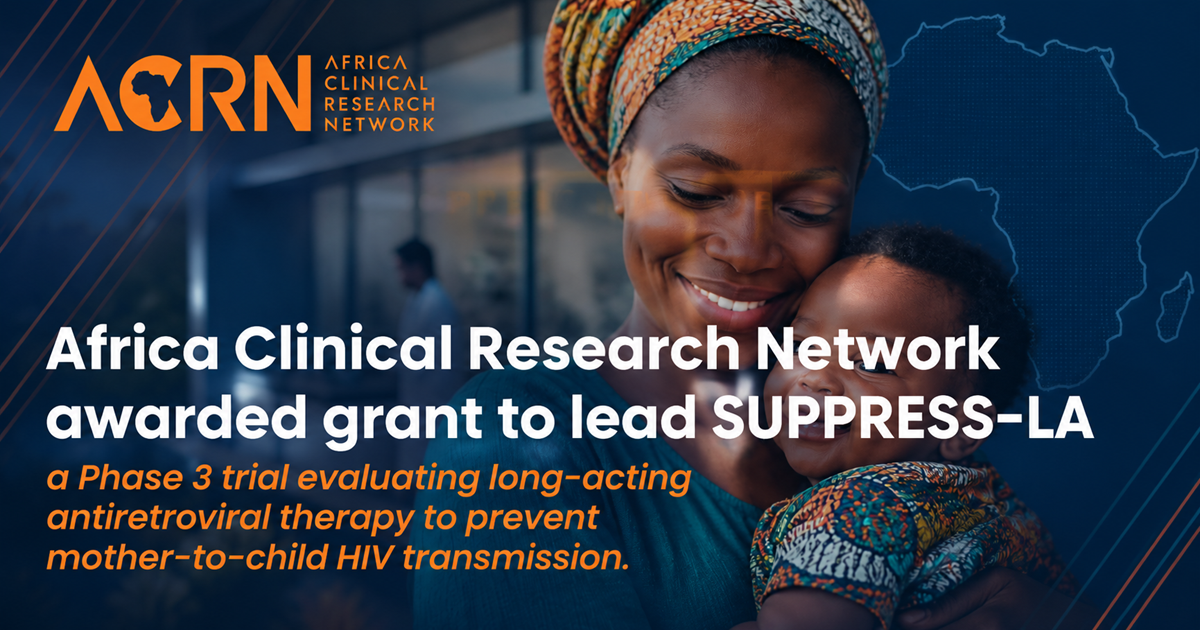
The Phase 3 study, known as Supporting Programmatic Maternal Viral Suppression with Long-Acting Therapy (SUPPRESS-LA), will be conducted in Zimbabwe, South Africa and Uganda, with the first participant expected to be enrolled in early 2027.
The Africa Clinical Research Network (ACRN), which is sponsoring and leading the study, received funding from the Gates Foundation to evaluate whether long-acting antiretroviral therapy can maintain viral suppression during pregnancy, after childbirth and throughout breastfeeding.
The research comes as countries across Eastern and Southern Africa continue to confront infections among children despite major gains in preventing mother-to-child transmission (MTCT).
Zimbabwe has reduced its MTCT rate from more than 20 percent in the early 2000s to 6.4 percent in 2024. However, the country remains above the World Health Organization (WHO) and UNAIDS elimination threshold of less than five percent among breastfeeding populations.
UNAIDS Spectrum modelling estimates that about 40 percent of the remaining mother-to-child HIV transmissions in Zimbabwe occur after birth during breastfeeding.
This makes the period after delivery a critical gap in the country’s efforts to eliminate paediatric HIV.
Globally, approximately 120,000 children under five acquired HIV in 2024, with the majority of new infections occurring in Eastern and Southern Africa.
Tackling the adherence gap
While antiretroviral therapy (ART) can reduce the amount of HIV in the blood to levels that dramatically lower the risk of transmission, maintaining viral suppression can become difficult during the postpartum period.
Women may face multiple challenges after giving birth, including caring for a newborn, returning to work or other responsibilities, stigma and difficulties accessing health services. For some, taking HIV treatment every day can become difficult even when the medicines themselves remain effective.
A 2026 systematic review and meta-analysis of pregnant and breastfeeding women receiving ART across Africa found successful viral suppression in about 81 percent of women, below the UNAIDS target of 95 percent.
The SUPPRESS-LA trial will therefore examine whether removing the requirement for daily oral dosing can help close this gap.
The study will evaluate long-acting injectable treatment administered at different intervals, including every eight weeks and every six months, to determine whether it can maintain maternal viral suppression throughout pregnancy, postpartum and breastfeeding.
The central question is whether a treatment that requires fewer doses could help women remain virally suppressed during the periods when adherence to daily medication may be most difficult.
Zimbabwe at the centre of Africa-led research
For Zimbabwe, the study could provide evidence directly relevant to the country’s efforts to eliminate paediatric HIV.
Unlike research where African countries primarily serve as sites for studies designed elsewhere, SUPPRESS-LA is being positioned as an Africa-led investigation, with country Principal Investigators expected to lead implementation through established African research institutions.
Regulatory submissions are being coordinated through the African Vaccine Regulatory Forum (AVAREF) joint review mechanism.
The process will involve regulatory authorities in the three participating countries, including Zimbabwe’s Medicines Control Authority of Zimbabwe (MCAZ), South Africa’s South African Health Products Regulatory Authority and Uganda’s National Drug Authority.
Dr Tariro Makadzange, chief executive officer of ACRN, said the study was intended to address a problem of particular importance to African mothers and infants.
“SUPPRESS-LA addresses a question of direct importance to African mothers and infants, in the settings where the evidence is most needed,” Makadzange said.
She said African investigators would lead the research, with the findings intended to inform healthcare practice in the region.
The final stretch towards elimination
Zimbabwe’s progress in preventing mother-to-child HIV transmission has been substantial. The decline from more than 20 percent transmission in the early 2000s to 6.4 percent in 2024 represents major progress from the era when paediatric HIV infections were far more common.
But the remaining infections are increasingly difficult to eliminate.
The data suggest that preventing transmission cannot depend only on ensuring women start ART during pregnancy. Sustaining viral suppression after delivery and throughout breastfeeding is equally important.
South Africa, Uganda and Zimbabwe face different health-system contexts, but all three countries continue to experience residual transmission. South Africa recorded an estimated 6,600 new paediatric HIV infections in 2024, while Uganda’s MTCT rate through the end of breastfeeding remains around six percent.
The SUPPRESS-LA trial could therefore help answer an important question for the next phase of the HIV response: whether long-acting treatment can make it easier for women to remain protected against transmitting HIV to their children when daily adherence becomes difficult.
If successful, the findings could contribute to future changes in HIV treatment and prevention programmes across the region.