Michael Gwarisa
As the world marks Cervical Cancer Awareness Month, the Africa Centres for Disease Control and Prevention has raised concern over the continent’s low diagnostic capacity for cervical cancer, a gap that has contributed to preventable loss of life over many years.
Regional data shows that sub-Saharan Africa accounts for about 23 percent of global cervical cancer deaths, with an estimated 70,000 deaths each year considered potentially avertable through improved prevention, screening, and treatment interventions. Globally, cervical cancer claimed approximately 350,000 lives in 2022, with the highest mortality rates recorded in sub-Saharan Africa.
Several high-burden countries in the region continue to report elevated age-standardised mortality rates per 100,000 women, including Eswatini at 96, Zambia at 72, Malawi at 71, and Zimbabwe at 68. Survival outcomes remain poor, with five-year survival rates averaging around 35 percent, compared to nearly 70 percent in high-income countries. Pooled mortality following diagnosis is estimated at 32.1 percent.
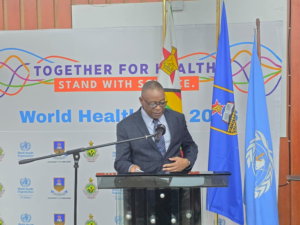
Responding to HealthTimes during the Africa CDC’s first weekly press briefing for 2026, Deputy Incident Manager Professor Yap Boum said low screening and diagnostic capacity was leaving many cases undetected until late stages.
“What we see is actually far from what is actually happening,” said Professor Boum. “Cervical cancer is one of what we call one of the silent killers, because unfortunately on the continent the diagnosis of cervical cancer is really low.”
He noted that while some countries have begun to make progress, many remain far behind. Nations such as Sao Tome and Principe, alongside others, have only implemented their first large-scale cervical cancer screening campaigns within the last three to four years.
“This month of awareness is critical for Africa CDC. Cervical cancer is managed at the level of our primary care centre, because this kind of disease and management has to happen within the community,” said Professor Boum.
He added that the persistent diagnostic gaps present an opportunity for African member states to strengthen community-based health systems by re-engaging community health care workers, who serve as the frontline of service delivery.
“It is time to engage in that awareness, bringing the right information, because awareness is first. The large majority of women on our continent do not have access to the services of a gynaecologist, simply because they are not available,” he said.
Professor Boum emphasised the need for innovation in both communication and service delivery. He said screening must be decentralised and integrated into primary health care, relying on trained nurses and community health workers rather than scarce specialists.