
Michael Gwarisa
Zimbabwe’s HIV response could face serious disruption following the Government’s decision to halt negotiations on a proposed US$350 million health funding agreement with the United States, public health experts have warned.
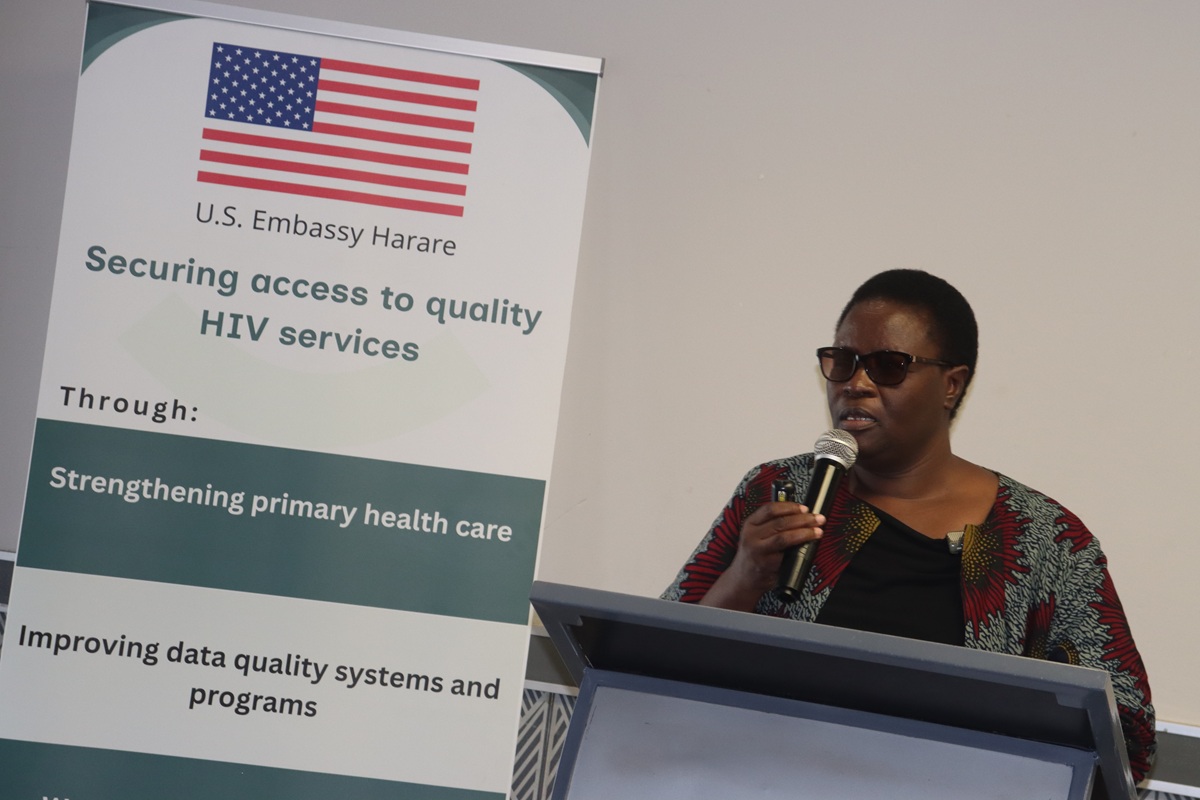
The proposed agreement was being negotiated between the Government of Zimbabwe and the US Embassy in Harare, acting on behalf of Washington under its America First Global Health Strategy. The framework was intended to guide future United States support for Zimbabwe’s health sector.
However, negotiations collapsed after authorities raised concerns over several provisions in the draft memorandum of understanding. According to government officials, the contentious issues included proposals for direct access by the United States to Zimbabwe’s health data over a specified period, as well as clauses linked to access to the country’s critical mineral resources as part of the broader cooperation arrangement.
In a circular issued by the Ministry of Foreign Affairs and International Trade, President Emmerson Mnangagwa directed officials from the ministries responsible for health and finance to discontinue any further engagement on the proposed agreement. The directive stated that the terms were clearly lopsided and posed a threat to Zimbabwe’s sovereignty, independence, and data privacy.
While the decision has been defended on sovereignty grounds, public health physicians have cautioned that a prolonged breakdown in negotiations could have unintended and far-reaching consequences for the country’s HIV response.
Speaking to HealthTimes, Dr Kudzai Masunda, president of the Zimbabwe College for Public Health Physicians, urged both governments to re-engage in dialogue, warning that Zimbabwe’s HIV programme remains heavily dependent on external financing.
“Zimbabwe’s HIV programme continues to rely on external funding for critical commodities, including antiretroviral medicines, laboratory reagents, and viral load monitoring systems,” said Dr Masunda. “Any prolonged disruption to these supply chains carries serious public health implications that extend well beyond individual patients.”
Although Zimbabwe has the AIDS Levy, which generates domestic resources for the HIV response, funding gaps remain substantial. Data from the National AIDS Council shows that in 2025 the levy raised approximately US$60 million, leaving an estimated shortfall of US$140 million.
During the same period, the US State Department committed US$65 million through a PEPFAR bridge plan to support HIV programmes in Zimbabwe. That funding was renewable every three months and also supported initiatives such as the rollout and procurement of Lenacapavir, a long acting injectable drug for HIV prevention.
Public health experts fear that the collapse of negotiations could lead to the reversal of several US commitments, placing Zimbabwe’s HIV programme under significant strain.
“HIV control is not only a health issue. It is also a matter of national development and stability,” Dr Masunda said. “A resurgence of new infections or widespread treatment interruptions could reverse decades of progress, increase illness and deaths among economically productive age groups, strain health services, reduce household incomes, and undermine workforce productivity.”
He noted that historically, uncontrolled HIV epidemics have had severe social and economic consequences, adding that preventing regression should be viewed as both a public health and national security priority.
According to the latest estimates from the Ministry of Health and Child Care, approximately 1.3 million people are living with HIV in Zimbabwe. Of these, about 1.2 million are currently on antiretroviral treatment, with 97 percent achieving viral suppression as of the 2023 to 2024 reporting period.
Despite these gains, experts warn that any disruption in drug supply or laboratory services could quickly undermine treatment outcomes. Patients on long term antiretroviral therapy risk treatment failure, drug resistance, and progression to advanced HIV disease if care is interrupted.
“From a technical perspective, continuity of treatment is non negotiable,” Dr Masunda said. “Even short term interruptions can lead to viral rebound, increased transmission, drug resistance, and long term system costs that far exceed the cost of maintaining uninterrupted supply.”
Concerns are also being raised by people living with HIV and civil society advocates, who say the uncertainty surrounding future funding has created anxiety among patients who rely on donor supported medicines and services.
Martha Tholanah, an HIV advocate and person living with HIV, said she respected the Government’s position but called for urgent clarity on alternative funding arrangements.
“As a community that depends on the funding mechanisms currently at stake, we find ourselves in a difficult position,” she said. “While the spirit of the Government’s stance is understandable and even commendable, the reality is that many discussions affecting our lives were happening without our direct involvement.”
She said the Government’s description of the proposed agreement as compromising national sovereignty resonated with many citizens, but stressed that this must be matched with concrete solutions.
“We urgently need a clear and immediate alternative that protects the gains already made and secures the future,” she said.
Tholanah added that Zimbabwe’s natural resources should increasingly be leveraged to support health financing, including the HIV response.
“We are patriotic citizens who expect protection from our Government,” she said. “As a sovereign nation with vast resources, we should be able to finance the majority of our health needs. This must become a priority, because it is about saving lives and protecting wellbeing.”
She also called for greater transparency and communication.
“Keeping citizens in the dark about issues that affect their health is never helpful,” she said. “Many people who depend on US funded treatment and prevention programmes are deeply worried, especially those who cannot afford to pay out of pocket.”
Meanwhile, Dr Masunda said the Zimbabwe College for Public Health Physicians stands ready to offer technical support should negotiations resume.
“We urge continued constructive dialogue between the Government of Zimbabwe and the United States to explore mutually acceptable solutions,” he said. “Areas of disagreement, including data governance, oversight, and implementation modalities, can often be resolved through technical clarification and negotiated safeguards that respect sovereignty while maintaining accountability.”
He said the College is willing to provide independent technical assistance, drawing on its expertise in health systems strengthening, HIV programme implementation, surveillance, and data governance.
Zimbabwe, he added, has demonstrated its ability to lead and sustain progress in the HIV response.