By Sky News (reported)
Australian authorities are investigating a suspected case of bird flu in Western Australia after a wild migratory bird tested positive for a possible H5 avian influenza infection, raising fresh concerns about the global spread of the virus.
The detection was confirmed on Friday by Minister for Agriculture, Fisheries and Forestry Julie Collins, who said the bird was found in a remote area in southwestern Western Australia. The case comes at a time when the world is facing an expanding outbreak of highly pathogenic H5 bird flu strains affecting wildlife, livestock, and in rare cases, humans.
According to Ms Collins, the Western Australian Department of Primary Industries and Regional Development is currently leading the investigation. Initial laboratory testing returned a “suspected positive” result for avian influenza, although authorities have stressed that confirmatory testing is still underway.
“Samples have now been sent to CSIRO’s Australian Centre for Disease Preparedness for confirmatory testing, with results expected tomorrow,” Ms Collins said.
She cautioned that it is not yet known whether the case involves the highly concerning H5 strain circulating globally.
“We cannot confirm yet whether it is the strain of concern that is circulating at this stage, known as the H5 bird flu. There is no evidence of any mass mortality at this time, nor is there any evidence of infection in poultry,” she added.
Officials said the bird was likely already ill before it arrived in Australia, suggesting a possible natural transmission via migration rather than local spread.
If confirmed as H5 bird flu, authorities say it would mark a significant development for Australia, which has so far remained free of the H5 strain despite global spread.
“If it is confirmed to be the H5 bird flu, this will be sobering, but not unexpected, given the spread globally,” Ms Collins noted.
Australia has previously managed to contain and eradicate other avian influenza strains such as H7, but it has never recorded an H5 outbreak in birds or poultry.
The Department of Agriculture, Fisheries and Forestry has repeatedly warned that H5N1, in particular, is one of the most dangerous strains due to its ability to spread across bird populations and, in rare cases, infect other animals and humans.
Authorities have urged the public not to handle sick or dead wildlife. Instead, they are advising people to photograph any suspicious cases and report them immediately to relevant environmental or agricultural authorities.
Avian influenza primarily affects birds, but experts warn it can also infect livestock and occasionally humans. The severity of different strains varies, with H5N1 considered among the most virulent and globally concerning variants.
The development in Western Australia comes as global monitoring of bird flu intensifies, with outbreaks reported across multiple continents in recent years.
In response to growing risks, the Australian government has announced increased funding and preparedness measures. On the same day the suspected case was revealed, officials unveiled a $1.3 million investment aimed at protecting vulnerable native species in New South Wales from potential H5 outbreaks.
Environment Minister Murray Watt said it is not possible to fully prevent bird flu from reaching Australia’s wildlife, stressing the importance of strengthening ecosystems instead.
“The best way we can protect species most vulnerable to H5 bird flu is to have strong and healthy populations,” he said. “This means repairing habitat and managing threats like weeds and invasive predators.”
The funding forms part of a broader $100 million national preparedness programme designed to strengthen Australia’s response capacity ahead of any potential H5 arrival.
Minister Collins said the investment reflects the seriousness of the threat posed by global spread of the virus.
“Strengthening our preparedness for H5 bird flu is critical – not just for our valuable agricultural industries, but for our unique natural environment and the broader community,” she said.
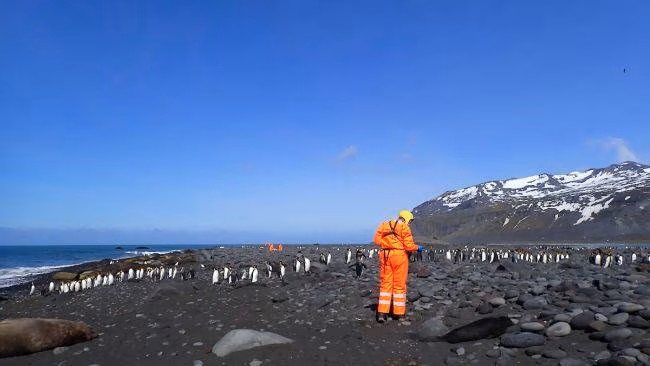
Concerns have also been heightened by recent scientific findings from Australia’s Antarctic program, which confirmed widespread deaths of elephant seals on Heard Island linked to H5N1 avian influenza.
Researchers reported that between October 2025 and January 2026, mass mortality events devastated seal populations on the remote island, with an estimated 13,359 pups dying out of 17,364. Death rates were recorded at around 76 percent.
Due to the remoteness of the region, findings were based largely on drone surveillance, with limited on-the-ground sampling. Scientists also reported similar impacts on nearby McDonald Island, suggesting the virus had already spread through parts of the sub-Antarctic ecosystem.
Lead researcher Dr Julie McInnes said the findings show the virus is continuing to move eastward through wildlife populations in the Southern Ocean region.
“These observations of H5 bird flu at Heard Island and McDonald Island are the first detection in an Australian external territory and show the continued eastward movement of the virus,” she said.
Researchers believe the virus may have been introduced through wildlife movement from French sub-Antarctic territories located about 1,800 kilometres away.
As investigations continue in Western Australia, authorities say the priority remains rapid confirmation of the strain and preventing any potential spread to domestic poultry or wildlife populations.