
By Staff Reporter
Behind every effective health supply chain are people. While investments in medicines, vaccines, infrastructure, technology and distribution systems remain essential, their effectiveness ultimately depends on the competence and leadership of the people entrusted with managing them.
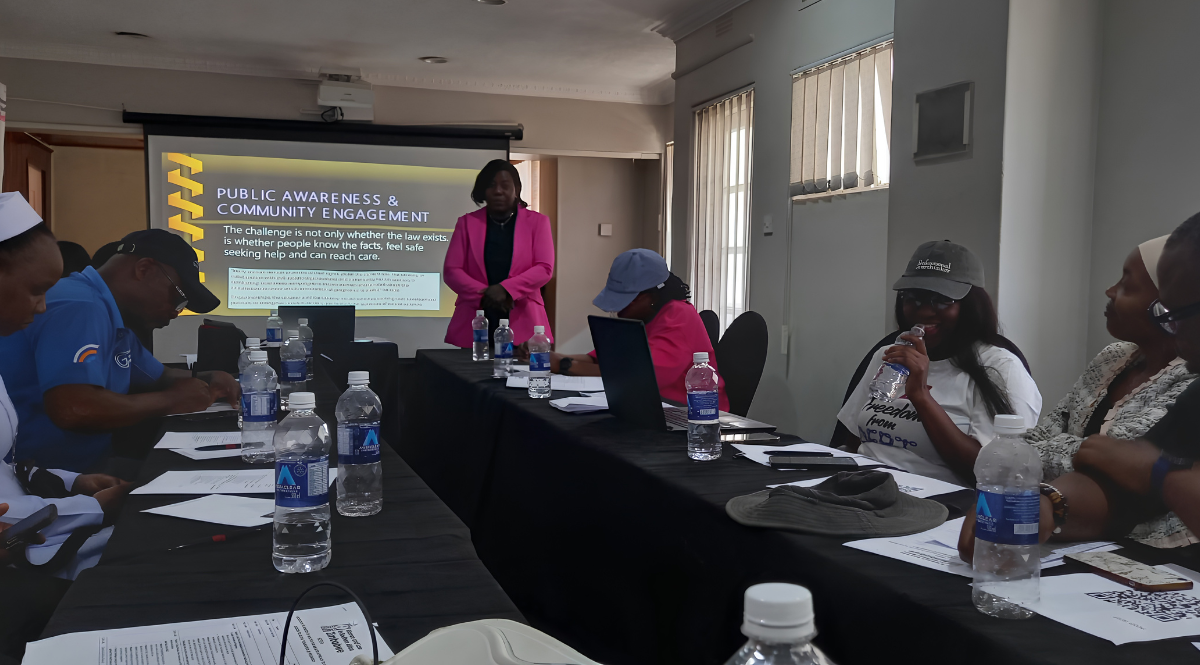
It is against this background that Zimbabwe hosted the Strategic Training Executive Programme (STEP 2.0) SADC regional workshop, bringing together public health supply chain professionals from Botswana, Lesotho, Malawi, Tanzania and Zimbabwe.
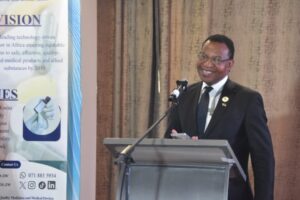
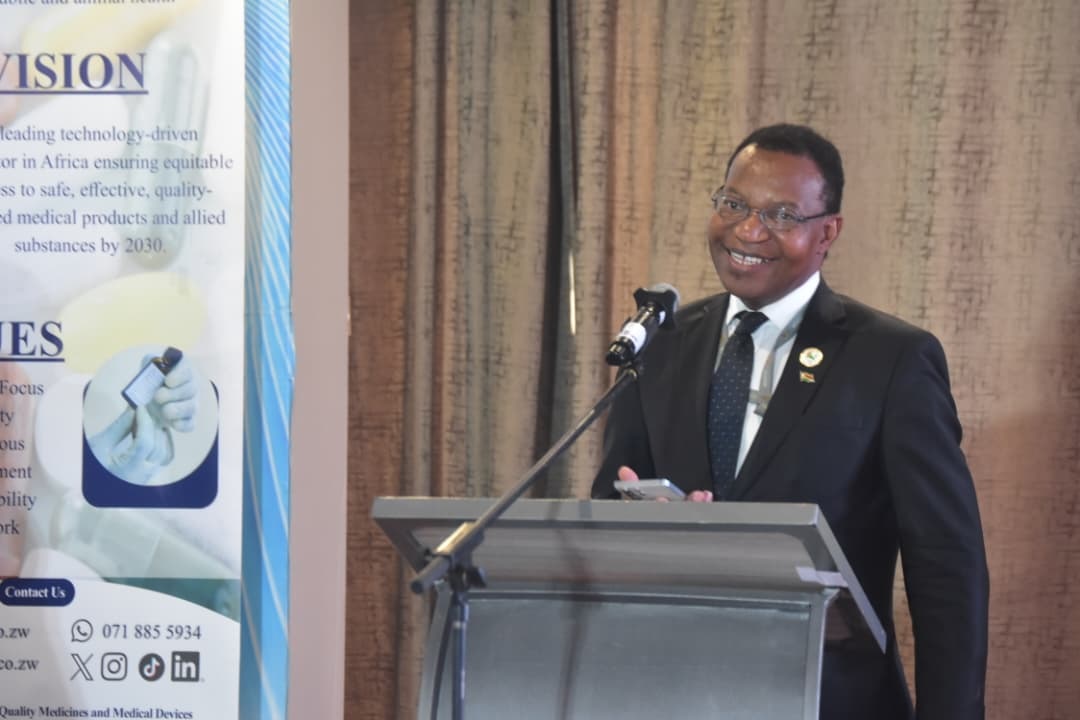
The five-day workshop, held from 9 to 13 November 2026 at the Hyatt Regency Harare The Meikles, was officially opened by Mr Boniface Machingauta, Deputy Director of Pharmacy Services in Zimbabwe’s Ministry of Health and Child Care.
The programme was delivered by the International Federation of Pharmaceutical Wholesalers (IFPW) Foundation in collaboration with Gavi, the Vaccine Alliance, and the Global Fund.
Its focus was on developing leadership competencies and equipping health supply chain professionals with the skills, confidence and practical tools to lead sustainable transformation within their respective organisations.
Beyond Technical Competence
Health supply chain workforce development has traditionally concentrated on technical competencies such as procurement, inventory management, warehousing, distribution and logistics information management.
However, being technically competent does not necessarily make someone an effective leader.
The ability to mobilise teams, influence decisions, manage resistance, communicate effectively, negotiate, resolve conflicts and build a shared vision is equally important.
STEP 2.0 addresses this gap by developing the leadership and management competencies that enable professionals to translate their technical knowledge into meaningful organisational improvements.
Participants explored situational leadership, team development, stakeholder engagement, effective communication, root cause analysis, strategic assessment and change management.
Central to the programme was Kotter’s eight-step model for leading change, through which participants learnt how to create a sense of urgency, build guiding coalitions, develop a shared vision, engage and enable their organisations, generate short-term wins and sustain transformation.
Rather than prescribing a single leadership approach, the programme encourages professionals to understand their own leadership styles and adapt them to different people, circumstances and institutional environments.
Taking Transformation Beyond the Classroom
What distinguishes STEP 2.0 from conventional training programmes is its practical workplace application.
Through a component known as Your Transformation Challenge (YTC), participants identify real challenges within their organisations and develop practical, measurable transformation projects.
The SADC cohort is addressing challenges across several critical areas, including medicines and vaccine inventory management, data quality and reporting, digital systems, supply chain visibility, expiry and waste reduction, storage, security, cold chain management, coordination and stakeholder collaboration.
Participants are required to look beyond the symptoms of these challenges and establish their underlying causes.
For instance, recurring medicines stockouts may not necessarily be solely a procurement or financing problem. They could also result from inaccurate consumption data, inadequate coordination, unclear responsibilities, poor communication or limited accountability.
Resolving such problems requires not only technical interventions but also changes in behaviours, management practices and organisational culture.
During the workshop, participants used root cause analysis and SCORE assessment — Strengths, Challenges, Options, Responses and Effectiveness — to evaluate their transformation projects, identify available resources, anticipate risks and assess how proposed changes would benefit the wider health system.
The emphasis is on ensuring that improvements are measurable, sustainable and responsive to the needs of patients and healthcare institutions.
Bringing Global Expertise into African Public Health Supply Chains
An important feature of STEP 2.0 is the collaboration between public health institutions, international development partners and experienced pharmaceutical industry professionals.
The Harare workshop was led by Bruce Bennett, retired President of American Health Packaging, alongside Olga d’Hennezel, former Executive Director of Manufacturing Science and Technology at Merck, and Dr Namrata Singh, STEP SADC Implementation Manager at the IFPW Foundation.
Programme advisers included Bertrand Pedersen, Senior Manager for Private Sector Partnerships and Innovation at Gavi; Chris Goetz, Executive Vice President of the IFPW Foundation; and George Bray, Vice President for Programs and Initiatives at the IFPW Foundation.
The coaching team brought together considerable international pharmaceutical and health supply chain expertise, comprising Christelle Tellier of Sanofi; Elena Badaloni, Menoune Benamara and Ninoslav Opacic of Pfizer; Stanley Chindove, Supply Chain Manager at the Global Fund; and Wilson Chandomba, Founder and Managing Consultant of Zimbabwe-based CMCOMMS Supply Chain Quality Assurance.
Programme coordination was supported by Mary Shula, STEP SADC Coordinator at the IFPW Foundation, and Christine Mulenga, Event Director at Hallpax.
Through the coaching model, participants benefit from experienced professionals who help them navigate workplace challenges, critically assess their decisions and develop practical approaches to leading change.
The diversity of experience also creates an opportunity for cross-sector and cross-country learning, enabling participants to appreciate how different organisations manage similar challenges.
A Programme Built on International Collaboration
STEP 2.0 builds on several internationally developed leadership and professional development initiatives.
These include the original STEP programme developed by Gavi in collaboration with UPS; the Transformational Leadership programme developed under USAID’s Human Resources for Health in 2030 initiative and implemented by People that Deliver; and immunisation leadership development programmes involving Yale University, PATH, the University of Global Health Equity and the Geneva Learning Foundation.
Its development and review also benefited from contributions from WHO, UNICEF, the Global Fund, VillageReach, Africa Resource Centre, the Sabin Vaccine Institute, GSK, Johnson & Johnson and other international partners.
This collective experience brings together lessons from public health, academia, humanitarian logistics and the pharmaceutical industry.
The Real Work Begins After the Workshop
The conclusion of the Harare workshop marks the beginning of the next critical phase of the programme.
Participants have returned to their respective countries, where they will spend the coming months implementing their transformation projects under the continued guidance of their coaches.
They will be expected to mobilise colleagues, engage decision-makers, overcome institutional barriers, monitor progress and demonstrate tangible improvements.
The programme therefore moves beyond the acquisition of knowledge to its practical application, with participants taking responsibility for leading change within their own institutions.
The benefits are expected to extend beyond individual participants as they develop colleagues, strengthen teams and embed improved leadership and management practices within their organisations.
Building African Leadership in a Changing Global Health Landscape
The programme comes at a particularly important time for Africa, as uncertainty in global health financing increasingly places greater responsibility on countries to strengthen their own systems, optimise available resources and develop sustainable institutional capabilities.
While effective leadership cannot replace adequate financing, it can help institutions reduce avoidable wastage, improve accountability, strengthen coordination and make better use of available resources.
Africa’s investment in health supply chain infrastructure, local pharmaceutical manufacturing, digitalisation and pooled procurement must therefore be accompanied by deliberate investment in the people who will lead and manage these systems.
Zimbabwe’s hosting of the regional workshop demonstrates the importance of regional collaboration in developing this leadership capacity.
Ultimately, the success of STEP 2.0 will not simply be measured by the number of professionals completing the programme, but by the transformation they lead within their institutions.
For patients, that transformation should translate into fewer medicine stockouts, reduced wastage, more reliable vaccine availability and uninterrupted access to quality-assured health commodities.
Africa needs technically competent health supply chain professionals. Equally, it needs leaders who can mobilise people, challenge established practices and make sustainable change happen.
STEP 2.0 is helping to develop both.