By Michael Gwarisa
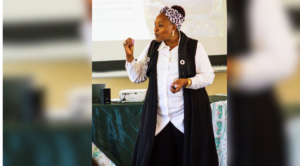
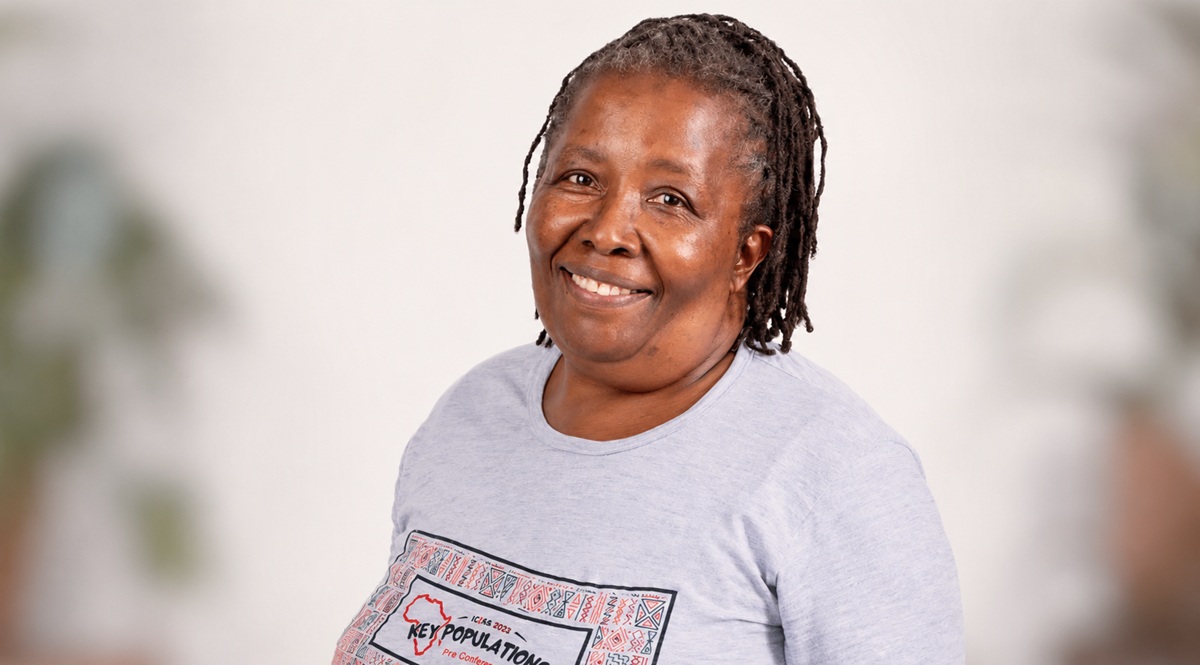
For 22 years, Martha Tholanah has lived with HIV. When she was diagnosed on January 3, 2003, the future looked bleak. She had fallen ill and gone for an HIV test shortly before starting a new job. Her CD4 count was just 31, indicating severe immune suppression at a time when an HIV diagnosis could still feel like a death sentence.
“At the time, the World Health Organization classified a CD4 count below 200 as stage four. Usually, hospitals would send you home for Home-Based Care, which meant there was nothing more that could be done, you were sent home to die,” she recalled.
But Martha survived.
She started her new job, went on to give birth to a daughter who remained HIV-free, and lived through one of the most remarkable transformations in modern medicine: the transition of HIV from a disease associated with almost certain early death to a chronic condition that, with effective treatment, can allow people to live long and fulfilling lives.
Today, Martha is 61 and has an undetectable viral load. Yet, after more than two decades of living with HIV, she says survival has brought a new set of questions.
“People see us happy because we have undetectable viral loads and are on treatment, but the reality is we are not okay,” she said. “We go about our work because we have to feed our families. No one seems to listen.”
Martha experiences chronic pain severe enough to affect her daily life and keep her away from family gatherings and other social events. For her, the question is no longer simply whether HIV treatment will keep her alive.
It is what it means to grow old with HIV. That question is rapidly emerging as one of the defining challenges of the global AIDS response. A major Lancet HIV Commission on ageing and HIV, presented in the context of the 26th International AIDS Conference in Rio de Janeiro, warns that the success of antiretroviral therapy is fundamentally changing the face of the HIV epidemic.
Millions of people who would once have died from AIDS are now surviving into middle and older age. By 2040, the Commission projects that 20.2 million people living with HIV will be aged 50 years and above, accounting for 51% of all people living with HIV globally. An estimated 96% of these older people living with HIV will be in low- and middle-income countries.
The message from the Commission is clear: the HIV response has become increasingly successful at helping people survive. It must now evolve to help them age well.
Beyond Survival
For decades, the global response to HIV was driven by an urgent objective: keep people alive. The expansion of antiretroviral therapy transformed the epidemic. Deaths fell, people regained their health, and millions who might once have expected shortened lives began planning for futures that included careers, relationships, parenthood and old age.
But the success of treatment has created a new reality. People living with HIV are not simply surviving for a few additional years. Many are now living with the virus for decades. The Lancet HIV Commission argues that this requires a fundamental rethink of how HIV care is organised.
The traditional focus on HIV testing, treatment and viral suppression remains essential. However, the Commission warns that these measures alone are no longer enough for an ageing population living with HIV.
As people grow older, they increasingly face other health conditions alongside HIV. These can include cardiovascular disease, metabolic conditions, cancers, bone disease, mental health challenges and other forms of multimorbidity.
The challenge is further complicated by polypharmacy, where individuals may be required to take multiple medicines for HIV and other conditions, increasing the complexity of their care.
The Commission argues that HIV care must move beyond a narrow focus on controlling the virus and towards a broader approach that considers a person’s overall health, functioning and quality of life.
For Martha, that argument resonates deeply. Her viral load may be undetectable, but she says that does not answer every question about her health.
“Family events are a time to connect, but I avoid them now because the pain makes it impossible to enjoy myself,” she said. “If I do attend, I often leave early.”
Her experience captures a growing paradox in the HIV response.
A person can be successfully treated for HIV and still face serious challenges associated with ageing and long-term health.
The Changing Face of HIV
The Commission’s projections show just how dramatically the demographics of HIV are expected to change. In 2025, people aged 50 and above accounted for about 29% of people living with HIV. By 2040, that proportion is projected to rise to more than half.
This means the world is entering an era in which the typical image of the person living with HIV may need to change.
For many years, HIV programmes have understandably focused heavily on populations at highest risk of acquiring the virus, young people, women, key populations and children.
But there is now a rapidly expanding generation of people who have lived with HIV for 20, 30 or potentially even 40 years.
Martha is part of that generation. She remembers a time when her CD4 count of 31 could have meant the end of her life.
Now she is part of a growing population whose challenge is different: navigating the effects of ageing while living with a chronic viral infection and taking lifelong treatment.
The Commission also warns that older adults have frequently been overlooked in HIV prevention, testing and care. Age-related assumptions can lead health systems and societies to treat older people as if they are no longer at risk of HIV or sexual activity, potentially contributing to missed testing opportunities and late diagnosis.
At the same time, older people living with HIV can face what the Commission describes as intersecting forms of stigma—related both to their HIV status and their age.
A Generation That Survived
Ageing with HIV is also not exclusively a story about people who are already over 50.
There are young adults who acquired HIV at birth or during childhood and who have already spent two decades or more on antiretroviral therapy. Martha worries about them too.
“When people discuss HIV and aging, they forget about young individuals born with HIV or diagnosed as toddlers,” she said. “Many have been on treatment for 20 or more years. While they are healthy now, I worry about who is looking after their long-term health.”
The Commission similarly identifies people with perinatally acquired HIV as an important population whose needs must be considered across the life course.
As they grow older, they may face complex health challenges associated with lifelong HIV infection and decades of treatment, including metabolic, cardiovascular, bone and neurocognitive conditions.
The challenge, therefore, is not simply about chronological age. It is also about time. How long has someone lived with HIV? How long have they been on treatment? What other health conditions are emerging? How do health systems support people whose needs become increasingly complex as they move through different stages of life? These are the questions the global HIV response must now confront.
From Living Longer to Living Well
The Lancet HIV Commission calls for a shift away from health systems that treat HIV in isolation. Instead, it argues for more integrated care that recognises the broader health needs of people ageing with the virus, including the prevention, screening and management of other health conditions.
It also places greater emphasis on a concept that goes beyond simply counting years lived. The goal, the Commission argues, should increasingly be to help people maintain their ability to function and continue doing the things that matter to them.
For Martha, that distinction is important. She has already won the battle for survival. Twenty-one years ago, when her CD4 count was 31, simply staying alive was the goal. Today, she has an undetectable viral load and is part of the extraordinary success story of modern HIV treatment.
But as she grows older, she wants the conversation to move beyond whether the virus is suppressed. The question now is whether the world that helped people like her survive is ready to support them through the next stage of their lives.
The global HIV response succeeded in proving that an HIV diagnosis does not have to mean death. The challenge identified by the experts gathered around the Lancet HIV Commission is what comes next. Because as millions of people who once expected to die young continue to live longer, the measure of success can no longer be survival alone.