By Michael Gwarisa in Addis Ababa, Ethiopia
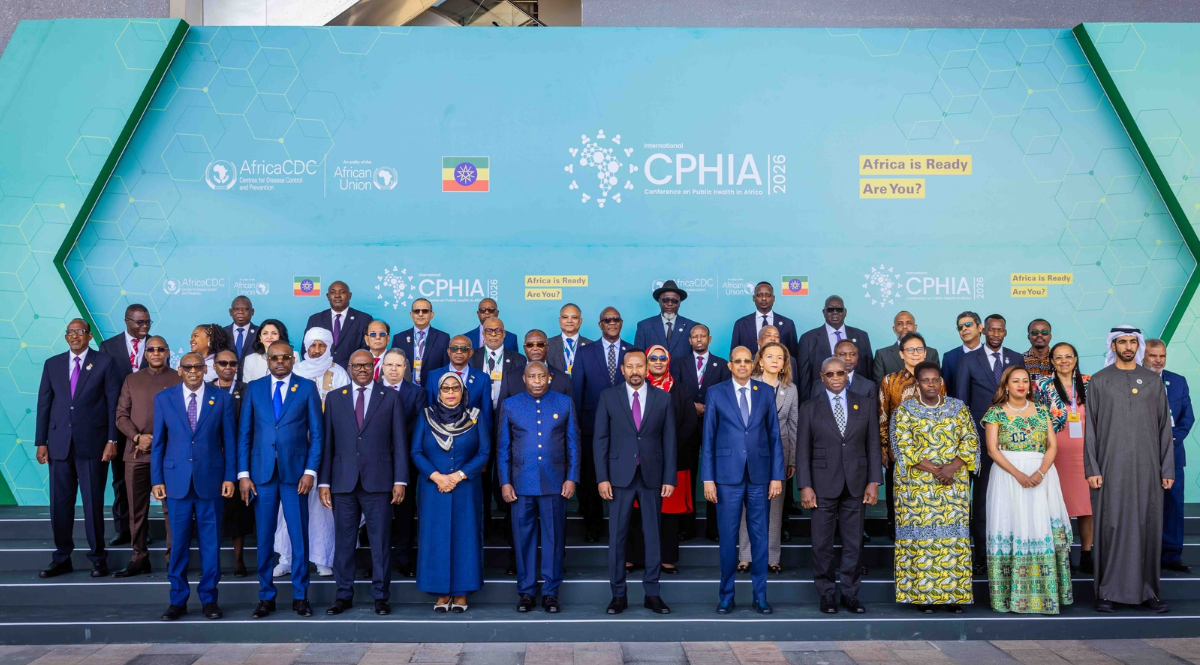
Africa’s ambition to take greater control of its health future came under sharp focus in Addis Ababa on Monday as leaders, scientists and public health experts opened the fifth International Conference on Public Health in Africa with a call for countries to move from dependence on external support towards stronger domestic health systems, financing, manufacturing and innovation.
Ethiopian Prime Minister Abiy Ahmed, who officially opened the conference, said health security and sovereignty could only become meaningful if African countries built systems capable of protecting people in their everyday lives as well as during major health emergencies.
Speaking before thousands of registered participants from 135 countries, Abiy said health could no longer be treated simply as a sector that responds when people become sick, but had to be embedded in how governments address nutrition, water, climate, social protection, technology and economic development.
“For our people, health security and sovereignty mean systems they can depend on in everyday life and in times of crisis,” Abiy said.
He pointed to Ethiopia’s health extension programme, which has brought essential services closer to households through a large network of community-based health workers, while the country is also expanding health insurance, strengthening laboratories and investing in domestic pharmaceutical manufacturing.
Abiy said Ethiopia had achieved World Health Organisation maturity level three for medicines and imported vaccines, which he said provided a stronger foundation for local manufacturers to serve both the country and the wider region.
His message reflected the central question confronting CPHIA 2026, whose theme focuses on transforming Africa from health dependency and vulnerability towards ownership and resilience: whether African countries can build the institutions, financing and production capacity required to respond to health threats without waiting for external actors to lead.
Speaking immediately after the Ethiopian Prime Minister, Dr. Jean Kaseya, the Africa CDC Director General pushed that argument further, describing CPHIA not simply as another international conference but as a continental movement for health security and sovereignty.
The Africa CDC chief said the continent had already demonstrated that African institutions could lead responses to major outbreaks, citing the agency’s work during Ebola emergencies and its expanding support for national public health institutes and genomic surveillance.
“We are not in Africa apologising for what we are achieving,” Kaseya told delegates, insisting that the continent’s progress should be recognised as evidence of what African leadership and institutions can deliver.
He said Africa CDC had expanded the number of countries with National Public Health Institutes from seven to 42, while the number of countries conducting genomic sequencing had grown from seven to 52.
Kaseya also called for greater accountability over resources committed to African health emergencies, arguing that governments must have stronger visibility over how funds intended to protect their populations are used.
His remarks came against the backdrop of continuing health emergencies across the continent, including the Ebola response in the Democratic Republic of Congo, where he said insecurity was making outbreak control considerably more difficult.
TThe conference is therefore taking place at a moment when Africa is being forced to confront two interconnected realities: the persistence of infectious disease threats and the fragility of health systems that remain heavily dependent on external financing, medicines, technologies and expertise.
Tanzanian President Samia Suluhu Hassan brought another dimension to that debate, placing maternal and child health at the centre of the continent’s health sovereignty agenda.
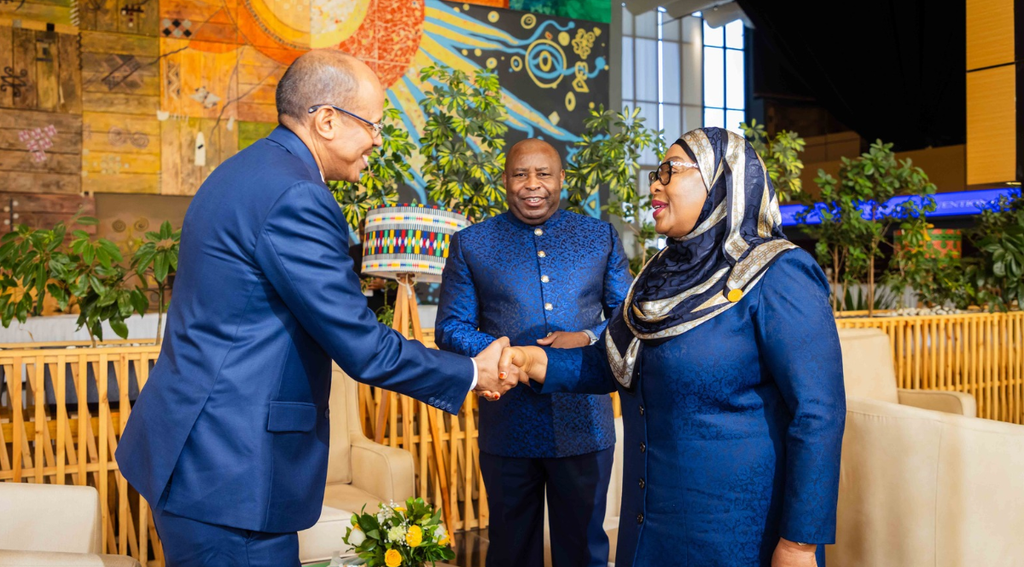
Hassan launched the African Union Champions Continental Roadmap on Reproductive, Maternal, Newborn, Child and Adolescent Health for 2026 to 2030, warning that Africa could not achieve the ambitions of Agenda 2063 while women and newborns continued to die from preventable causes.
The roadmap is built around three targets, known as the Three Zeros: zero home deliveries, zero preventable maternal and newborn deaths, and zero unvaccinated children.
Hassan said approximately 180,000 women died from maternal causes across Africa in 2023, while an estimated 1.18 million newborns lost their lives during the same period.
She warned that if current trends persist, Africa could still record around 300 maternal deaths per 100,000 live births by 2030, far above the Sustainable Development Goal target of fewer than 70.
Yet Tanzania’s own experience, Hassan argued, shows that significant progress is possible when political commitment is matched with sustained investment and accountability.
She said Tanzania had reduced maternal mortality from 556 deaths per 100,000 live births in 2019 to 104 in 2023, with more recent survey results expected to show a further decline to approximately 75 deaths per 100,000 live births.
Tanzania’s progress, which Hassan said had previously been recognised by the Gates Foundation, has become part of her argument for stronger African ownership of health priorities.
She announced an initial commitment of 60 scholarships for specialist and advanced training in midwifery, anaesthesia, obstetrics and gynaecology and neonatal care for African countries, alongside short competency-based courses and supervised clinical attachments for nurses and midwives.
The roadmap also calls on African Union member states to integrate the Three Zeros into national health strategies and establish empowered national focal points responsible for implementation.
For Africa CDC, however, the broader challenge extends beyond individual programmes. Kaseya said African countries must build the capacity to manufacture essential health products, finance their own systems, lead outbreak responses and accelerate digital transformation.
Abiy made a similar argument, calling for African countries to develop centres of medical excellence, use their collective purchasing power to create dependable markets for African medicines and health products, and establish clear accountability for every health commitment.
The message emerging from the opening of CPHIA 2026 is therefore less about rejecting international partnerships than changing the balance of those partnerships. Rwanda, which also addressed the opening, argued that declining external health assistance makes it increasingly necessary for African governments to finance their own systems while ensuring that international resources align with priorities determined by African countries.
The challenge is formidable, but the leaders gathered in Addis Ababa are arguing that the continent has already begun building the foundations of a different health future, one in which African institutions lead, African countries finance and manufacture more of what they need, and African governments are ultimately accountable for whether their people receive the care they require.
For Hassan, that ambition can ultimately be judged through the survival of a mother during childbirth, the healthy start given to a newborn, the protection of a child through vaccination and the opportunities available to Africa’s young people.