
By Michael Gwarisa
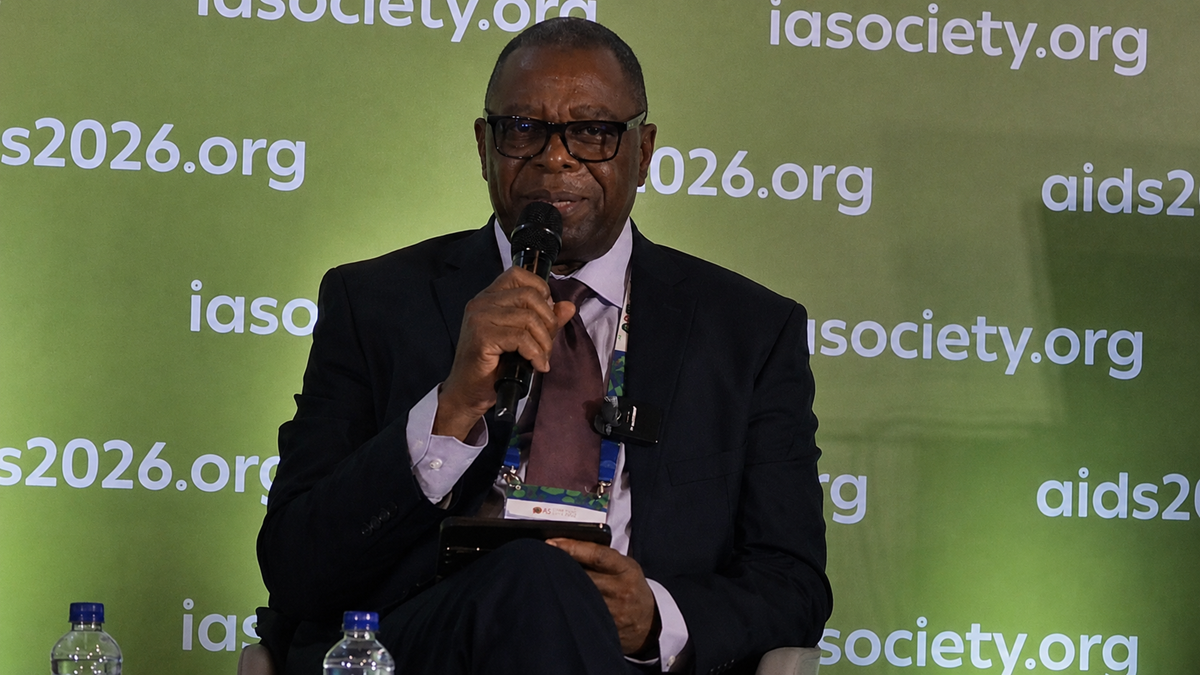
RIO DE JANEIRO, Brazil – Zimbabwe has reaffirmed its commitment to ending AIDS among children, with the Minister of Health and Child Care, Dr Douglas Mombeshora, telling delegates at the 13th International AIDS Society Conference on HIV Science (AIDS 2026) that the country remains focused on closing the treatment gap affecting children and adolescents living with HIV despite growing global funding uncertainties.
Addressing a high-level session on paediatric HIV, Dr Mombeshora said Zimbabwe had made remarkable progress towards the UNAIDS 95-95-95 targets, achieving 96-97-96 among adults. However, he acknowledged that children continue to lag behind and require renewed attention.
“We have achieved this in adults, but for children we are a little bit behind,” Mombeshora said, adding that the country’s progress had been driven by strong political commitment, partnerships with communities, civil society organisations and development partners.
His remarks come just days after researchers at AIDS 2026 presented alarming new data showing Zimbabwe is among the countries hardest hit by recent disruptions to the United States President’s Emergency Plan for AIDS Relief (PEPFAR).
According to researchers from the Heidelberg Institute of Global Health and the Clinton Health Access Initiative, Zimbabwe recorded a decline of more than 6,000 children receiving PEPFAR-supported HIV treatment between 2024 and 2025, placing it alongside South Africa and Kenya among the countries experiencing the largest reductions in paediatric HIV treatment support.
Globally, the study found that more than 77,000 fewer children were receiving PEPFAR-supported HIV treatment in 2025 compared to the previous year. Researchers cautioned that while the figures do not necessarily mean children have stopped taking antiretroviral medicines, they indicate a reduction in direct PEPFAR support to health facilities, including healthcare workers, technical assistance and essential commodities.
The findings have raised concerns that countries heavily reliant on donor funding could experience increased pressure on already stretched health systems.
Despite these challenges, Mombeshora said Zimbabwe remains firmly committed to eliminating AIDS among children.
He highlighted Zimbabwe’s membership in the Global Alliance to End AIDS in Children by 2030 and noted that the country has prioritised women, children and adolescents through national policies, including the National Health Strategy and the Zimbabwe National HIV and AIDS Strategic Plan.
“Our goal is to make sure that children and adolescents living with HIV are diagnosed and put on treatment to achieve viral suppression through family-centred care supported by peer-led models,” he said.
Mombeshora said Zimbabwe has expanded community-based support systems through Community Adolescent Treatment Supporters and Young Mentor Mothers, who provide adherence counselling and psychosocial support to children, adolescents and their families.
“These community-led initiatives are a game-changer within the programme,” he said.
The minister also highlighted Zimbabwe’s long-standing AIDS Levy, introduced in 1999, as one of Africa’s pioneering domestic health financing mechanisms. He said half of the funds collected are used to procure antiretroviral medicines, while the remainder supports HIV prevention programmes, initiatives targeting adolescent girls and young women, efforts to eliminate mother-to-child transmission of HIV, syphilis and hepatitis B, and community-led HIV responses.
He added that Zimbabwe is exploring additional domestic financing mechanisms, including the proposed National Health Provision Programme, to strengthen the sustainability of the country’s health sector.
The contrast between Zimbabwe’s ambitious commitments and the emerging realities of declining external support underscored one of the central themes of AIDS 2026: ensuring that gains made over the past two decades are not reversed as global HIV financing shifts.