Michael Gwarisa
A team from Imperial College London has travelled to Zimbabwe to deliver an intensive training programme aimed at strengthening the use of machine learning in healthcare, as global efforts grow to harness artificial intelligence for improved health outcomes.
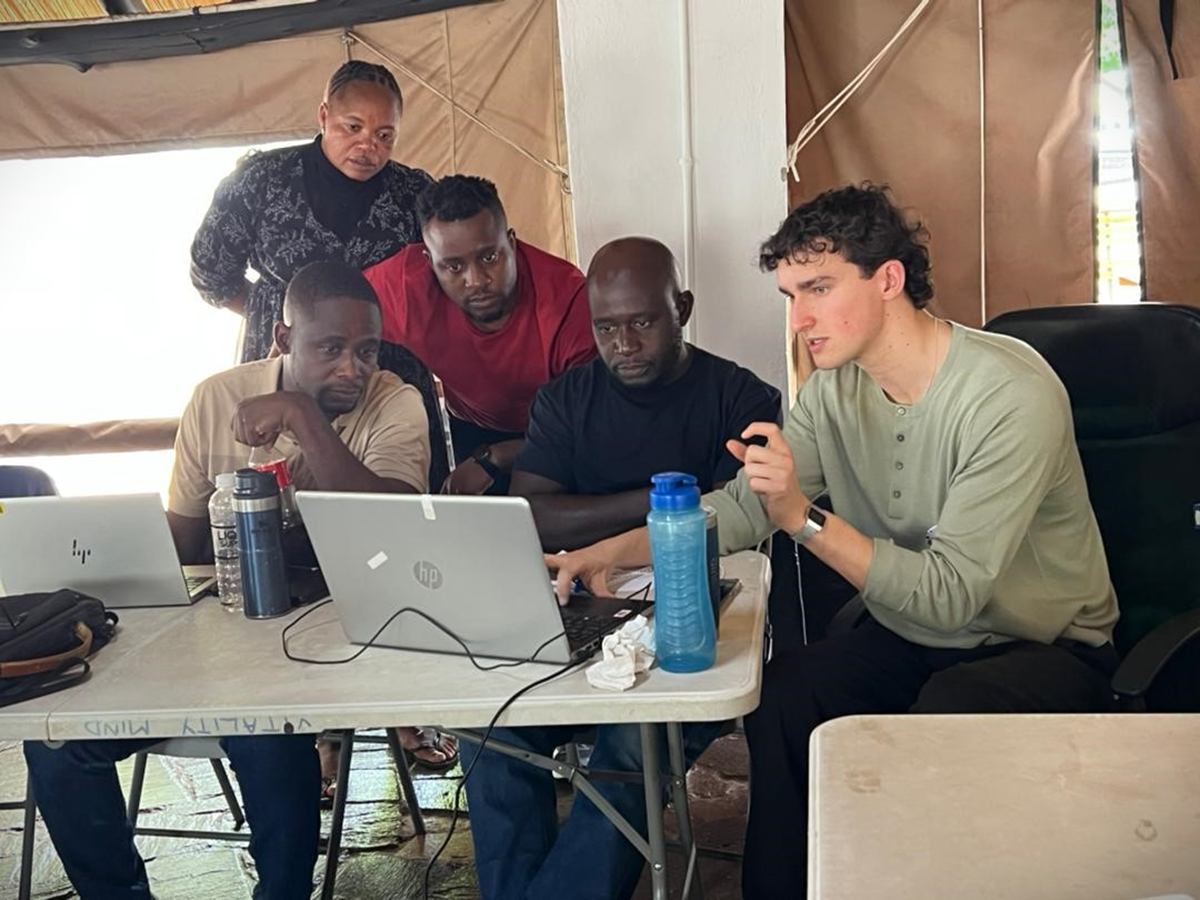
The three day course, titled Machine Learning for Health Applications, was held in Harare from 2 to 4 March and brought together postgraduate students, clinicians, researchers, and data scientists from across Zimbabwe. The programme was designed to equip participants with practical skills that can be applied in local healthcare settings.
Organisers said the training reflects a growing need to bridge the gap between advanced digital tools and frontline health systems in low and middle income countries.
“What made the course particularly memorable was the energy that attendees brought to it. Participants arrived early every morning and many stayed long after sessions had ended, continuing discussions with the teaching team and each other,” said Marco Reed, a PhD student in artificial intelligence for paediatrics at Imperial.
“The group was wonderfully varied, spanning experienced data scientists, healthcare workers, and postgraduate students, which made for rich discussions and a lot of peer learning. During the guest lectures, debates about AI infrastructure and capability in Zimbabwe were lively and detailed,” he added.
The course was delivered in partnership with local institutions including the Biomedical Research and Training Institute Zimbabwe, Health Research Unit Zimbabwe, and Neotree, highlighting a collaborative approach to building digital health capacity.
Over the three days, participants covered key topics such as supervised and unsupervised learning, linear models, evaluation metrics, and advanced techniques including tree based models and support vector machines. Each morning lecture was paired with practical sessions in the afternoon, allowing participants to build and evaluate models using real data.
The final day focused on real world applications, drawing examples from healthcare systems in Zimbabwe, Malawi, and the United Kingdom. These included ongoing work in neonatal care and clinical decision support tools developed through collaborations between Imperial researchers and African partners.
One of the highlights of the programme was a webinar on machine learning in healthcare, delivered in partnership with the University of Zimbabwe. The session was co hosted by Payam Barnaghi, Professor of Machine Intelligence Applied to Medicine at Imperial, and Tawanda Mushiri, an Associate Professor of Artificial Intelligence and Robotics.
Speaking during the session, Professor Mushiri said Zimbabwe’s newly launched national artificial intelligence strategy provides an important framework for integrating machine learning into key sectors, including healthcare.
Participants said the training helped demystify complex concepts and showed how artificial intelligence tools can be adapted to local contexts.
“The course was a transformative experience that effectively bridged theory and real world application. The practical components were especially valuable and have strengthened my ability to apply data driven methods to healthcare challenges,” said one participant.
The initiative builds on earlier collaborations between Imperial and Zimbabwean institutions, including a high level workshop held in 2025 that brought together academics, researchers, and entrepreneurs to explore the role of artificial intelligence in improving health systems.
That event, organised in partnership with the University of Zimbabwe, Imperial, Neotree, and University College London, was supported by the Wellcome Trust and the Foreign, Commonwealth and Development Office.
The latest training also draws on ongoing research collaborations focused on neonatal health. Researchers from Imperial, working with partners in Zimbabwe and Malawi, are developing machine learning algorithms to support early detection of neonatal sepsis, a leading cause of newborn deaths.
According to organisers, experiences from these projects have highlighted a critical gap between those developing digital health tools and healthcare workers expected to use them. The training programme was designed to address this gap by building local capacity and encouraging collaboration across disciplines.
Dr Felicity Fitzgerald, a Clinical Associate Professor at Imperial who also works with THRU ZIM, has been central to these efforts. Her work focuses on strengthening data systems and clinical decision making in hospitals across Zimbabwe.
Organisers say the initiative reflects a broader shift towards what is known as convergence science, where expertise from different fields is brought together to address complex global challenges.
By combining knowledge from artificial intelligence, clinical medicine, and public health, the programme aims to ensure that technological innovations are grounded in real world needs and can deliver tangible benefits.
The training is also part of Imperial’s wider commitment to building partnerships in Africa and supporting the development of locally relevant solutions.
Organisers say there are plans to expand similar training programmes in the region, as demand for digital health skills continues to grow.
As countries like Zimbabwe invest in artificial intelligence strategies and digital health systems, initiatives such as this may play a critical role in ensuring that innovation translates into improved care.
For participants and organisers alike, the message was clear. Building the future of healthcare will depend not only on technology, but on the people equipped to use it effectively.