By Kudakwashe Pembere in Mash Central
The explosion came without warning.
One moment, Regina (not her real name) was helping her aunt carry a log of firewood in Rushinga. The next, she was lying on the ground in agony, her lower leg blown off by a landmine hidden beneath the soil.
Sixteen years later, the memory remains vivid.
“My aunt and I were fetching firewood,” Regina recalls, her voice trembling. “We were carrying a log together. I was holding one end and she was holding the other. Suddenly I found myself on the ground. I had stepped on a landmine.”
At the time, she was only 27 years old and carrying a baby on her back.
“The baby was not injured, but my leg was gone. We could not even find where it had gone.”
Villagers rushed her to Dande before she was transferred to Karanda Mission Hospital.
“It was one of the most painful moments of my life. I had no money and I did not know what would happen to me.”
The year was 2010.
After receiving treatment, Regina returned home determined to rebuild her life. Living in a polygamous household, she knew she could not rely entirely on her husband, who had several other wives and struggled to provide for all the families.
With the help of an artificial limb, she slowly regained her independence and returned to work, determined to support her three children.
“My father had already died, but my mother was still alive at the time. She sold some asbestos sheets that were valuable to us and exchanged them for a cow. From that money, she bought me an artificial leg.”
The prosthetic changed everything.
“I could walk again. I could work again. I could provide for my children.”
For years, she managed to feed her family and send her children to school despite the disability that had changed her life forever.
Years later, tragedy struck again.
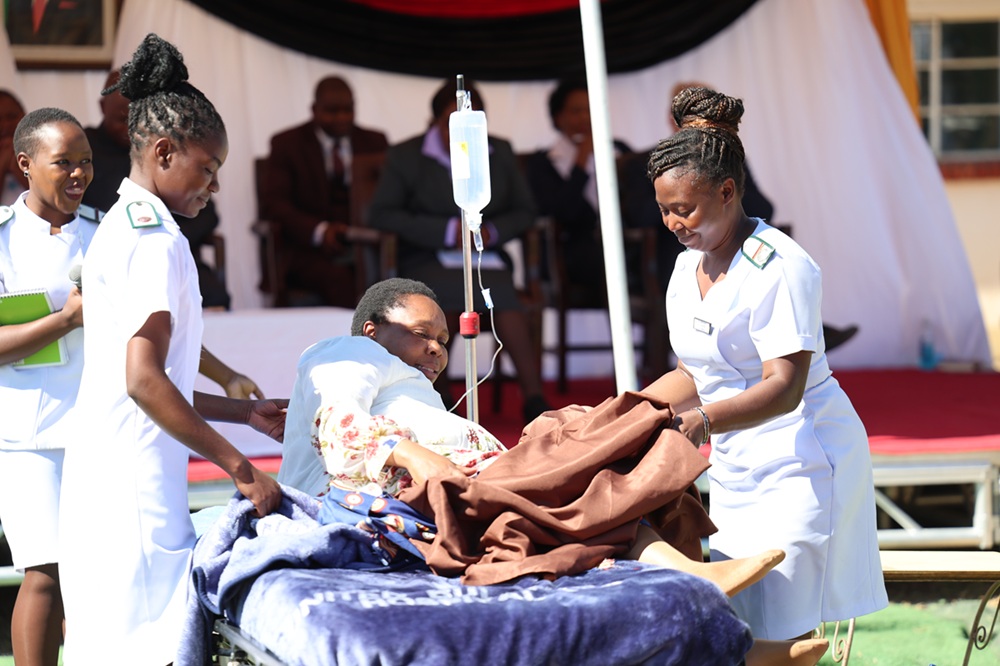
Today, Regina lies in the Intensive Care Unit at Karanda Mission Hospital. The rhythmic beeping of monitoring machines fills the room.
Her left arm, wrapped in bandages, rests in a makeshift traction device. Hospital staff point to the injuries that now cover parts of her body.
This time, it was not a landmine.
She had been travelling on an ox-drawn scotch cart when disaster struck.
“The cattle suddenly turned,” she explains. “The person who was leading them ran forward to control them. The scotch cart overturned and landed on me.”
The accident left her with severe injuries to her arm and leg.
“I was taken to Bandimba Clinic and then referred here to Karanda.”
As she recounts the ordeal, her greatest concern is not her pain.
It is her children.
Now 43 years old, Regina worries about what the future holds for her family.
“I am scared for my children,” she says quietly.
“How will their lives be after these new injuries? Their father is unemployed and has other wives. I am the one who has always tried to make sure there is food at home.”
Her eldest child is 13 years old. The second is nine and the youngest is six.
“What pains me most is wondering whether I will still be able to send them to school. Will I be able to provide food for them? Before, it was just my leg that was affected. Now I do not know whether I will be able to work again.”
When the scotch cart overturned, Regina thought she was going to die.
Many in her community feared she would not survive.
But once again, Karanda Hospital became her lifeline.
This time, however, she faced another challenge. She had no money to pay for treatment.
To her surprise, the hospital stepped in.
“I am grateful to God that I am being helped,” she says.
“I was not expecting this. I had no money and no one to assist me. I am grateful to the people here at Karanda who came through for me despite my circumstances.”
The experience has left her deeply moved.
“I thought I was going to die. But when I arrived here and saw the staff helping me and taking me to theatre, my prayer was that God would intervene. He did.”
She pauses before continuing.
“Their kindness was amazing. God worked through the people here. Other hospitals might say a patient must pay first, but they are treating me for free. I see God’s hand in that.”
For Regina, surviving the accident itself already feels like a miracle.
“When the scotch cart overturned, I never imagined I would make it here. Even some people back home expected to hear news of my death.”
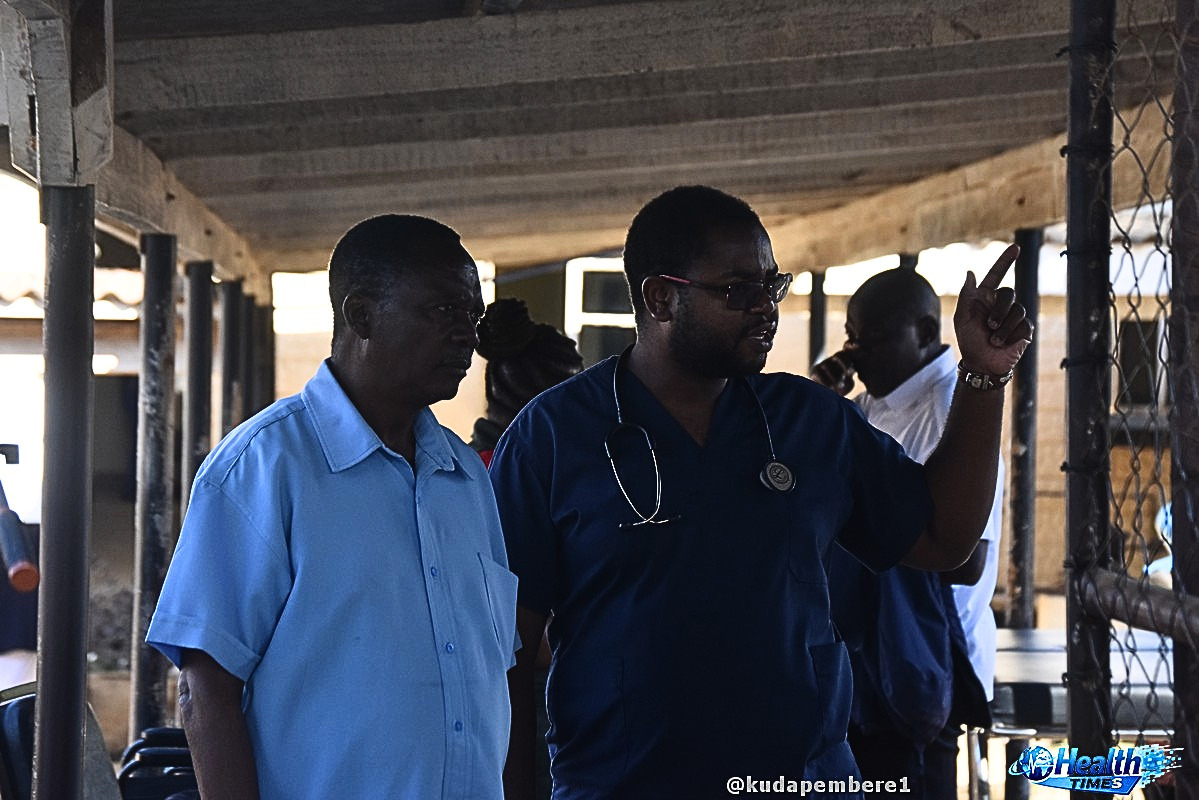
Karanda Mission Hospital’s Assistant Medical Director, Dr Takudzwa Sasa, says the hospital has a long-standing policy of treating vulnerable patients who cannot afford care.
“We do not turn away patients,” he says.
In Regina’s case, the treatment she received would have cost thousands of dollars elsewhere.
“We inserted metal implants to stabilise the fractures. At a private hospital, that procedure alone could cost around US$8 000. Anaesthetic services and specialist care could add another US$3 000.”
In total, the care Regina received was valued at approximately US$11 000.
Dr Sasa says the hospital regularly absorbs such costs for disadvantaged patients.
“Last year alone, the value of free treatment we provided reached about US$155 000,” he says.
“At times, this can amount to nearly a quarter of our revenue. We would welcome support mechanisms that could help cover these costs.”
While the hospital continues to serve some of the country’s most vulnerable patients, it is also facing challenges of its own.
Karanda Mission Hospital is urgently seeking about US$1.5 million to construct staff accommodation and upgrade ageing infrastructure.
Hospital chaplain Reverend Mark Sukulao says the institution’s facilities were built decades ago and are struggling to keep pace with growing demand.
“We developed a five-year strategic plan three years ago because we want to modernise the hospital,” he says.
“The buildings we have today were designed for a much smaller patient population. They no longer fully meet modern healthcare demands.”
Although the hospital was originally designed as a 160-bed facility, demand for services continues to rise.
“We want to expand the male, female and paediatric wards. At the same time, we are recruiting more nurses and doctors, but we have a serious accommodation crisis.”
The hospital currently employs seven doctors, around 50 nurses and numerous support staff.
“What we urgently need are houses for our staff. We estimate that an injection of about US$1.5 million would allow us to construct the accommodation required.”
Her focus remains fixed on the three children waiting for her recovery.