By Kuda Pembere
Government has set up a steering committee for the Public Health Institute of Zimbabwe (PHIZ), with Dr. Raiva Simbi appointed as the coordinator.
Other members include Dr. Wenselous Nyamayaro, Dr. Pious Makaya, Dr. Agnes Mahomva, Brigadier General Dr. Godfrey Mutetse, Dr. Prosper Chonzi, Justice Ministry Permanent Secretary Mrs. Nyemba (represented by Salome Chihuri), Clotilda Chimbwanda, Dr. Christopher Pasi, Dr. Richard Makurumidze and Dr. Nyasha Masuka. Non-voting members include Dr. Rooney, Mrs. R. Matewe and Dr. Safi.
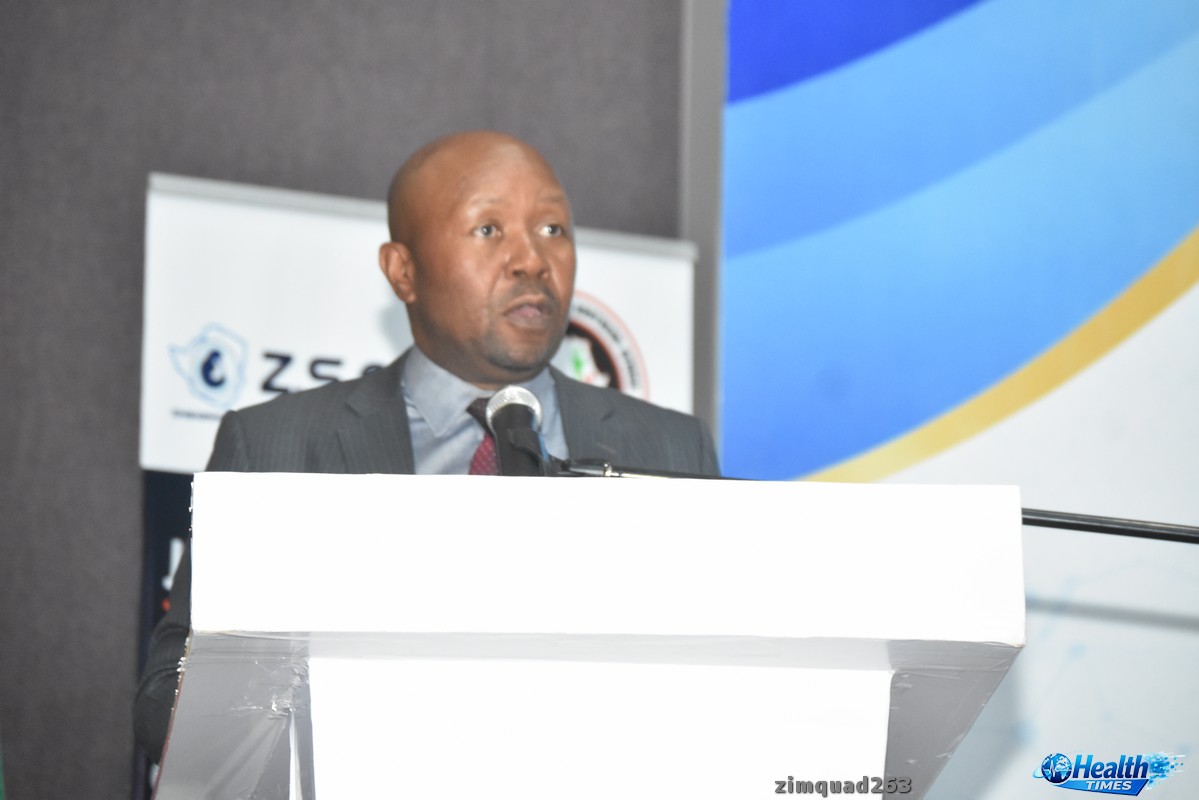
Officiating at the launch of the steering committee, Health and Child Care Minister Dr. Douglas Mombeshora said the establishment of PHIZ demonstrated government’s commitment to strengthening health security and emergency preparedness.
“Today, we begin building a national home for public health intelligence, coordination and scientific excellence. As Zimbabwe advances towards Vision 2030, the establishment of PHIZ launched on 9 October in Bulawayo marks a milestone in our transformation agenda.
“The Institute will serve as the engine that strengthens health security and preparedness, enhances surveillance, unifies evidence for decision-making and coordinates our essential public health functions.
“In simple terms, PHIZ is where science, strategy, prevention and preparedness will meet. One day we may even joke that before anyone catches the flu, PHIZ will already know its surname and the village it came from,” he said.
“PHIZ does not belong to the Minister of Health alone. It belongs to Zimbabwe. That is why today’s gathering reflects a whole-of-government approach. Health is not created in hospitals alone. It is created through clean water, good roads, functioning justice systems, food security, science, innovation, well-managed finances, national defence and strong governance.”
The minister added that the committee reflected a holistic approach across government.
“This steering committee, therefore, represents the collective strength of government—from finance to lands, justice, defence and the Health Service Commission—all working together to ensure PHIZ becomes a sustainable national institution.
“I am particularly pleased that Cabinet, through the Office of the President and Cabinet, has consistently guided this process. It shows the seriousness with which Zimbabwe views public health security,” he said.
He acknowledged the resilience of Zimbabwe’s health system despite limited budget allocations and other constraints.
“Ladies and gentlemen, our health system faces genuine constraints—budgetary limitations, human resource pressures and emerging diseases that test our readiness. But Zimbabwe has never been a nation that gives up.
“We innovate, we adapt and we move forward. PHIZ will be central to consolidating public health functions, aligning programs, strengthening governance, providing a unified scientific voice and ensuring accountability and transparency. To the steering committee, you carry a historic responsibility,” Dr. Mombeshora said.
World Health Organization Representative to Zimbabwe Dr. Desta Tiruneh urged members to collaborate closely.
“As the Steering Committee begins its work, WHO encourages strong collaboration across sectors; clear governance; transparency; and a shared commitment to Zimbabwe’s health priorities.
“A Public Health Institute must be founded on integrity, science and service. It must stand above silos and individual interests. It must reflect national priorities while embracing global best practice.”
He reaffirmed WHO’s commitment to providing technical support.
“The World Health Organization reaffirms its commitment to continued technical assistance, capacity building, institutional strengthening, scientific collaboration and long-term partnership throughout the development of PHIZ.
“We look forward to working closely with the Ministry, the Steering Committee and all partners to ensure this institute becomes a regional beacon of innovation and public health excellence,” Dr. Tiruneh said.
Dr. Roisin Rooney from the European Union said the EU, in collaboration with 10 member states, has allocated funds to bolster National Public Health Institutes across 10 African countries, including Zimbabwe.
“Now I just want to mention those 10 member states: Belgium, Czechia, Germany, Finland, France, Ireland, Italy, the Netherlands, Portugal and Sweden.
“This action is proposed within the framework of the Global Gateway Health Package presented at the 6th European Union–African Union Summit in 2022, with a total financial contribution amounting to an indicative €71.8 million for the entire region,” she said.
“Now just to mention as well the 10 African countries, because some technical working groups’ meetings will be organised, some of them online. So the 10 countries are Burundi, Chad, Democratic Republic of Congo, Guinea-Bissau, Guinea-Conakry, Malawi, Nigeria, Rwanda and Zimbabwe.”
She added, “These institutes will be hubs for research, innovation and emergency preparedness. Now supported by Sweden starting in 2026, Sweden will have a role in facilitating regional exchanges and drawing on expertise across Europe as well as across the region to advance Zimbabwe’s health systems and strengthen public health policies.”
Dr. Rooney stressed the importance of institutionalising PHIZ.