Mealtime insulin can be confusing at first, especially when balancing food, activity, and glucose goals. NovoRapid Vial is one option within this class, and understanding how it works helps you use it safely. For a neutral overview of vial format and key handling points, you can learn more about this vial presentation and usage details.
Daily life with diabetes involves trade-offs: keeping glucose stable without overcorrecting, planning meals without losing flexibility, and managing stress, illness, and exercise. A clear plan and consistent routines make mealtime insulin more predictable.
What Rapid-Acting Insulin Does
Rapid-acting insulin helps control the blood sugar rise following meals. It is designed to start working quickly and peak soon after injection. Timing matters because food absorption and insulin action must align reasonably well.
For many adults with type 1 diabetes, rapid-acting insulin covers most carbohydrates at meals and snacks. Some people with type 2 diabetes may also use a rapid-acting option to address post-meal spikes when other therapies are not enough. Individual responses vary, so your care plan should be tailored with your clinician.
Who Might Use It and Why
People with type 1 diabetes typically need both basal (background) and bolus (mealtime) insulin. Rapid-acting insulin often serves as the bolus component. Those with type 2 diabetes might add it when fasting values are controlled but after-meal readings stay high.
Using a vial can suit people who prefer syringes for precise, small dose changes or who split doses. Others may favor pens or pumps. Discuss pros and cons of each delivery method, including cost, dexterity needs, and visibility of dose markings.
Core Dosing Concepts to Understand
Mealtime dosing usually combines several ideas:
- Insulin-to-carbohydrate ratio: how many grams of carbs are covered by 1 unit.
- Correction (sensitivity) factor: the expected glucose drop from 1 unit.
- Pre-bolus timing: how long before a meal to inject to match food absorption.
These numbers are starting points that evolve with experience, activity changes, and health status. Keep notes on meals, timing, glucose readings, and any lows or highs. Share patterns with your healthcare provider to refine settings.
Timing Around Meals and Snacks
Pre-bolusing can reduce post-meal spikes but needs caution to avoid lows if meals are delayed. Some people time doses closer to the first bite for lower-carb or high-fat meals that digest slowly. Others might split a dose for extended eating, such as long dinners or grazing.
When uncertain, consider a conservative approach and recheck glucose later. Continuous glucose monitors (CGMs) can help show how timing affects spikes and dips. Fingerstick checks remain useful for confirming CGM trends or when symptoms do not match readings.
Site Selection, Rotation, and Technique
Common injection sites include the abdomen, thigh, upper arm, and buttocks. Rotate sites within each area to reduce lipohypertrophy, which can impair absorption. Inspect skin regularly for lumps, dents, or irritation.
Use a new needle for each injection. Insert at the recommended angle and depth for your needle size. After injecting, hold briefly to help deliver the full dose, then safely dispose of the needle in a sharps container.
Storage, Handling, and Vial Basics
Read the manufacturer’s insert for storage specifics and shelf-life after first use. As a general rule, protect insulin from extreme temperatures and direct sunlight. Do not use insulin that looks cloudy (unless it is a suspension), discolored, or contains particles.
Label the date you first puncture a vial and follow the recommended in-use timeframe. Keep a backup plan for refrigeration during travel or heat waves. If a dose seems unusually ineffective, consider potential storage issues and discuss next steps with your care team.
Recognizing and Preventing Hypoglycemia
Low blood sugar (hypoglycemia) can develop quickly with rapid-acting insulin. Early signs may include shakiness, sweating, hunger, or trouble concentrating. Severe cases may involve confusion, seizures, or loss of consciousness.
Keep quick-acting carbohydrates available, such as glucose tablets or juice. Recheck glucose after treating a low to ensure it has recovered. Review recent activity, dose timing, and meal composition to find patterns and reduce future risk.
Managing Highs, Illness, and Ketones
High blood sugar can result from missed doses, underestimation of carbohydrates, or illness. For type 1 diabetes, ketones can develop when insulin is deficient. Check ketones during prolonged hyperglycemia or when sick, especially with nausea or abdominal pain.
Sick-day plans typically include more frequent glucose checks, hydration, and thoughtful dose adjustments. Seek urgent care for persistent vomiting, large ketones, or signs of diabetic ketoacidosis, such as rapid breathing and confusion. Do not delay care if severe symptoms appear.
Exercise, Alcohol, and Daily Variability
Physical activity increases insulin sensitivity and may lower glucose for hours afterward. Consider reducing mealtime doses or adding planned snacks for prolonged or intense workouts. Monitor more frequently on exercise days.
Alcohol can suppress the liver’s glucose release and raise hypoglycemia risk, particularly overnight. Eat carbohydrates with alcohol and check glucose later. Discuss personalized adjustments with your clinician.
Medication Interactions and Other Factors
Some medications, such as steroids, can raise glucose significantly. Others may mask low blood sugar symptoms. Inform your healthcare team about all prescriptions, supplements, and over-the-counter products you use.
Stress, sleep quality, and menstrual cycles can also shift insulin needs. Track changes and adjust cautiously with professional guidance. Small, consistent tweaks usually work better than large, rapid changes.
Devices, Data, and Personal Preferences
People differ in how they prefer to deliver insulin and track data. Vials offer flexibility and precise dose measurement; pens add convenience; pumps can automate basal delivery and enable extended or dual-wave boluses. CGM data can inform dose timing and carb estimates.
When comparing options, consider cost, insurance coverage, supply availability, and ease of travel. Explore the broader class of Rapid-Acting Insulin to understand how these medicines are typically used across different care plans.
Practical Routines That Help
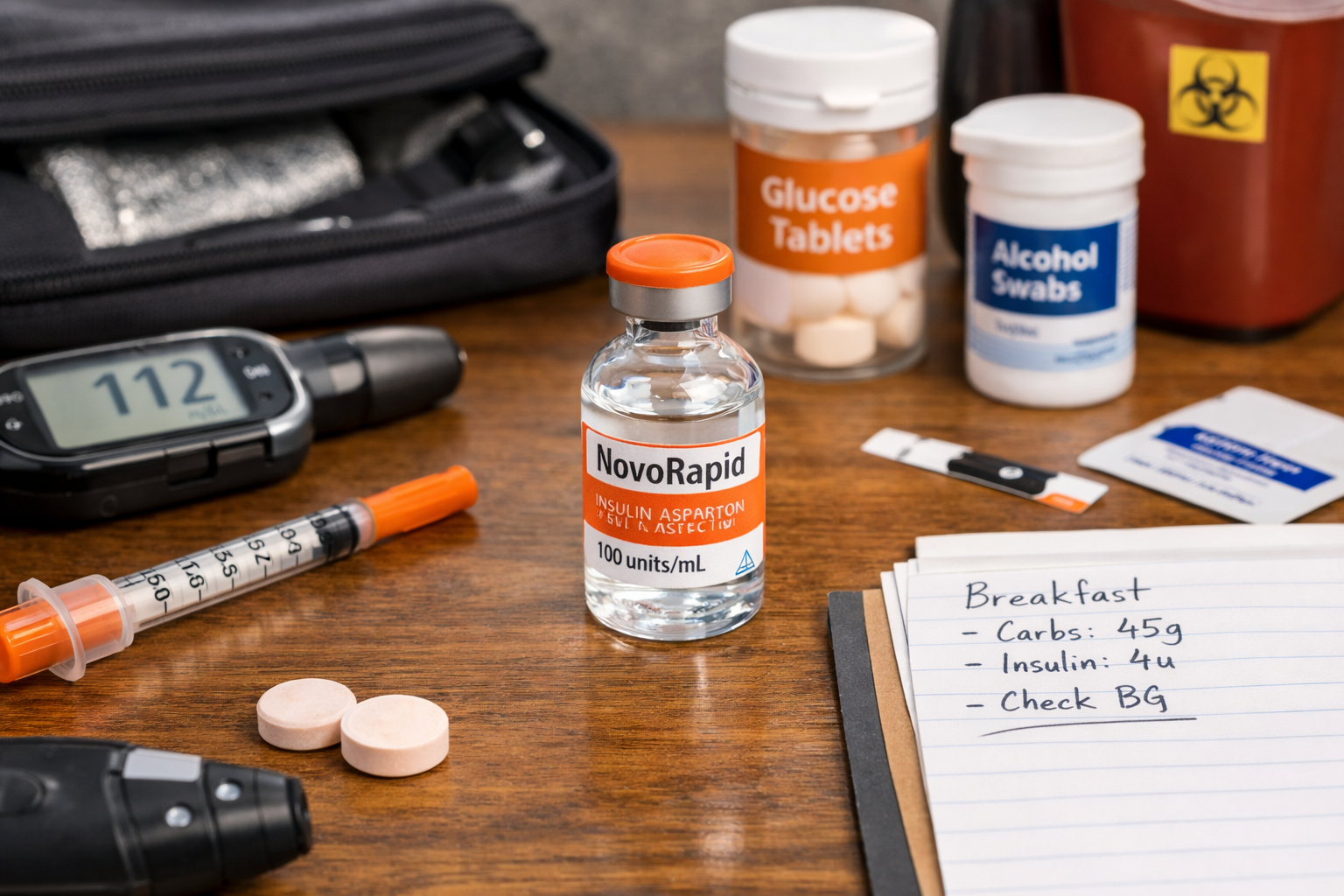
Simple habits reduce surprises. Pre-plan carbohydrate amounts for common meals. Keep a small kit stocked with glucose, syringes, alcohol swabs, and a spare vial if appropriate.
Rotate injection sites weekly, and set calendar reminders for vial in-use limits. When traveling, carry insulin and supplies in hand luggage with a cooling case if needed. Keep backup prescriptions and medical identification accessible.
When to Revisit Your Plan
Reassess your ratios and correction factors after notable changes: new job hours, training cycles, weight shifts, or medication changes. Review data every few weeks, or sooner if you experience frequent lows or highs. Discuss persistent issues with your healthcare provider.
Children, older adults, and people with impaired hypoglycemia awareness need individualized targets and safety strategies. Caregivers should know how to recognize and treat lows quickly.
Key Takeaways
NovoRapid Vial is one option for managing mealtime glucose. Its effectiveness depends on timing, dose calculations, site rotation, and careful monitoring. Small, consistent improvements in routine can lead to steadier readings.
Use tools that fit your life, whether syringes, pens, pumps, or CGMs. Keep communication open with your clinical team and update your plan as your needs change. For general information about diabetes therapies and supplies, visit CanadianInsulin.
Medical disclaimer: This content is for informational purposes only and is not a substitute for professional medical advice.