Michael Gwarisa
A year after the United States withdrew its support from the World Health Organisation (WHO), experts warn the country is now more vulnerable to disease outbreaks and public health emergencies.
The US is experiencing one of its most severe influenza seasons in recent years. According to the Centers for Disease Control and Prevention (CDC), the country has recorded at least fifteen million flu cases, one hundred eighty thousand hospitalisations, and over seven thousand four hundred deaths. Hospitalisation rates and viral activity indicate significant pressure on hospitals and public health services.
Measles has also re-emerged. Since 2025, the US has reported 2,144 confirmed measles cases linked to forty-nine outbreaks, with eighty-eight percent of cases associated with outbreaks. This represents the highest burden of measles in the country since it was declared eliminated in 2000.
Public health specialists attribute the rising vulnerability to widespread vaccine hesitancy, declining public trust in health authorities, and gaps in disease surveillance and staffing. These factors have complicated outbreak detection, response coordination, and prevention efforts.
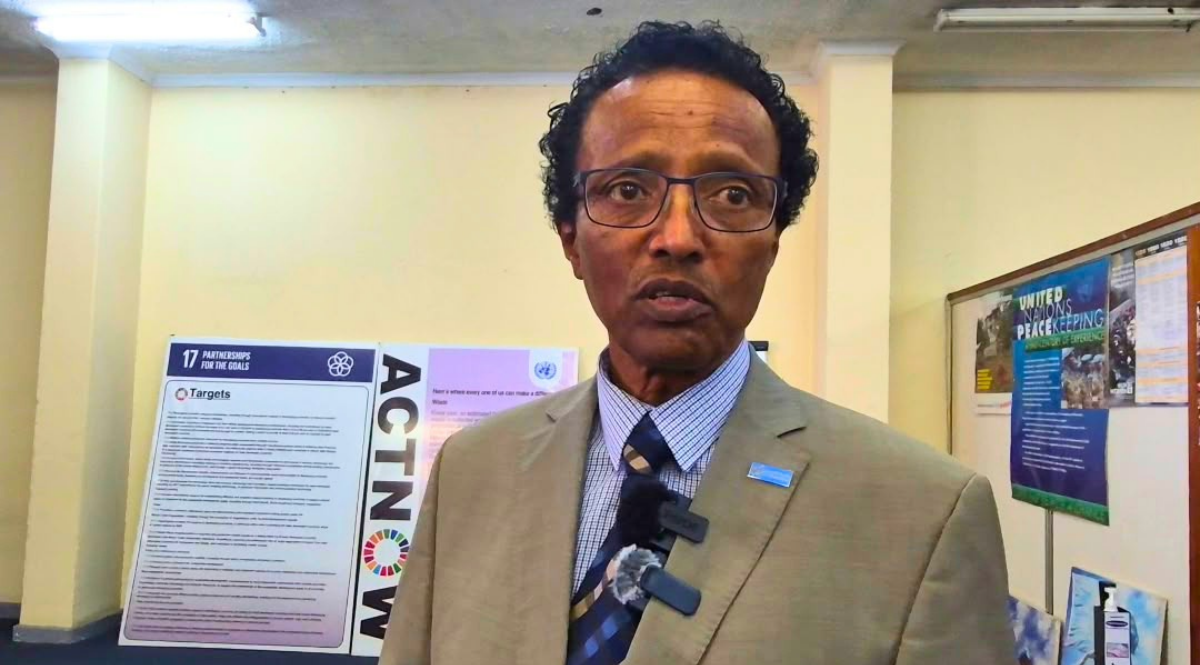
WHO Director General Dr Tedros Adhanom Ghebreyesus described the US decision to reduce engagement with the organisation as unwise.
“So it’s not really the right decision. I want to say it bluntly, because I believe there are many things that are done through WHO that benefit the US, and that only WHO does, especially on health security issues,” he said.
“That’s why I say the US cannot be safe without working with WHO, and there are many examples to show that. My wish is that they will reconsider and continue working with other member states through WHO.”
He warned that the withdrawal creates a lose-lose scenario, weakening both US preparedness and global response capacity at a time when infectious threats are rising.
At the same time, WHO is undergoing significant internal restructuring due to budget shortfalls, largely triggered by reduced US funding. Around six hundred positions have been cut at headquarters, departments have been consolidated, and some functions relocated to lower-cost locations such as India and Berlin.
“Based on that, we carried out restructuring, which we call ‘Future-Fit WHO’. This restructuring was done in line with WHO’s core mandate, with all prioritisation based on that mandate. The process has been completed. We started from the top: senior management was reduced by half, middle management and departments were reduced by half, and this went down to expert level. All adjustments were made based on the prioritisation process we set for ourselves. We also observed three principles throughout the process: transparency, fairness, and humanity,” Dr Tedros said.
Despite funding challenges, the organisation has stabilised. For the 2026–2027 biennium, WHO has secured about seventy-five percent of its required budget. Remaining gaps may be partially addressed through savings and prioritisation, but experts warn that securing the bulk of funding early is essential for smooth operations.
Dr Tedros emphasised that financial stability alone is insufficient. Cooperation and solidarity among countries, he said, are the best defence against global health threats. “When I call for reconsideration, it is not about money. Money can be adjusted. It is about cooperation and solidarity. The best immunity is solidarity. This is in the interest of the US and in the interest of the rest of the world. I’m not saying money doesn’t matter, but what matters most is cooperation and solidarity so the whole world can prepare for threats like viruses, as we saw with COVID-19,” he said.
The organisation’s financial position has improved thanks to reforms that began in 2017 and 2018. Member states agreed in 2022 to increase assessed contributions to fifty percent of the core budget, with two instalments approved in May 2023 and May 2025. This has prevented the loss of an estimated six hundred to seven hundred jobs, even as some staff reductions were unavoidable.